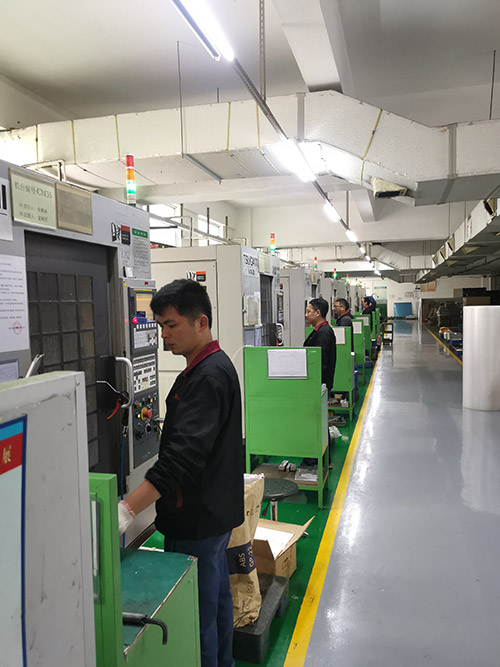

Copper is a common metal material with excellent conductivity, thermal conductivity, and workability, widely used in electronics, construction, machinery, and other fields. Copper part processing refers to the process of manufacturing various shapes and sizes of parts or finished products through a series of processing techniques. There are many types of copper part processing methods, including casting, forging, machining, stamping, and welding. Below, we will detail the copper part processing process.
I. Casting:
Casting involves pouring molten copper into molds to solidify and form the desired shape. It is suitable for producing large quantities of complex copper parts, offering high production efficiency and low costs. During the casting process, it is crucial to control the casting temperature, cooling rate, and pouring method to ensure the quality and surface finish of the parts.
Forge:
Forging is a common copper part processing method, involving heating copper material and then subjecting it to plastic deformation to achieve the desired shape. Forging can be categorized into two types: hot forging and cold forging. Hot forging is suitable for parts with large deformation and complex shapes, while cold forging is ideal for small batch production and high precision requirements. During the forging process, it is essential to select the appropriate temperature, pressure, and speed based on the properties of copper to ensure the mechanical properties of the parts.
Section 3: Machining
Machine processing involves cutting, drilling, and turning copper materials to achieve specific dimensions and surface quality. It is suitable for producing high-precision, small-batch copper parts, catering to a variety of shapes and sizes. During machine processing, it is essential to select appropriate cutting tools, cutting parameters, and cooling methods to ensure processing efficiency and quality.
Section 4: Pressing
Stamping is a process that utilizes molds to plasticly deform thin copper sheets into various shaped parts. It is suitable for producing large quantities of copper parts with complex shapes, offering advantages such as high production efficiency and low costs. During the stamping process, it is necessary to design reasonable mold structures, control the stamping speed and pressure, to ensure the dimensional accuracy and surface quality of the parts.
Welding:
Welding is the process of joining copper materials by heating, melting, and cooling them to form a dense connection. It is suitable for connecting copper parts or repairing welding defects and can achieve various forms of connections. When welding, it is necessary to select the appropriate welding method (gas welding, arc welding, etc.), welding parameters, and welding materials to ensure the quality and strength of the weld joint.
Overall, copper part processing is a diversified process that requires selecting appropriate processing methods and technological parameters based on the specific requirements of different parts to ensure their quality and performance. As copper finds widespread application in various fields, the technology for copper part processing is continuously evolving and improving, providing crucial support for the production of high-quality copper products.