



| 1 | |||
| Aluminum | Nickel, copper, zinc | Electroplating, Chemical Plating | Enhance solderability and improve joint corrosion resistance |
| Aluminum | Aluminum-Silicon Alloy | Wrap | Soldering Wire |
| 2. Pre-set solder paste and fluxes Some welding methods require the pre-positioning of flux and inhibitor. | The pre-set solder paste is typically in a soft膏-like liquid form. | Please provide the Chinese content to be translated. | |
| Ensure even coating on both surfaces to be joined. | Low-viscosity soldering paste can be applied using dipping. | Manual spraying or automatic | |
| Spray. Heat the thick soldering paste | 50~60 degrees | C, can reduce its viscosity without dilution; the hot solder paste | |
| Reduced surface tension, easily adheres to metal. Flame brazing and torch brazing for gas fluxes. | And brazing with self-flux brazing rods. | No pre-set required | |
| Solder wire. Vacuum brazing does not require flux. A flux is an auxiliary material used to prevent solder from flowing excessively during brazing. | In soldering and brazing within a gas-tight furnace |
No Chinese content provided.Process
1. Surface preparation of workpieces
To ensure uniform solder joint formation, it is essential to clean the workpiece surface of oils and oxides prior to welding. To enhance the solderability of certain materials or to increase the wetting ability of the solder to the base material, it is often necessary to coat the base material with metal.
(1) Remove oil stains
Common organic solvents like alcohol, gasoline, trichloroethylene, and carbon tetrachloride are used for removing oil stains. Bulk production often involves degreasing in organic solvent vapors. Mechanical stirring or ultrasonic vibration can be used in washing tubs to enhance cleaning effectiveness. After degreasing, the item must be washed with water and then dried.
(2) Remove Oxides
The removal of surface oxides from parts can be chosen according to material, production conditions, and batch size, with methods such as mechanical, chemical etching, and electrochemical etching available. After chemical or electrochemical etching, polishing or neutralization treatment is required, followed by rinsing with water and drying.
Batch production mechanical cleaning methods include methods such as grinding wheels, metal brushes, and sandblasting.
b. Chemical etching for surface oxide removal has commenced in mass production, boasting high production rates. The choice of etching fluid depends on the nature and condition of the base material and its surface oxides. Aluminum and aluminum alloys can be treated with (10% NaOH, the remainder water or 10% H)2SO4, Residual WaterErosion fluid composition。
c. Electrochemical etching is also suitable for mass production and the rapid removal of oxides, commonly used in processes for cleaning oxides from stainless steel and carbon steel.
(3) Metal Coating on Base Material Surface
Metal coating on the base material primarily aims to enhance the brazing properties of the solder; increase the wettability of the solder to the base material; and act as a pre-applied solder layer to simplify assembly and improve production efficiency.
The paste flux is widely used during brazing in empty furnaces. The flux is primarily composed of stable oxides (such as alumina, titanium oxide, magnesium oxide, etc.) mixed with an appropriate binder. Before brazing, the paste flux is applied to the surfaces of the base materials that do not require brazing. As the flux does not wet these materials, it effectively prevents their flow. The flux is then removed after brazing.
2.Assembly Positioning and Placement Welding Wire
The assembly method allows components to self-align and self-support, and can also be fixed and clamped using fixtures. For the joints of flat tubes and fins coated with metal on the surface of the base material, the size of the gap is not considered during the welding process. However, a certain amount of pressure must be pre-applied through the fixture during the brazing to reduce the gap. The end cover of the collecting pipe is installed in the corresponding position and tightly sealed with a wooden hammer head. Then, using spot welding, the import joint and the collecting pipe are joined together at the same time, facilitating brazing. If there is a need to pre-place solder, the solder is placed in the designated position during assembly.
3.Soldering
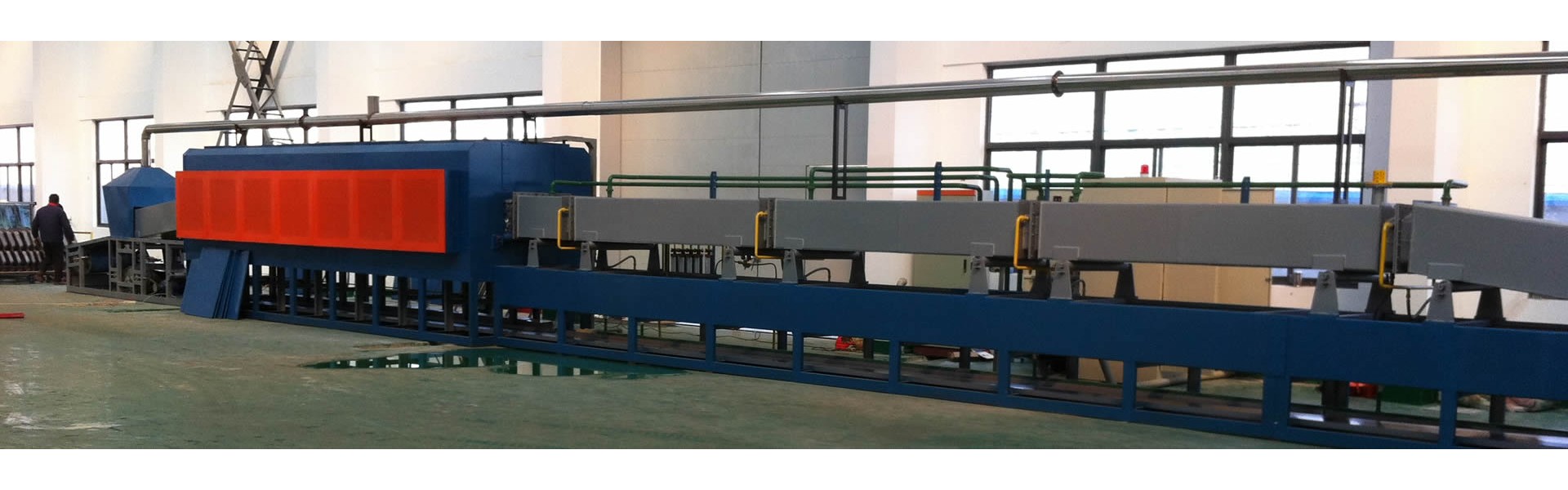
For aluminum brazing in nitrogen furnaces: A brazing flux spray system applies flux to the workpiece, which is then dried in an oven heated to 150°C to 250°C. The workpiece is brazed within a protective atmosphere furnace when the temperature reaches approximately 610°C. After water and air cooling, the workpiece is unloaded from the unloading platform. The process is as follows: Welded workpiece → Flux spray → Conveyor → Drying oven → Conveyor → Heating furnace → Brazing furnace → Water cooling chamber → Air cooling chamber → Conveyor.
Pin spray
An assembly line carries workpieces through a sealed flux chamber, where water-soluble flux is sprayed onto the workpieces. After spraying is complete, excess flux on the workpieces is removed using an air knife, followed by transferring the workpieces to a drying oven.
(2) Drying Process
After applying the soldering paste, the parts must be dried in a drying oven, typically at around 200°C. Caution should be exercised to prevent overheating of the heat exchanger, as overheating (i.e., reaching 250°C) can lead to the formation of high-temperature oxides on the aluminum surface.
Continuous Soldering Furnace
The brazing furnace must ensure that the workpiece temperature increases by more than 20℃ per minute, reaching the melting point of the brazing material on the workpiece surface (591℃). The temperature uniformity of the workpiece is ±5℃, while maintaining a nitrogen-protected atmosphere inside the furnace. Precise control and consistency of each workpiece's temperature are critical, so the heating chamber is divided into several control zones. The more zones, the better the temperature distribution control of the workpiece. Any significant fluctuation can lead to insufficient or excessive brazing of the workpiece. The cooling curve is as shown in the figure.In the furnace brazing zone, the oxygen concentration is controlled below 0.005% to prevent oxidation. Nitrogen is introduced to prevent oxygen from entering the furnace from both ends. The entry of nitrogen should not cause any change in the furnace temperature, otherwise, it will disrupt the uniform heating and cooling of the heat exchanger. Before entering the furnace, the nitrogen is preheated, and the entry of nitrogen must be multi-point.
Insulation Time and Conveyor Speed: Since insulation time cannot be directly measured, it is often determined by adjusting the soldering temperature or conveyor speed during trial welding products. An insulation time of reaching or exceeding 602℃ is ideal, with a range of 3 to 5 minutes being optimal. After soldering, the workpiece enters a water-cooled jacket room, where it cools to approximately 200℃. Then, the workpiece moves into an air-cooled cooling chamber, where it is cooled using recirculating air to ensure it reaches a temperature safe for hand contact, after which it is manually unloaded.
4. Soldering Post-Processing
Post-soldering treatment primarily involves removing residual soldering flux, flux inhibitor, or substances that may affect the shape of the solder seams.Some soldered components require heat treatment, and some leaded seams, along with the entire workpiece, need to be plated after welding.Reapply, as if plated.Coating with other inert metal layers, oxidation or passivation treatment, painting, etc.
(1) Removal of solder paste
Most soldering flux residues are corrosive to the pre-welded joint and hinder the inspection of lead seam quality, and should be removed after welding.Clean.Different removal methods are adopted for the physical and chemical properties of soldering flux.
(2) Flow Retardant Removal
For "separating agent" type flow control agents, it is easy to remove them using mechanical methods such as steel bristle brushes, compressed air, or flushing with water."Surface Reactive" flow preventers, which are cleaned easily with a hot nitric-acid-hydrofluoric acid wash, are suitable for materials containing copper andThe alloy of silverApplicable for use. Clean with a solution of sodium hydroxide or difluoramine, suitable for any occasion. For limited use only.Flow Restrictor,Available for immersion washing with a 5%-10% nitric or hydrochloric acid solution, but nitric acid should not be used on copper or silver alloys.No Chinese content provided.After administration, the product should be thoroughly rinsed with clean water.
