

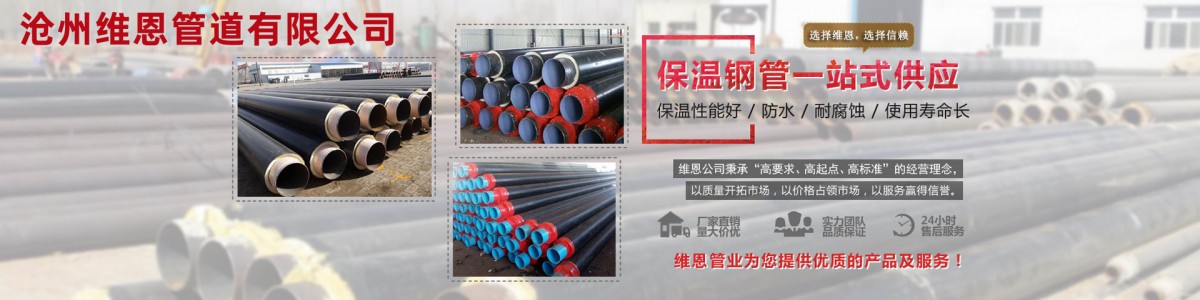

Currently, in large-scale engineering projects in China, the installation of underground pipelines and related liquefied gas transmission pipelines must use pre-fabricated buried-insulated pipes, which is their primary application field.
Due to the specialized application fields requiring specific materials to ensure basic safety and benefits, it is natural for most people to understand the primary applications of thermal insulation pipes and the significance of their related development, thereby comprehending their specific content.
Certainly, pre-fabricated buried thermal insulation pipes can be applied in the liquid field, where leakage is prone. Therefore, to prevent leaks, the use of pre-fabricated buried thermal insulation pipes can achieve leak-proofing effects and greatly satisfy the corresponding functional features.
For many, prefabricated buried-insulation pipes can also be used in gas fields. The gas is primarily to prevent gas leakage and to stop liquids like water from seeping into the pipeline, which could lead to substances entering the gas.
Clearly, the selection of insulation materials for these special contents is particularly crucial. At the same time, its isolating function makes the insulation materials more proactive, capable of blocking contamination and the corresponding chemical and chemical effects.
For many, these factors are clearly the primary reasons for choosing pre-fabricated buried insulation pipes, and they also significantly influence the market. With high-quality choices, it naturally leads to high-quality functions and continually expands its application scope.
PU foam insulation pipes offer numerous advantages during use, earning widespread recognition and positive feedback from users. When utilizing this type of insulating pipe, it is essential to first understand its characteristics. Only by grasping its features can we better utilize it and maximize its impact.
Polyurethane foam-insulated pipe has significantly lower construction costs compared to other thermal insulation pipes. This feature makes it a popular choice among many. At the same time, it has minimal heat loss and helps save energy, thereby reducing operating costs.
In general, when storing polyurethane thermal insulation pipes, classification, categorization, and coding are necessary. Different specifications of products should not be stacked together in bulk, as they are prone to mixing, so careful arrangement is essential. The storage area should be level, free of debris, easy to load and unload, and surrounded by no flammable or explosive materials.
When handling polyurethane insulated pipes, they must be lifted using slings. However, slings or other methods must not damage the insulating pipes, and they should not be lifted directly with steel wire ropes. Operators are prohibited from bumping, throwing, or dropping insulating pipes that are directly buried in the ground.
Loaders should coordinate with truck drivers during transportation to prevent skidding. Insulation pipes must be securely fastened. The installed pipes should not damage the external pipes or insulation. For short-distance transportation of polyurethane insulated pipes, they can be transported separately by the transport pipes, and care should also be taken during transportation to avoid damaging the outer surface and insulation layer of the insulated pipes. Proper handling methods ensure that the insulated pipes are not directly buried.
Each part of the loader has been subjected to prolonged baking. Depending on the varying usage effects, the handling and unloading process can vary in convenience. This issue involves numerous factors, so we must research this matter and find a quick and simple method for dealing with steel insulated pipes.
Secondly, polyurethane foam insulated pipes exhibit excellent corrosion resistance. Generally, they do not damage the surface and can extend the service life.
Additionally, the PU foam insulated pipes occupy less space, have a fast installation process, and play a great role in environmental protection. One of its main features is its relative safety, which increases the safety factor of the structure.
