
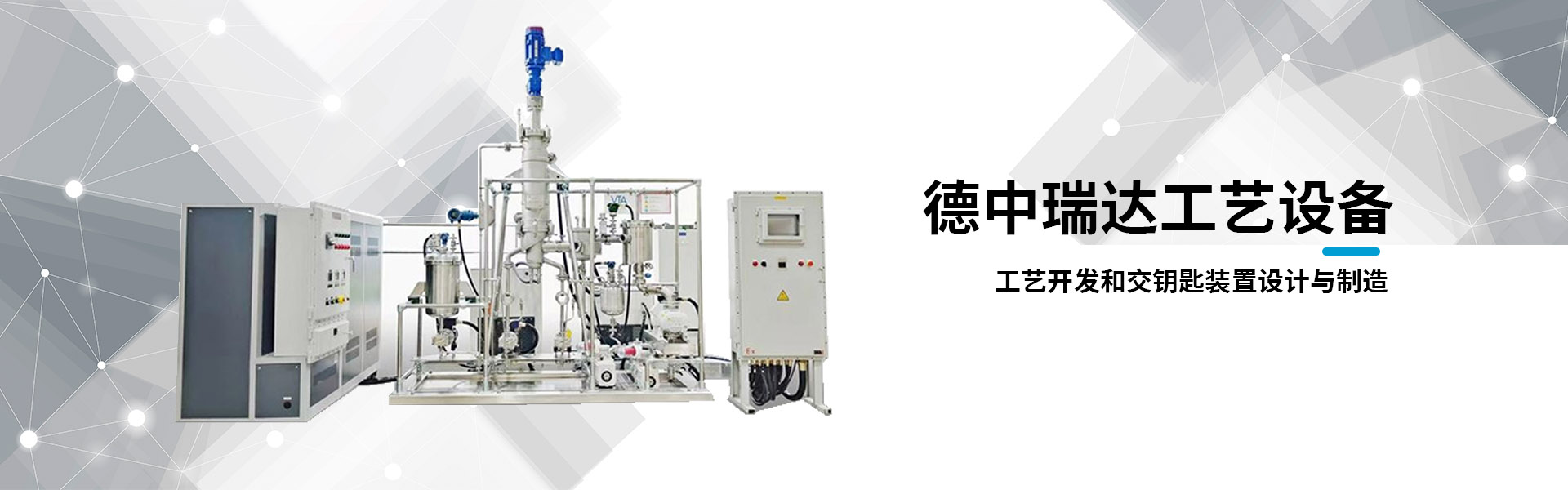
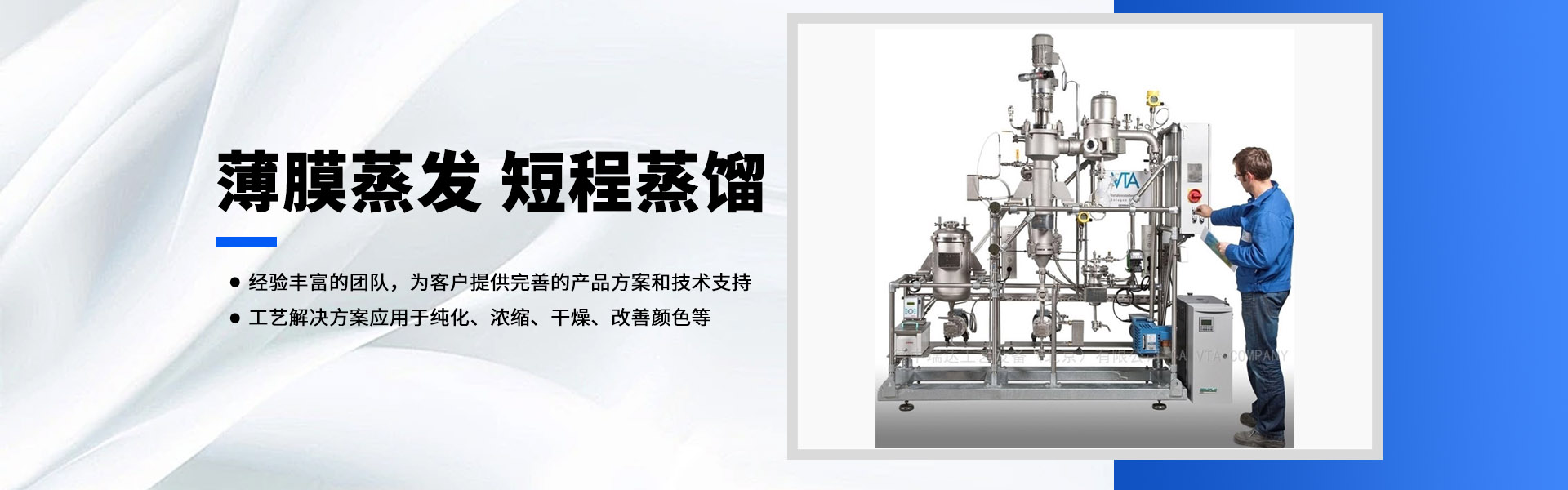
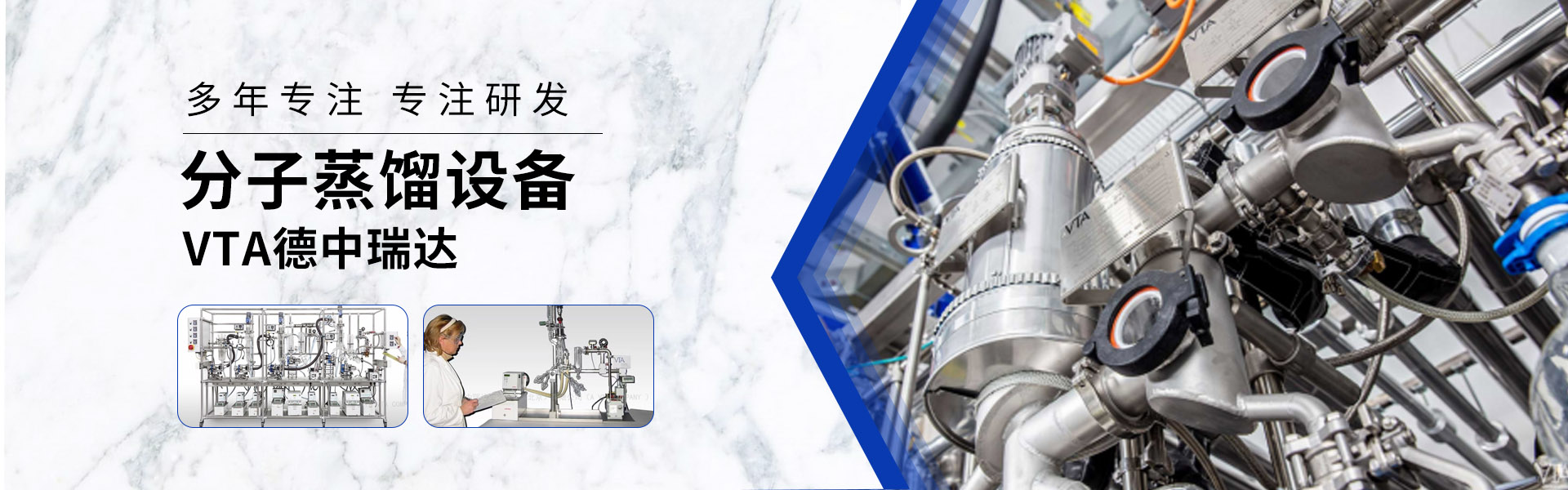

The pilot-scale molecular distillation process is a liquid-liquid separation technology conducted under high vacuum conditions, capable of addressing issues that conventional distillation techniques cannot solve. The distillation process is as follows:
The rate of evaporation increases with the rise in temperature, as does the thickness and uniformity of the liquid film. If the practical vacuum degree of the evaporator is too low, it can lead to excessively high evaporation temperatures, causing thermal decomposition and carbonization of the material. Conversely, an overly low vacuum degree can result in excessively low evaporation temperatures, high rotational speeds, high investment costs, and low production capacity, which is not cost-effective. Therefore, the practical vacuum degree of the equipment must be set reasonably to ensure a constant evaporation temperature, prevent thermal decomposition, and maximize production capacity or reduce energy consumption.
The feeding state has a significant impact. Continuous feeding, with high shear forces achieved within a short heating time, is determined by the inherent properties of the pilot-scale molecular distillation equipment. The lighter the components to be separated, the lower the flow resistance, resulting in higher gas phase velocities and better separation efficiency.
Pilot Molecular DistillationThe main reasons for the thermal decomposition of materials during the process include the following points:
1. Excessive Temperature: Improper temperature control during the distillation process can lead to overheating of the material, triggering thermal decomposition. This is usually caused by excessive heating power, prolonged heating time, or improper heating methods.
2. Insufficient Vacuum Level: Distillation must be carried out under high vacuum conditions. Insufficient vacuum can lead to material exposure to oxygen for an extended period at high temperatures, triggering oxidation reactions and thermal decomposition.
Material Properties: Certain materials inherently possess low thermal stability and are prone to thermal decomposition at high temperatures. Additionally, impurities within the material may also lead to the occurrence of thermal decomposition.
4. Equipment Factors: Improper design and operation of pilot-scale molecular distillation equipment may also lead to thermal decomposition of materials. For instance, an unreasonably designed evaporator, uneven stirring, and inadequate cooling effects can all cause materials to remain at high temperatures for too long, thereby triggering thermal decomposition.
