
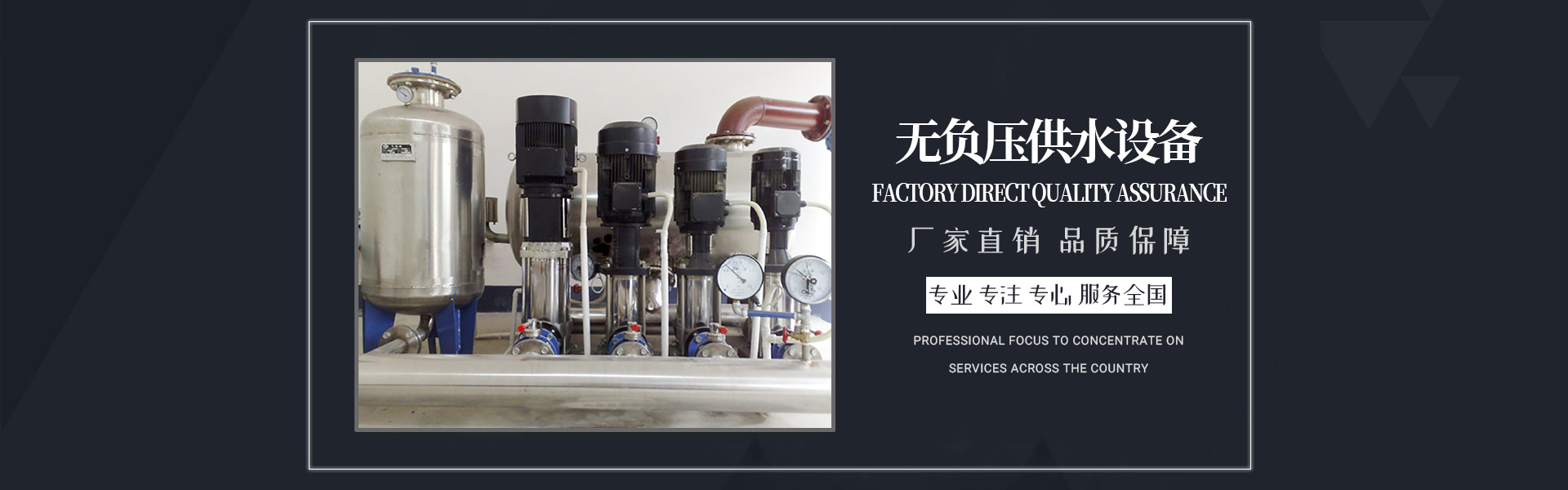
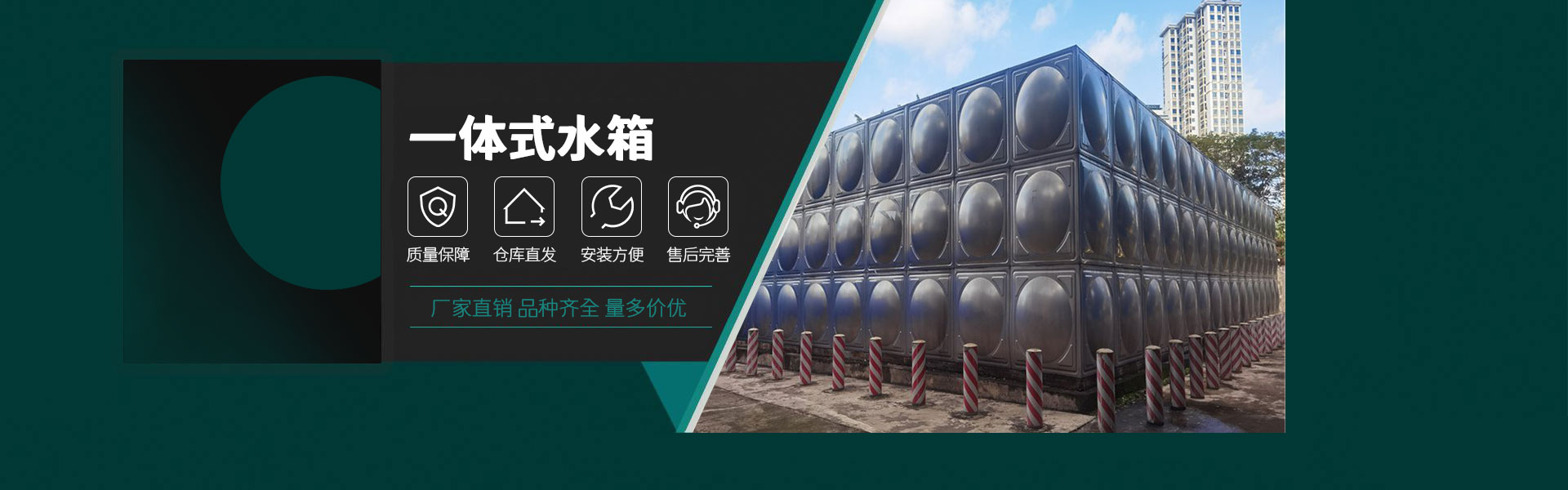


As cities flourish, China's water supply market system continues to improve, and people's awareness levels are increasingly elevated. Consequently, the public has a deeper understanding of the pollution associated with secondary water supply. In the era of network intelligence, we have successfully achieved a technological innovation in shifting from traditional water supply systems to pressure-free secondary water supply equipment. It boasts significant advantages in terms of energy conservation, water saving, land saving, and cost saving in construction. Replacing traditional secondary water storage facilities like ponds and tanks, the market demand for this technology is rapidly growing.
The Pressure-Free Secondary Water Supply Equipment is an application based on the conventional variable frequency constant pressure water supply system. It represents a new method of water supply, breaking through the limitations of traditional methods, and combining simple pumps, pipes, and control panels. It is an adjustment to current electronic information technology and mechanical equipment application technologies. As the concept of pressure-free water supply continues to evolve in society, many producers and research institutions are actively researching and analyzing it, achieving substantial results.
The Non-Return-Valve Second Water Supply Equipment completely resolves the issue of secondary water pollution. Based on the working principles of existing non-negative pressure water supply equipment on the market, the second water supply equipment mainly includes variable frequency speed regulating pump units and steady flow compensation devices. The application of pressure reducing valves, such as pressure and flow sensors, control cabinets, and filters, allows air to enter the steady-state compensator and transition from the compensator to the closed water tank, effectively suppressing negative pressure. When using the steady-state flow compensator, control of pumps and other equipment is achieved through liquid level control.
The pressure-free secondary water supply equipment can adopt a frequency-limited automatic flow control method to enhance the water supply capacity of the municipal pipeline network. In the pressure control mode, if the city's pipeline water supply is insufficient or the water usage exceeds the pipeline's supply capacity, a constant flow water supply is initiated, and normal water supply is resumed once the water supply meets the standard. The fully enclosed structure completely eliminates secondary pollution, making the water quality safer and more hygienic.
