Environmental equipment, instruments and meters, robots, ...

Insulators are a widely used type of insulating component in the power grid. Currently, porcelain insulators are predominantly used, with a small number of glass insulators and organic ones as well.(Or composite materials)Insulators have also begun to see applications domestically.
Insulators come in various shapes and sizes, categorized by their use into transmission line insulators and power station insulators, or indoor and outdoor types.;According to their shape, they are suspended insulators.jPin-type insulators, post insulators, rod-shaped insulators, sleeve insulators, and wire insulators, among others. Additionally, dust-proof insulators and insulating crossarms are also available.
Porcelain Components(Or glass components)The main component of insulators, it serves not only as insulation but also boasts high mechanical strength. To ensure the mechanical and electrical strength of porcelain pieces, they must be solid, uniform, and free of pores. To enhance the insulating surface's electrical strength and resistance to dampness and dirt, porcelain pieces often feature skirted edges and protrusions, and are coated with white or colored porcelain glaze. This glaze offers strong chemical stability and also increases the mechanical strength of the insulator.
Insulators may sustain scratches during handling and construction due to collisions.;During operation, it may shatter or be damaged due to lightning accidents.;Due to the long-term combined effects of mechanical loading and high voltage, the insulator degrades, causing its breakdown voltage to continuously decrease. When it drops below the surface dry flashover voltage, it is termed a low-value insulator. The limit of a low-value insulator, where the internal breakdown voltage is zero, is called a zero-value insulator. When a string of insulators contains low-value or zero-value insulators, flashover accidents are prone to occur in polluted environments, even under overvoltage or working voltage conditions. For instance, the power grid has experienced pollution flashovers multiple times due to the presence of zero-value insulators.;Some Electric Power Bureau110kVLines have also experienced insulation failures due to zero-value insulators, leading to explosions. Therefore, it is crucial to timely detect and remove defective insulators in operation to eliminate potential hazards, which is vital for reducing power system accidents and enhancing the reliability of power supply.
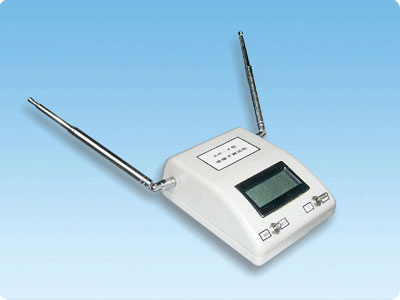
In the relevant regulations, insulator testing refers to the testing of pole insulators and suspension insulators, with the following test items:
(1)Zero-value Insulator Testing(66kVAbove.)。
(2)Measure insulation resistance.
(3)交流耐压测试
(4)Measure the equivalent salt density of surface污秽物 on insulators.
Operational needle-type支柱绝缘子和suspension绝缘子的 testing projects may be selected from the following: checking for zero value, insulation resistance, and AC withstand voltage test. Glass suspension insulators are not subjected to all three tests. Insulators that spontaneously break during operation should be replaced promptly.


www.114global.com © Zhongshang 114 Hebei Network Technology Co., Ltd.Address: Room 6009, Oriental New World Center, No.118 East Zhongshan Road, Qiaoxi District, Shijiazhuang City, Hebei ProvincePlatform Service Hotline: 4006299930