Environmental equipment, instruments and meters, robots, ...

No Chinese content provided, original return: "No content provided." Appliance Please provide the Chinese content that needs to be translated into American English. No Chinese content provided.
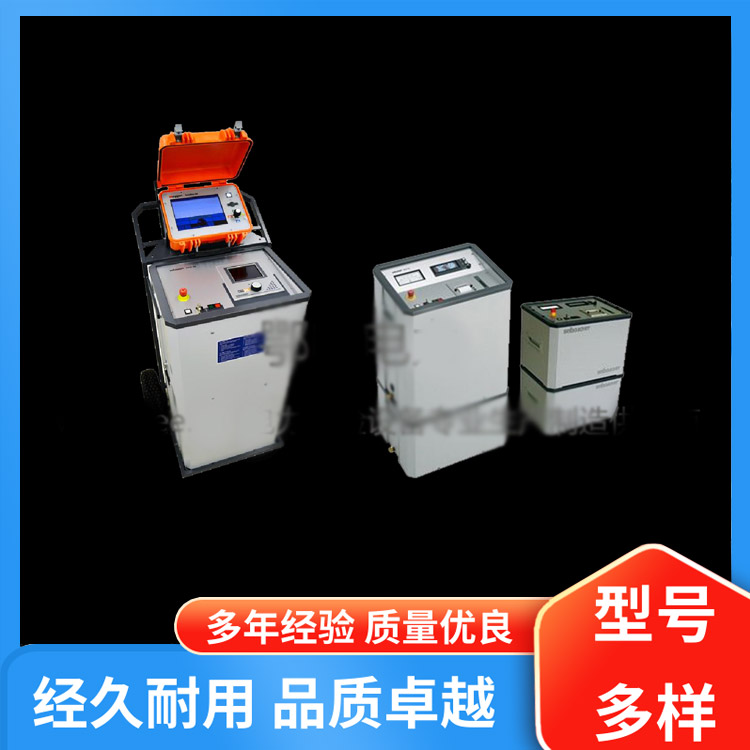
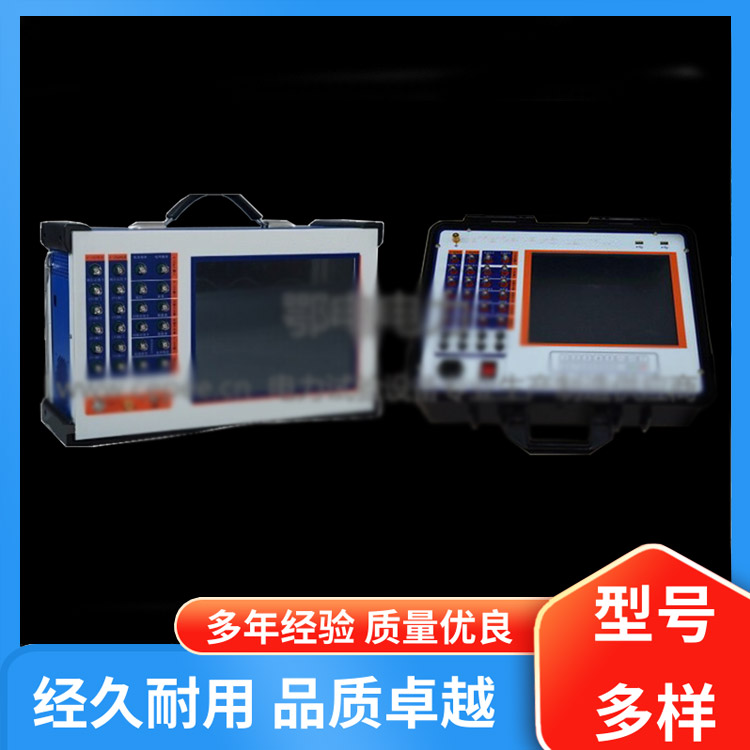
Cable Fault Tester, capable of testing35KVThe high-resistance flashover, leakage, low-resistance, short-circuit, and open-circuit faults of various types of cables at the following voltage levels.
The Cable Fault Tester features a cabinet structure and a touch screen operation interface, with all function keys displayed intuitively on the screen. Users can directly operate via the touch screen. It has waveform storage capabilities, allowing for the storage of a large number of field test waveforms for easy retrieval and side-by-side comparison. The testing interface is simple and clear, with function keys defined in a straightforward manner, and the measurement methods are simple and quick.

Technical Description
Key Technical Indicators:
1.Testing Methods: Low-voltage pulse method, high-voltage corona method.
2.Technical Specifications
Test Distance: For the low-pressure pulse method, the test distance is measured.60KmDuring the high-voltage flashover test, the large test distance40Km。
System Test Accuracy: Less than20cm。
Pulse Amplitude: Load Impedance50Ω time is not less than250Vpp。
Length Options: ﹤1KM、 ﹤3KM、>3KMThree.
Sampling Frequency: 6Mhz、12 Mhz、24Mhz、48 Mhz 96 Mhz 192Mhz
Reading Resolution: 1m
Pre-set5The propagation speed of electromagnetic waves through cable mediums: oil-impregnated paper, non-dripping:160m/μsCross-linked polyethylene172m/μsPolyvinyl Chloride (PVC)184m/μsThe propagation speed of radio waves in other types of cables is also set automatically.
For other types of cables, the machine's speed measurement function can determine the propagation speed of electromagnetic waves within the cable after entering the known full length of that cable type.
3.Sampling Methods: Current Sampling, Voltage Sampling.
4.Work Conditions: Temperature-20 +55ºCRelative humidity90%。
5.Volume:430×300×190mm。
6.Weight: Approximately10kg。
Test Principles:
Cable faults are generally categorized into two major types: short-circuit, open-circuit, low-resistance faults, and high-resistance arc-over, leakage faults. According to the principle of radar ranging, a pulse signal is emitted towards the cable from the testing end. At points of characteristic impedance mismatch, a reflected wave is produced. The incident and reflected waveforms are then captured and displayed on the screen, with two digital cursors placed at the two characteristic inflection points of the waveform. By measuring the speed of the electromagnetic wave in this type of cable, the distance from the fault point to the testing end can be calculated.
S = VT / 2
SFault point distance from the testing end.
VThe propagation speed of waves through cables.
TThe time it takes for radio waves to travel back and forth between the cable test end and the fault point.
Please provide the Chinese content to be translated.VNo Chinese content provided.TUnder the current circumstances, calculations can be made.SJust place the dual electronic cursors at the characteristic inflection points of the waveform, and it will automatically complete.


www.114global.com © Zhongshang 114 Hebei Network Technology Co., Ltd.Address: Room 6009, Oriental New World Center, No.118 East Zhongshan Road, Qiaoxi District, Shijiazhuang City, Hebei ProvincePlatform Service Hotline: 4006299930