Environmental equipment, instruments and meters, robots, ...

Five Key Features of the Instrument:
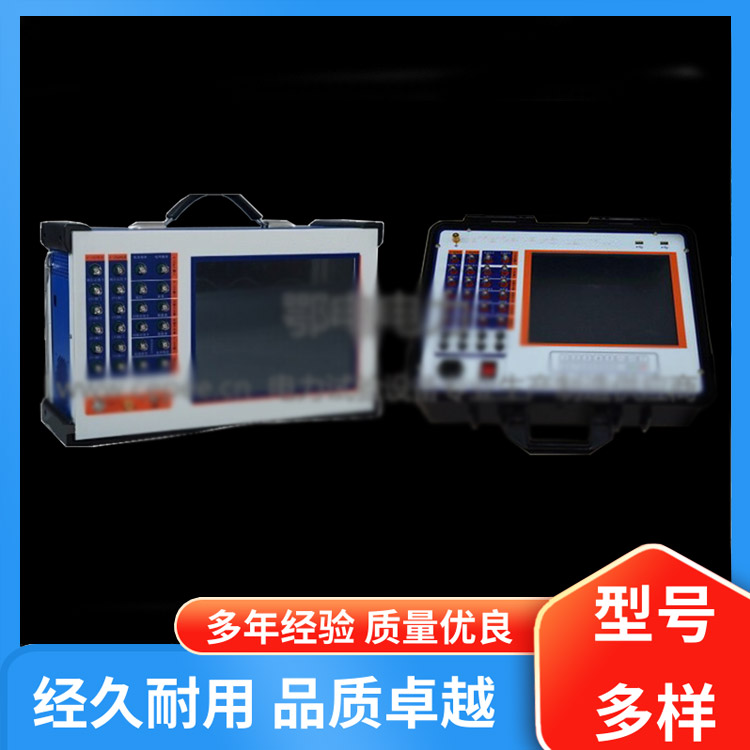
The domestically exclusive, full-digit, multi-functional cable detection comprehensive machine.
Resolved the routing难题 for operational cables that could not be addressed domestically.
Identify damage to the sheath of buried cables causing ground faults and open circuit failures.
Identify the desired cable among multiple live cables.
Charging batteries are configured to complete all tests without the need for municipal electricity.

Locating cable routing paths
The DTY-2000 can easily solve the issue of finding the path of live cables. Clamp the measurement coupling on the cable to be tested, and the transmitter generates a coupling signal on the target cable through the coupling clamp. The transmitter's signal can be received along the cable path. This method can detect cables longer than 3 kilometers. The instrument receiver can also detect the 50Hz frequency signal of operating cables. This working method is very practical for distinguishing between live and non-live cables, as it does not require a transmitter.
Blind Testing of Underground Cables
In certain situations, operators may not be able to access the cable for direct connection or the use of a coupling clamp. In such cases, the transmitter's built-in inductive antenna can be used to emit the output signal, which is then sensed on the underground cable being tested for location detection. This method can detect cable depths of at least 2 meters.
Locating Faults in Direct-Buried Cables
The DTY-2000 Underground Cable Tester can apply the step voltage method to identify cable faults with insulation resistance to ground less than 2MΩ; it can also use the signal strength method to determine open circuit and short circuit faults. The DTY-2000 revolutionizes the traditional concept of cable fault location, eliminating the need for high-voltage testing equipment, AC power supply, or waveform analysis. The wiring is simple and intuitive, making it easy to use with a quick learning curve.
Cable Identification for Operation
Identifying live cables: Clamp the transmitter onto the cable using a transmission coupling clip, and at the exposed end of the other cable, connect the receiver using a reception coupling clip and clamp it onto the cable. At this point, the signal strength can determine which cable is the live signal cable. (This method requires an additional special reception clip.) When the receiver, reception clip, and transmitter are used together, they can be employed to identify the live status of the cable.


www.114global.com © Zhongshang 114 Hebei Network Technology Co., Ltd.Address: Room 6009, Oriental New World Center, No.118 East Zhongshan Road, Qiaoxi District, Shijiazhuang City, Hebei ProvincePlatform Service Hotline: 4006299930