Environmental equipment, instruments and meters, robots, ...

1Summary
Isolation switches are high-voltage switchgear widely used in the power system due to their high volume of usage and broad application range. As the only outdoor isolation switches....Electrical equipment that is fully exposed to the atmospheric environment and directly affected by environmental and climatic conditions operates under harsh conditions, making it prone to mechanical or electrical failures. Particularly, the contact parts are susceptible to damage from rain, dust, and harmful gases, leading to poor contact and overheating. The springs providing contact pressure may soften and lose tension due to overheating, exacerbating the overheating and creating a vicious cycle that can eventually burn out the contacts and cause accidents. During maintenance, attention is often focused on replacing visibly failed or broken springs, but those with reduced pressure are often overlooked. As a result, during subsequent operation, the distribution of current among the contact fingers varies due to differing pressures, with greater differences leading to uneven current distribution. Over time, this can cause poor contact and overheating. The overheating of the contact fingers can lead to a cascade of poor contact throughout the entire contact point. Additionally, many isolation switches have adjustable contact finger pressures. If the pressure is not adjusted adequately during maintenance or if there are differences in the adjustment pressure for each finger, the aforementioned issues can arise.
Currently, the vast majority of maintenance personnel judge the quality of contact in the conductive parts by measuring their loop resistance, believing that if the loop resistance is within the acceptable range, the maintenance work on the conductive parts can be completed successfully. However, this is not the case. The loop resistance values provided in the product manual are for the entire conductive loop, including the bulk resistance and contact resistance of components such as terminal blocks, conductive tubes, and contact tips, which have a wide range and ample margin. They do not directly reflect the changes in contact resistance but only indicate the conductivity of the loop. Tests have shown that the loop resistance values for both two and four pairs of contact tips are within the acceptable range. Similarly, the pressure applied to the contact tips does not significantly affect the loop resistance values.
Throughout various maintenance procedures and standards, there are regulations regarding the measurement of contact finger pressure. The recommended tool for measurement is a spring scale. In practical work, measuring contact finger pressure at high altitudes with a spring scale is not only inconvenient and inaccurate but also unsafe. For some structures, such as scissor-type disconnect switches, the contact finger pressure cannot be measured with a spring scale at all. Therefore, the requirement to measure contact finger pressure is merely a theoretical statement.
In response to the current maintenance status of the power supply system, our company has independently developed an intelligent finger pressure detector for measuring the contact pressure of isolator fingers. By simply opening the sensor of the simulated contactor at each contact position of the pair of fingers, it can display and remember the contact pressure at that moment. This effectively solves a major challenge in measuring finger pressure. Additionally, it can automatically compare the test values with pre-set standard values to draw relevant conclusions and guide maintenance, based on the set standards. The instrument has been granted a national patent.
This instrument can also be used by switchgear manufacturers to inspect the pressure on contact fingers. Changing the shape of the pressure sensor can also measure the contact finger pressure of circuit breakers.
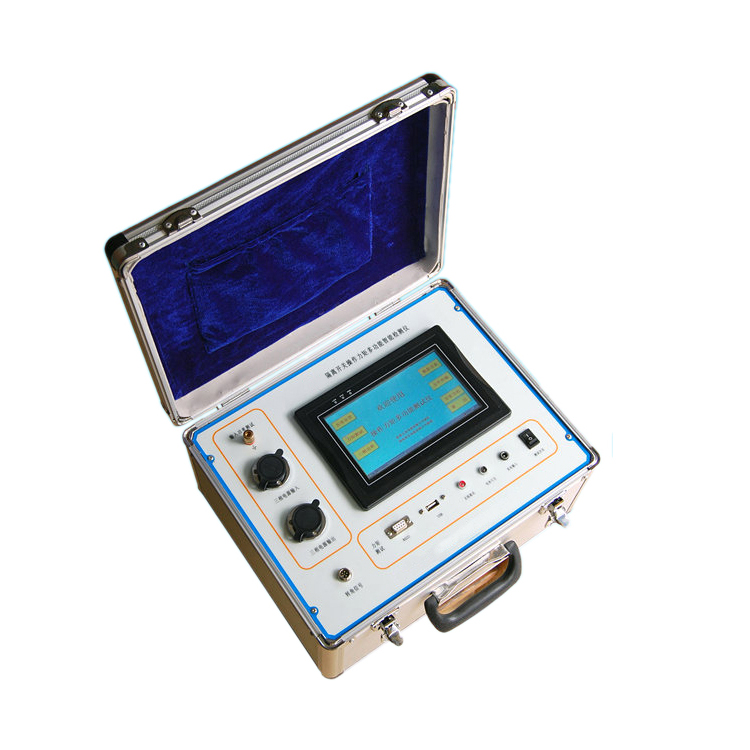
2Key Technical Parameters and Main Functions
1Key Technical Parameters
a.Power Voltage:AC 220 V
b.Power Dissipation: ≤20 W
c.Measurement Range: SensorA ≤980 N(No Chinese content provided.)SensorB ≤2000 N(No Chinese content provided. Please provide the text to be translated.)Signal Line6Mi.
d.Measurement Error: ±3% N
e.Display Format:7Touchscreen tablet computer, Chinese menu, Chinese input.
f.Communication Method:USB、RS232Serial Port (for software upgrades, not yet activated)
g.Work Power: Lithium-ion Battery24VCharging Power Supply:AC220V±10%,50Hz
h.Major Storage Milestone:20000Taiwanese Isolation Switch Data.
i.Work Environment: Temperature -10℃~40℃; Humidity ≤80 %RH。
2 Primary Functions
a.Could measure and preserve the current domestic100kVAll structural types of isolation switch contact pressure can be compared with standard values and historical data, leading to corresponding conclusions to guide maintenance work.
b.Measurement data can be uploaded to the computer and automatically converted intoWORD、EXCELThe document is provided for statistical and analytical purposes.
c.Automatically generate test reports within the computer-specific tool software environment.


www.114global.com © Zhongshang 114 Hebei Network Technology Co., Ltd.Address: Room 6009, Oriental New World Center, No.118 East Zhongshan Road, Qiaoxi District, Shijiazhuang City, Hebei ProvincePlatform Service Hotline: 4006299930