
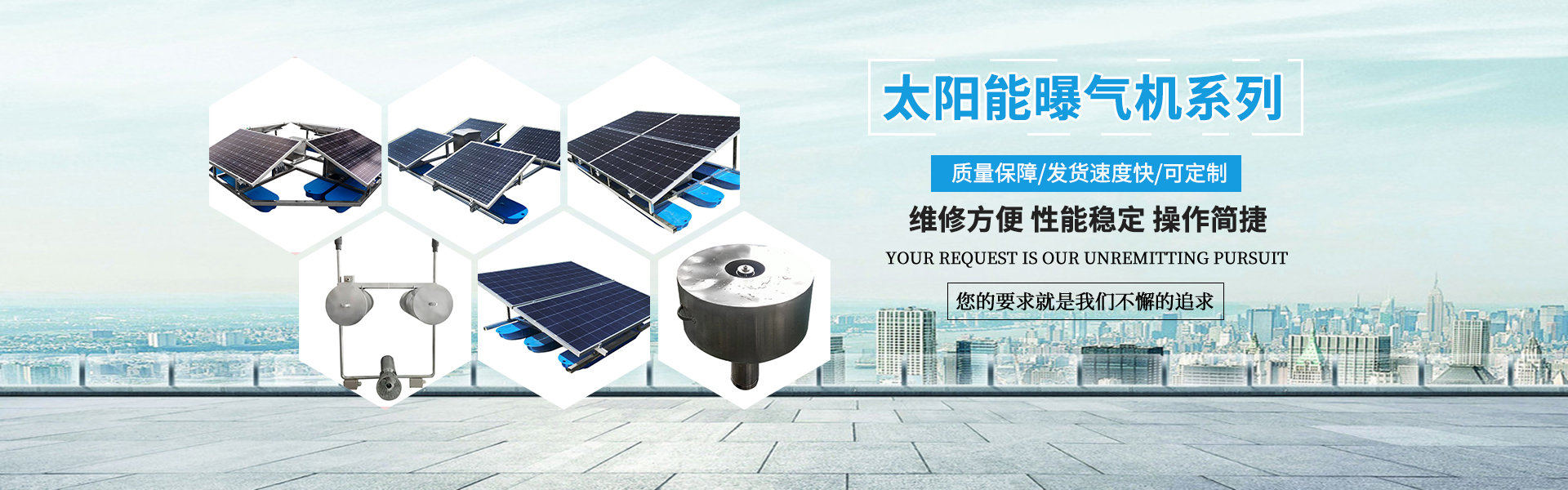


Mechanical Aeration
A method that utilizes mechanical equipment to thoroughly mix wastewater and sludge in an aeration pond, continuously refreshing the surface of the mixed liquid, and contacting it with air to increase the dissolved oxygen in the water. This aeration method is simple in equipment, convenient for maintenance and management, but it consumes a lot of energy, is prone to foam and dead spots, and is difficult to repair, thus it is only commonly used in smaller aeration ponds and has not been widely adopted.
2. Aeration and air blowing
Compressed air aeration involves supplying a certain airflow from blowers, which then send air through pipes to aeration devices installed at the bottom of a pond. These devices create bubbles of various sizes. The bubbles form at the aeration device's outlet, rise and flow, and burst at the water surface, facilitating the transfer of oxygen to the wastewater. Blower aeration typically requires the construction of a blower room and the installation of aeration piping, and the aeration heads are prone to clogging. Large oxidation ponds require significant power to operate, but due to their lower energy consumption compared to surface aeration and simpler maintenance, they are widely used.
Jet Aeration
Jet aeration devices enhance oxygen transfer efficiency by slicing and粉碎ing the air introduced by blowers into microbubbles through high-speed jet streams, allowing for thorough mixing and contact between the mixed liquid and the microbubbles.
The main advantages of jet aeration include its convenient and efficient operation, simple system design, reliable performance, ease of installation and maintenance, and wide application range. However, jet aeration also has various drawbacks, such as the difficulty in adjusting oxygen content and requirements for pool depth.
In addition to the aforementioned aeration methods, other commonly used aeration techniques in wastewater treatment include pure oxygen aeration, submersible aeration, and strong flow aeration.
