
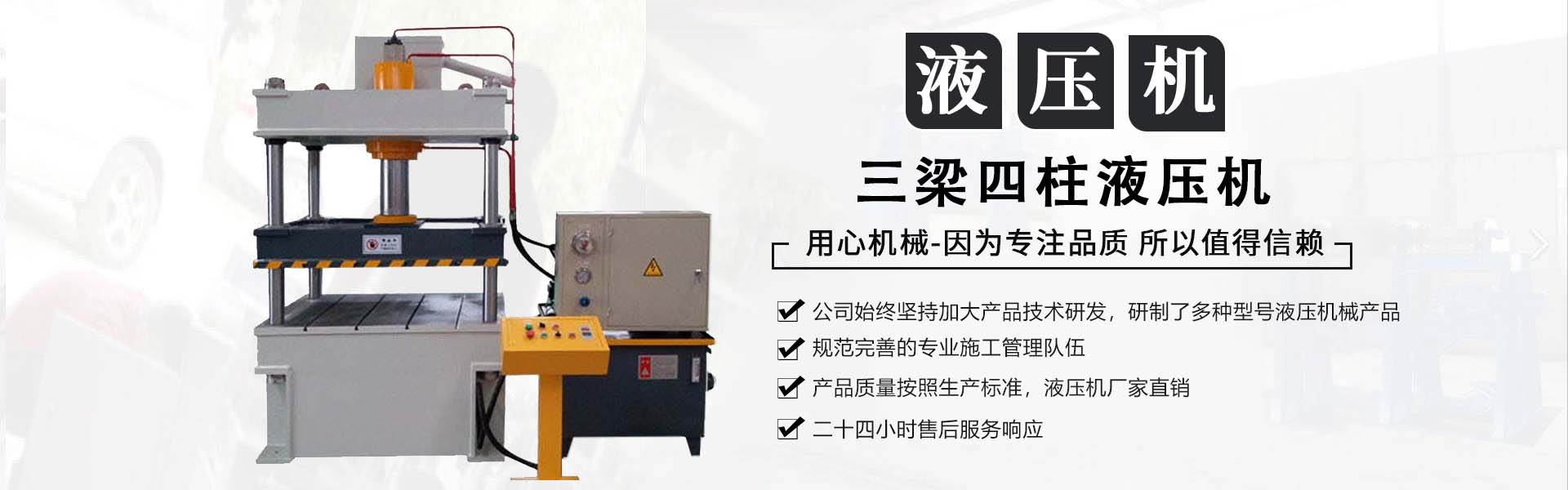
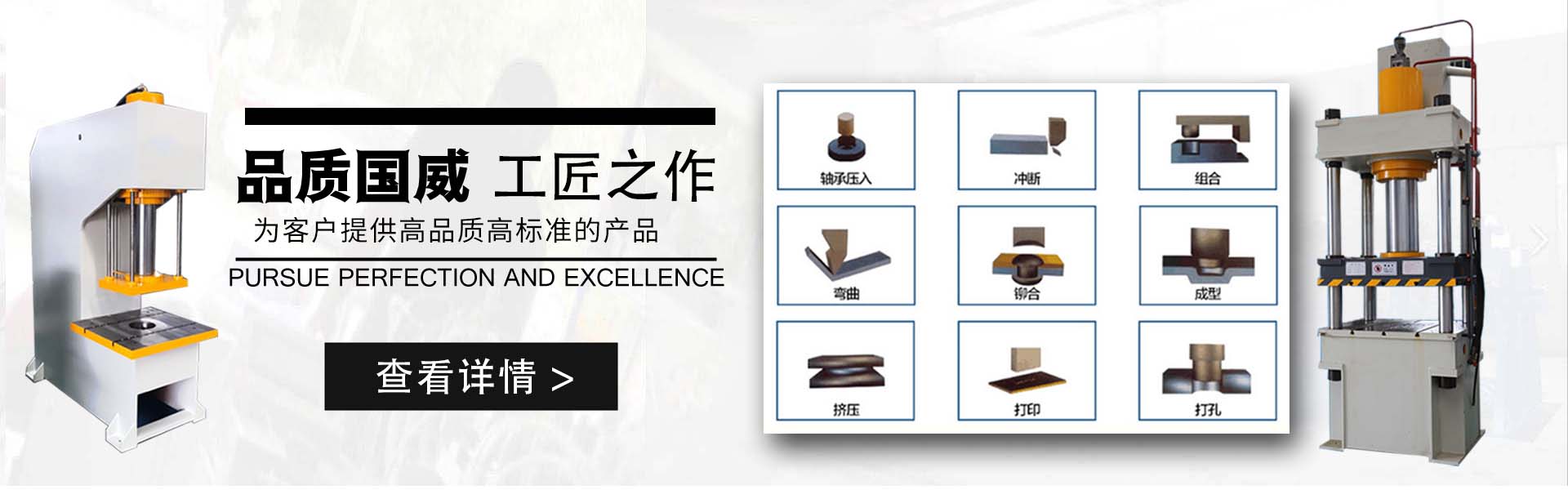
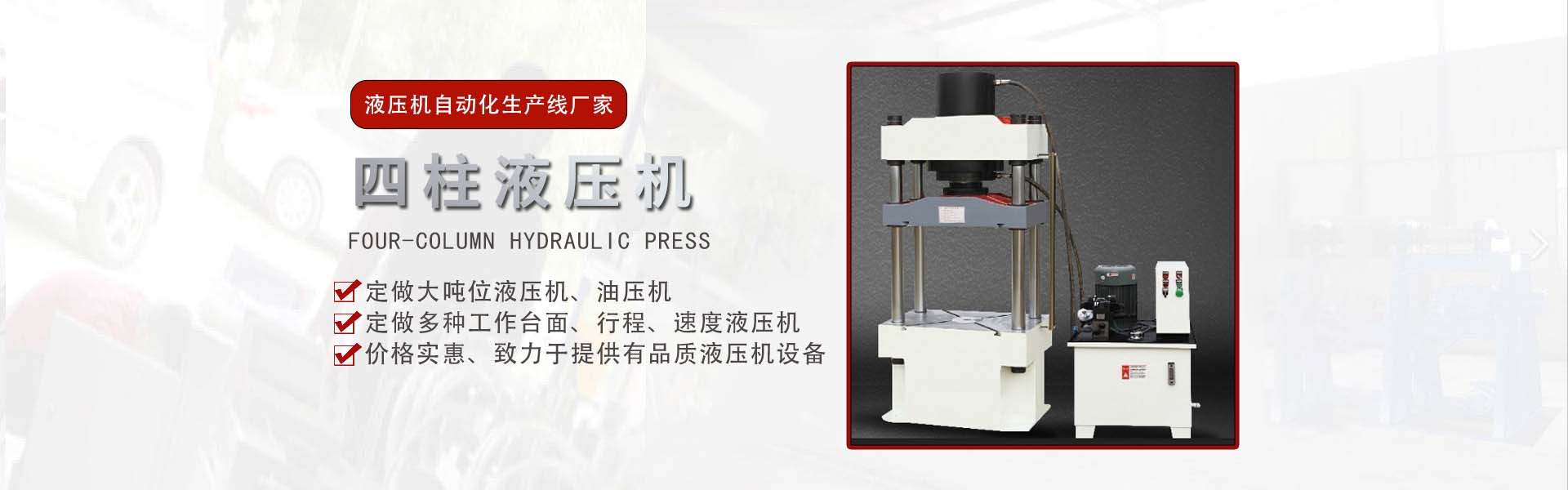

The four-column hydraulic press is a machine that uses hydraulic oil as the working medium and a hydraulic pump as the power source. It drives hydraulic oil through hydraulic pipelines into the cylinder/piston, where there are several sets of sealing elements that work together. The seals at different positions are different, but they all serve the purpose of preventing oil leakage. The conversion of hydraulic energy into mechanical energy is achieved through hydraulic transmission, which utilizes liquid pressure to transmit power and control. A hydraulic system consists of a hydraulic pump, hydraulic cylinder, hydraulic control valve, and auxiliary hydraulic components.
What safety protection devices are included in the hydraulic system of a four-column hydraulic press?
(1) The four-column hydraulic press features a cylinder that rises to the top position with support functionality. This design facilitates the safe removal of compressed workpieces, reduces the physical strain on operators, and enhances operational efficiency.
(2) The system features a pre-decompression function. After the pressure maintenance is completed and the main cylinder does not move upwards, the pre-decompression function can release the pressure in the upper chamber of the four-column hydraulic press main cylinder in advance, effectively reducing pressure surges and preventing noise pollution.
(3) When the four-column hydraulic press' ejector cylinder pushes the workpiece downward, due to the weight of the cylinder, the descent speed is fast, which may cause a vacuum in the upper chamber of the cylinder. At this time, quick oil replenishment can be achieved through the suction valve.
(4) The four-column hydraulic press system is equipped with a filtration device and an oil temperature alarm, which can promptly detect the quality and temperature of the oil, preventing abnormal conditions during operation.

