
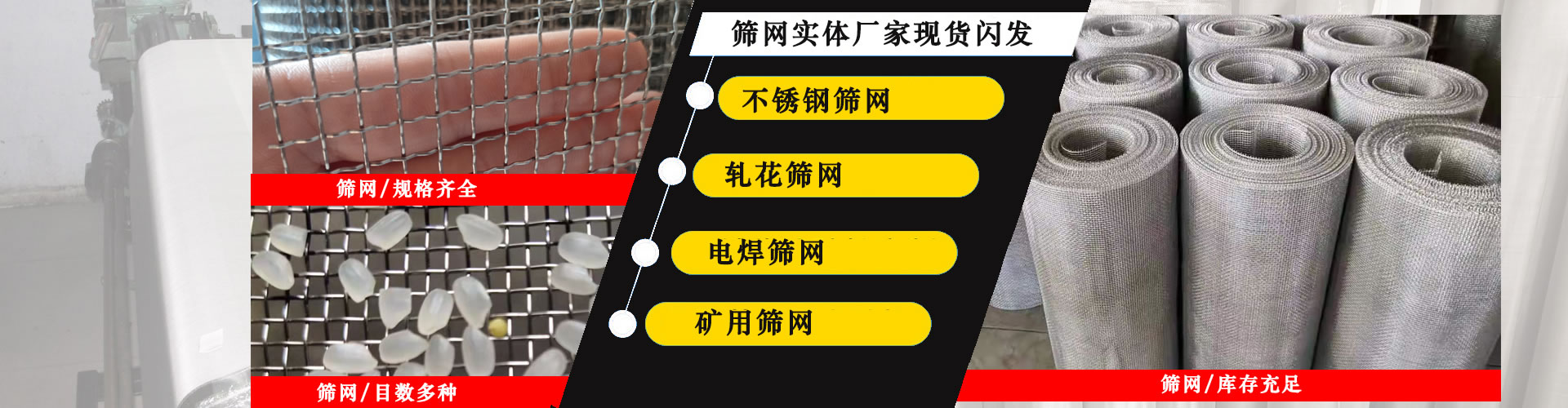
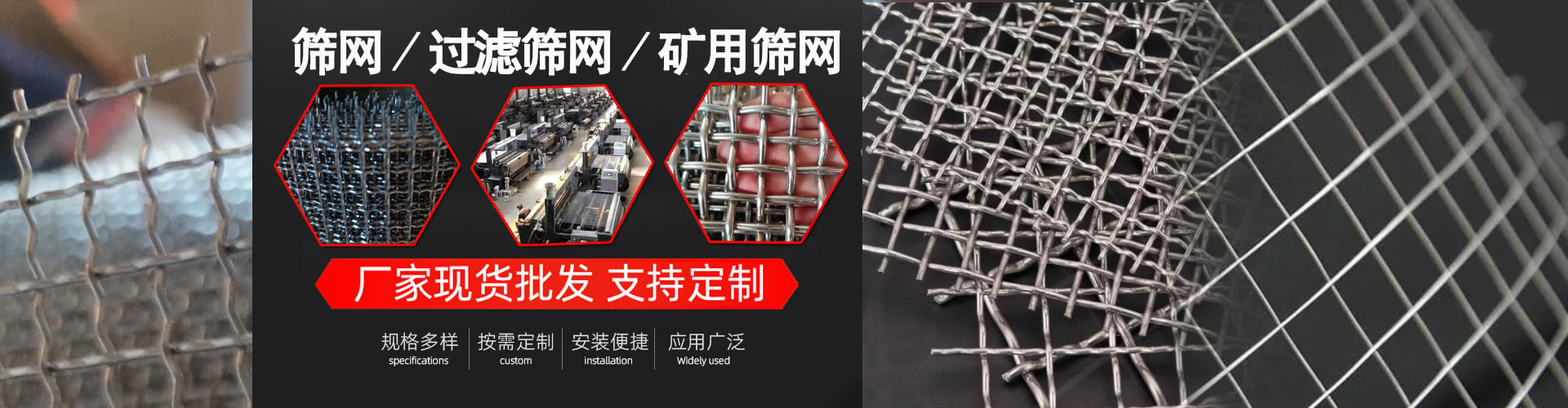
The sieve is made from 304, 304L, 316, and 316L stainless steel perforated sheet, woven wire mesh, and welded wire mesh, which are pressed into sheets using die presses. It is then assembled by combining different mesh sizes of metal wire with support wires, followed by a finishing process. It is primarily used for precise filtration in the petrochemical industry.
1. The stainless steel rimmed filter mesh boasts the pressure and tensile strength of stainless steel. 2. The product is cut from rimmed filter mesh, thus featuring resistance to acids, alkalis, high temperatures, and wear. 3. Precision molding ensures the product has no burrs and high accuracy, making it more secure during installation and use. 4. The rimmed stainless steel filter mesh is woven by advanced CNC looms, offering evenly distributed mesh holes for high filtration precision.
Stainless steel wire mesh has always been a favorite among consumers, particularly for its corrosion and rust-resistant properties. The smooth, glossy surface of stainless steel wire mesh does not rust and can withstand harsh weather conditions. Such a superior product requires special processing, and it is the heat treatment that imparts its unique characteristics to the stainless steel wire mesh.
Combining elements such as heat treatment temperatures, holding times, and cooling criteria is crucial in this context. Additionally, the heat treatment criteria significantly affect the shear strength of stainless steel mesh, such as the 1Crl8Ni8T1+16Mn mesh. When the heat treatment temperature exceeds 400 degrees, the coarse grain structure leads to a marked decrease in shear strength. However, the impact toughness, bending properties, and elongation can be notably improved with increasing heat treatment temperatures. Conflicts with the heat treatment criteria of carbon steel are inevitable, such as the low-carbon duplex 00Crl8Ni5M.3512 and 00Cr22Ni5M03N, which, upon prolonged residence below 950 degrees, tend to precipitate Fe-Cr intermetallic phases with brittle characteristics. This severely deteriorates the ductility and intergranular corrosion resistance of stainless steel. Carbon structural steel typically has a normalizing temperature around 890 degrees, and prolonged overheating can lead to coarse grain structure and reduced toughness.


通过中商114认证