

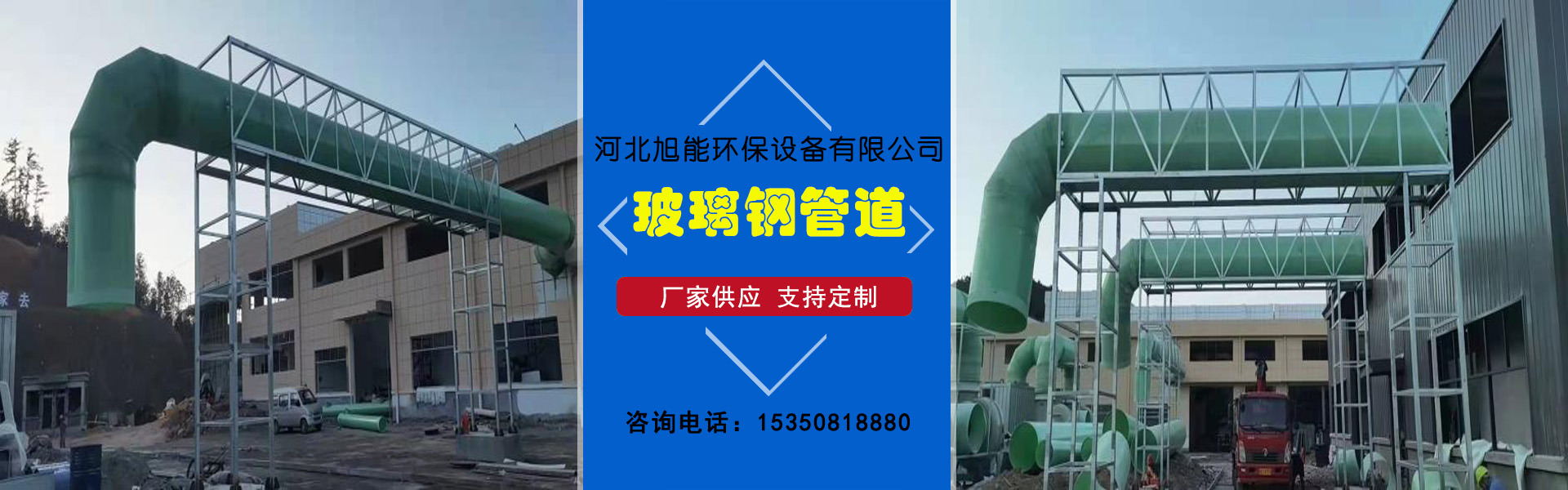

Fiberglass ductwork is a lightweight, non-metallic piping material that boasts strength and good corrosion resistance. It is made by wrapping glass fiber, based on a resin matrix, layer by layer around a rotating mandrel according to process requirements, and uniformly laying quartz sand as a sand-laying layer between the fibers. The design of the fiberglass ductwork is advanced, with a reasonable structure, thus fully utilizing the material's characteristics and functions.
Fiberglass ducts have garnered widespread consumer favor due to their inherent excellent properties.
Excellent corrosion resistance properties
Glass fiber reinforced plastic (GFRP) ducts can transport corrosive gases without concern for damage to the GFRP ducts. There's no need for cathodic corrosion protection or other anti-corrosion measures for GFRP ducts, ensuring no secondary pollution when transporting water or other media. Due to their corrosion resistance, GFRP ducts have a longer lifespan, typically lasting over 20 years.
Unfazed by harsh conditions
Glass fiber reinforced plastic (GFRP) ducts, due to their material properties, are both heat-resistant and frost-resistant, allowing them to operate effectively in harsh environments.
Comprehensive costs for glass fiber reinforced plastic (FRP) ductwork are low, yet their benefits are substantial. Larger diameters of FRP ducts lead to lower costs and extended service life. Moreover, since they don't require annual maintenance, FRP ducts can fully capitalize on their overall benefits.
Lightweight and strong
Glass fiber reinforced air ducts are significantly lighter than cement pipes of the same size and length, weighing only 1/10 as much. Due to their light weight, glass fiber air ducts are easy to transport and install.
Single pipeline length is long
Glass fiber reinforced plastic (GFRP) ducts, when compared to their length, can significantly reduce pipeline joints. With an effective length of up to 12 meters, GFRP ducts can cut the number of joints by two-thirds compared to concrete pipelines. The reduction in pipeline joints not only enhances the overall quality of the pipeline but also effectively speeds up installation, with the construction period reduced by one-third when compared to pipelines made from other materials.
Inner wall of the pipe is smooth
Fiberglass ducts have a smooth inner wall, reducing the flow resistance of transported materials, thereby enhancing flow velocity and lowering energy consumption. Compared to steel pipes of the same size, fiberglass ducts can increase fluid flow by about 10%. They also leave no fluid residues on the inner pipe wall over time, preventing scaling and maintaining consistent flow rates. Additionally, they offer effective cable protection even in harsh and corrosive environments.


通过中商114认证