
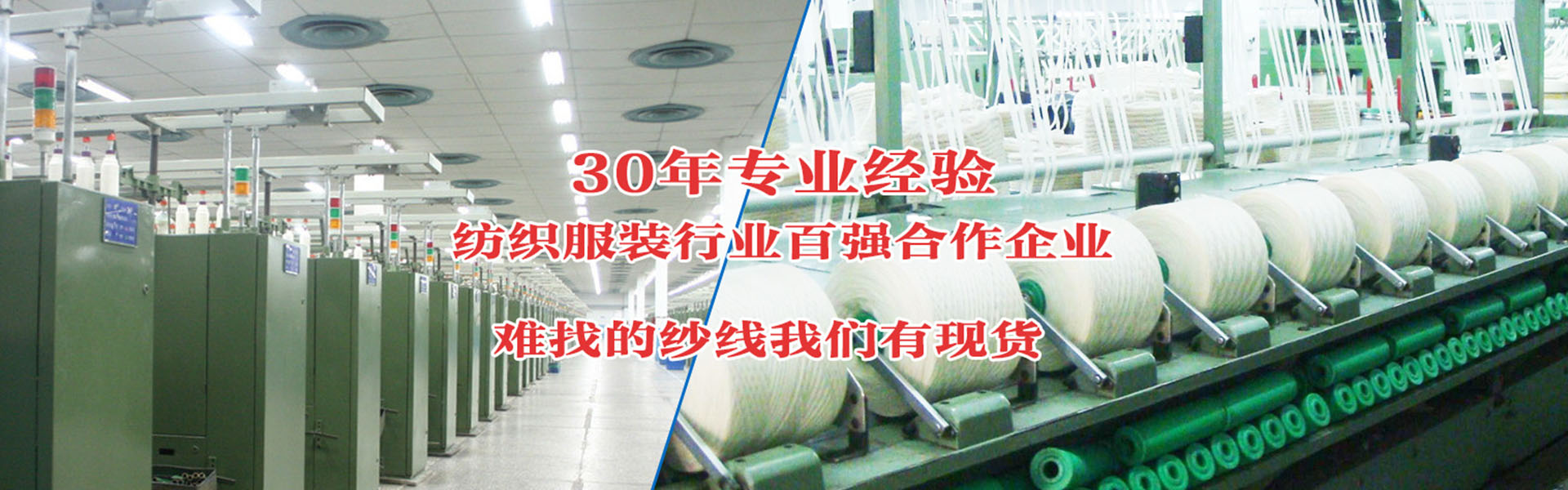
High twist, low twist, untwisted, high tenacity, vortex spun, reverse twist, and bamboo yarns, among other "specialized, refined, and innovative" yarn varieties. Offering fine cotton (BCI), organic cotton (GOTS, OCS), recycled cotton, polyester (GRS), African cotton, and Pima cotton yarns with certifications. Hard-to-find yarns, we have them in stock.
Henan QiangNian (Wei Shu He Sheng) Product Hotline: 13903781186, Mr. Liu
Reasons affecting shrinkage rate:
1. The raw materials of the fabric vary, resulting in different shrinkage rates. Generally speaking, fibers with high moisture absorption tend to shrink more when soaked in water.
Post-fiber expansion, with increased diameter and reduced length, the shrinkage rate is greater. For instance, some viscose fibers have a high water absorption rate of
13%, while synthetic fiber fabrics have poor moisture absorption, resulting in lower shrinkage rates.
2. The shrinkage rate varies with the density of woven fabrics. For instance, if the warp and weft densities are similar, their respective warp and weft shrinkage rates...
Yarn density affects shrinkage: fabric with higher yarn density experiences greater lengthwise shrinkage, while fabric with higher weft density than warp density experiences greater crosswise shrinkage.
Water is abundant.
3. The shrinkage rate varies depending on the fineness of the yarn and the type of fabric. Fabrics with coarser yarn tend to have a higher shrinkage rate, while those with finer yarn exhibit less shrinkage.
The shrinkage rate is minimal.
4. The production process of fabric varies, leading to different shrinkage rates. Generally speaking, the fabric experiences different levels of shrinkage during weaving and dyeing processes.
During the process, the fiber must be stretched multiple times, resulting in a longer processing time. The fabric with greater tension tends to shrink more, while the opposite is true.
No content provided.
5. Natural plant fibers (such as cotton, linen) and regenerated plant fibers (such as viscose) versus synthetic fibers
Compared to materials like polyester or acrylic, wool tends to absorb moisture and expand more easily, resulting in a higher shrinkage rate.
The surface scale structure is prone to felting, affecting its dimensional stability.
6. Generally speaking, woven fabrics tend to have better dimensional stability than knitted fabrics; high-density woven fabrics have superior dimensionality.
The stability of the inch is superior to that of low density. In woven fabrics, the shrinkage rate of plain weave is generally less than that of flannel.
In knitted fabrics, the shrinkage rate of plain weave is less than that of rib weave.
7. The production and processing process is inevitably affected by the fabric during dyeing, printing, and finishing stages.
The stretching of the yarn creates tension within the fabric. However, the fabric easily releases tension when it comes into contact with water.
We notice that the fabric shrinks after washing. In the actual production process, we typically use pre-shrinking to address this issue.
Subject:
8. The Laundry and Care Process - The laundry and care process includes washing, drying, and ironing. Each step affects the fabric...
The shrinkage of materials. For instance, the size stability of hand-washed samples is superior to that of machine-washed samples, and the washing temperature also plays a role.
The impact on the size stability is significant. Generally speaking, the higher the temperature, the poorer the stability. The drying method of the samples affects the fabric.
The shrinkage rate's impact is significant as well.
Common drying methods include dripping air-drying, flat metal mesh method, hanging drying, and drum drying.
The droplet drying method has minimal impact on the dimensions of fabrics, whereas the drum arch drying method has a significant effect on them.
Two in the middle.
Additionally, selecting an appropriate ironing temperature based on the fabric's composition can also improve the fabric's shrinkage.
For instance, cotton-linen fabrics can be improved in their shrinkage by high-temperature ironing. However, not the higher the temperature, the better...
High temperatures during ironing not only fail to improve the shrinkage of synthetic fibers but can also degrade their performance.
Issues such as the fabric becoming hard and brittle.
High tenacity yarn, low tenacity yarn, untwisted yarn, high strength yarn,涡流纺yarn, reverse twist yarn, bamboo yarn, and other "specialized, refined, unique, and innovative" yarn varieties. Offering fine cotton (BCI), organic cotton (GOTS, OCS), recycled cotton, polyester (GRS), African cotton, and Pima cotton yarns, as well as certificates. Hard-to-find yarns, we have stock.
Henan QiangNian (Wei Shu He Sheng) Product Hotline: 13903781186, Mr. Liu