
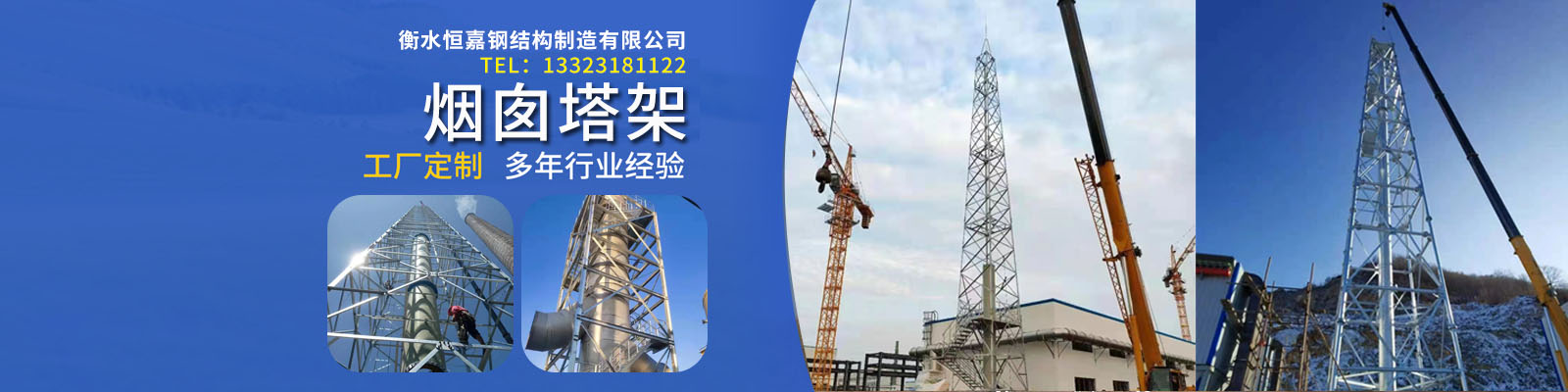
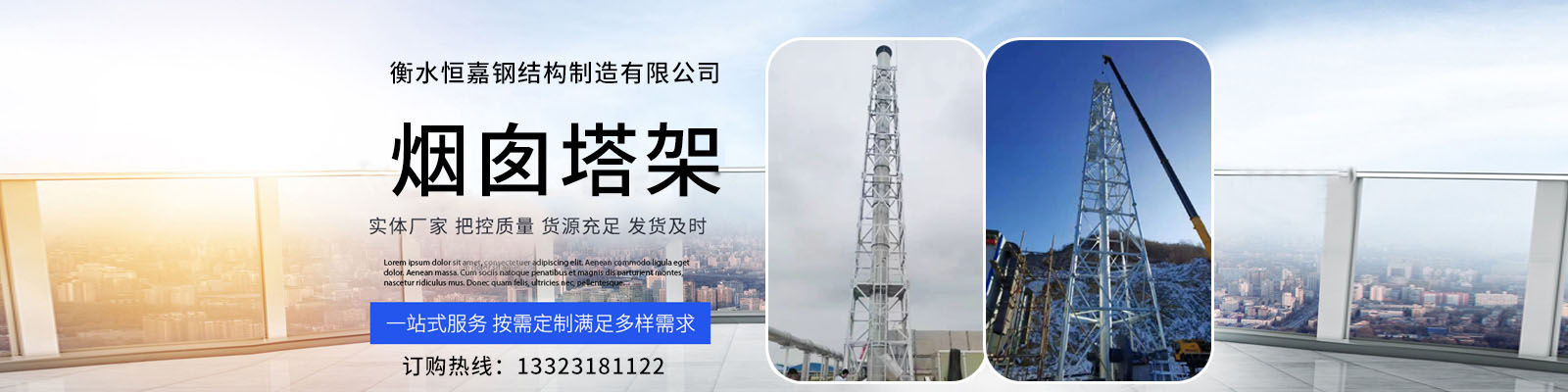

The chimney tower serves as a support structure for chimney supports, exhaust gas emission towers, and auxiliary chimney support towers. It primarily uses a steel structural frame to support the supported pipe bodies, with structural forms including self-supporting and guyed types. The external steel structure mainly provides fixed support for glass fiber reinforced plastic and other composite desulfurization towers, as well as serving the function of the chimney. It also offers an installation and control platform for desulfurization towers, chimney entry holes, observation ports, and flue gas online monitoring systems. The external steel structure preferably uses a rotating staircase for easy maintenance and inspection of the desulfurization tower (chimney). It is commonly used in chemical enterprises, oil departments, and flammable gas emissions. The "chimney tower" is also known as the "flame tower" and is mainly used to burn off the flammable gases produced during the production process of oil, petrochemical, refining, refining, natural gas, fertilizer, and chemical industries. These gases are often toxic, harmful, flammable, and explosive, posing certain risks. After transforming these gases into non-hazardous ones, they are released into the atmosphere.Section II: Product Categories:High-Flying TorchHeights typically range from several dozen meters to over one hundred meters. Currently, an ultra-high-altitude torch of one hundred and eighty meters has been put into production and operation domestically.By construction type: Elevated Torch (Tower Torch), Self-Supporting Torch, Rope Pull Torch.2. Ground Torch:The main reference is to a closed flue gas combustion unit with burners set on the ground and surrounded by enclosed structures. High-altitude torches are cost-effective but require more space, while ground torches are the opposite.
News Center Co., Ltd.
