

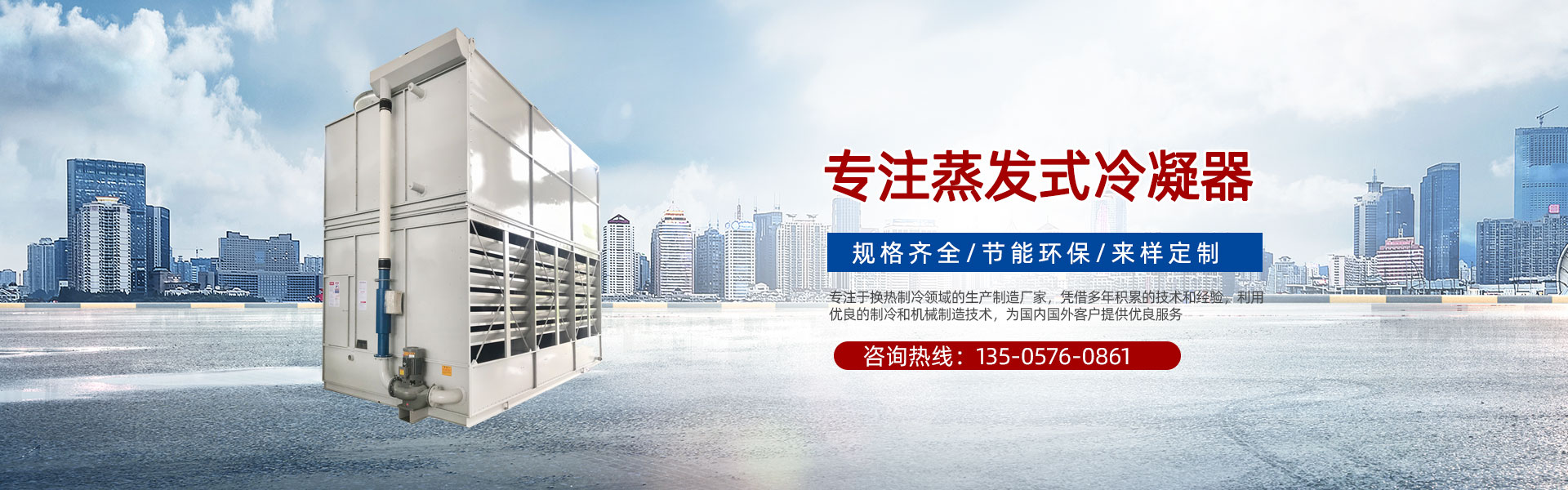
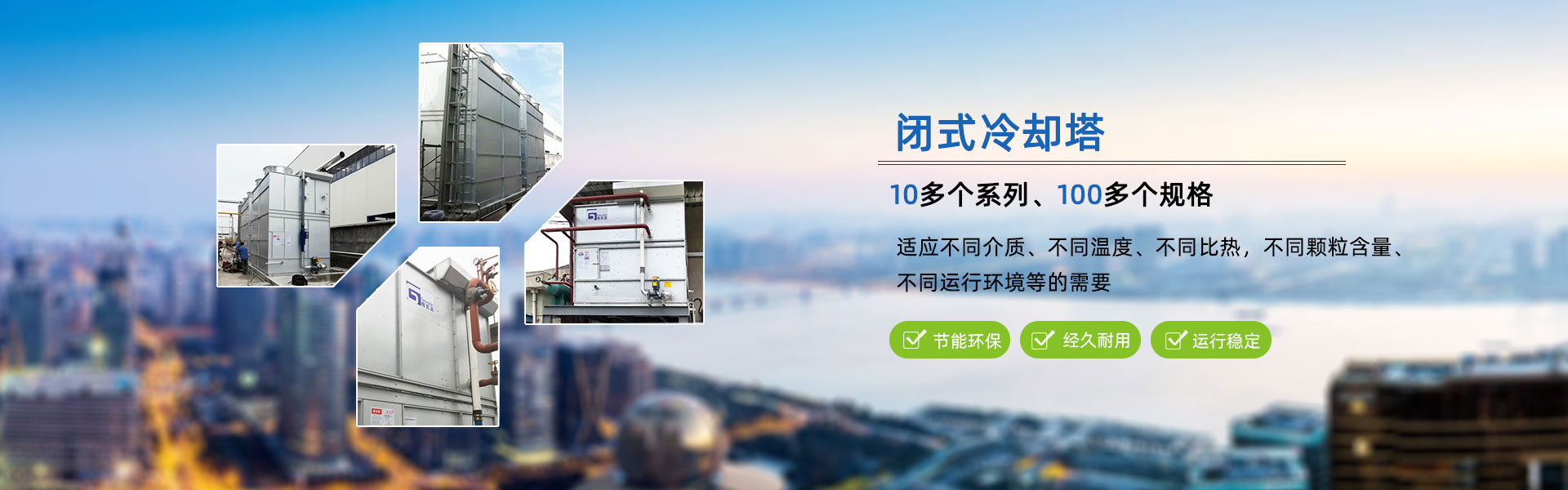

Evaporative condensers are a crucial piece of equipment in the refrigeration industry, primarily responsible for cooling the high-temperature exhaust steam, converting it from a gaseous to a liquid state. The working quality of evaporative condensers under refrigerant action remains highly reliable. In fact, since the last century, many developed countries have begun to phase out traditional water condensers and have started using evaporative condensers as the main component of cooling systems for a variety of refrigeration needs. In recent years, the Chinese market has also felt the powerful impact of condensers and they are now being applied in refrigeration systems for refrigerators, air conditioners, industrial freezers, and more.
Do you know the outstanding advantages of an evaporative condenser?
It offers water-saving capabilities. Traditional water-cooled condensers consume vast amounts of water. Additionally, the condenser can save water resources to some extent by using vaporization to absorb heat, with consumption being just one percent of that of traditional water-cooled condensers. This significantly reduces our water usage.
Performance advantages include energy-saving effects. The surrounding wet bulb temperature affects the evaporator condenser, while the air-cooled condenser impacts the drying temperature. Generally speaking, we can observe that the condensation temperature of evaporative condensers is lower than that of air-dry condensers. An increase of 1 degree in condensation temperature will lead to a 3% to 3.5% increase in refrigeration energy consumption. It is clear, therefore, that evaporative condensing equipment has higher refrigeration energy consumption than air-dry condensers, demonstrating significant energy-saving benefits.
An additional simple structure is included. The evaporative condenser does not require an extra cooling tower, taking up less space overall, making installation more convenient, and also reducing our maintenance workload.
