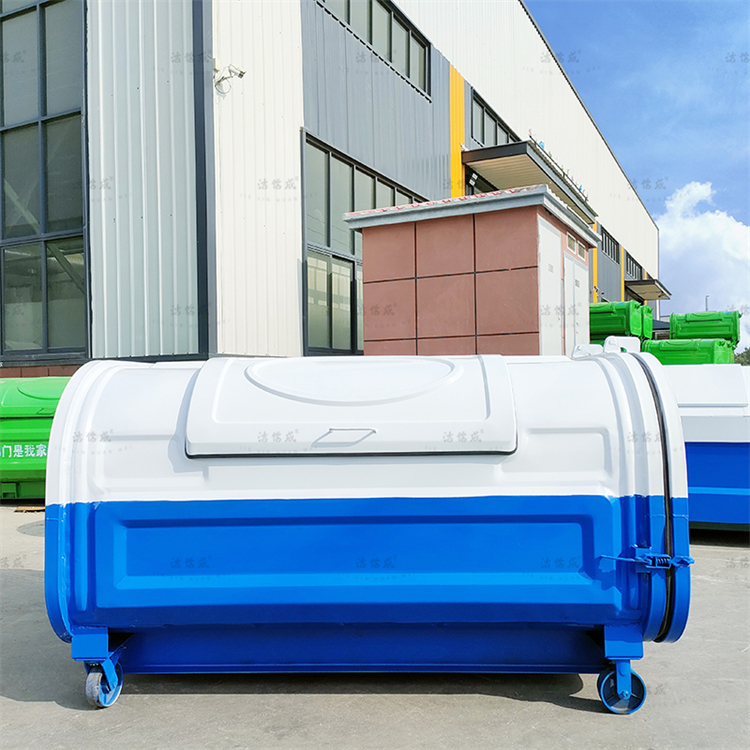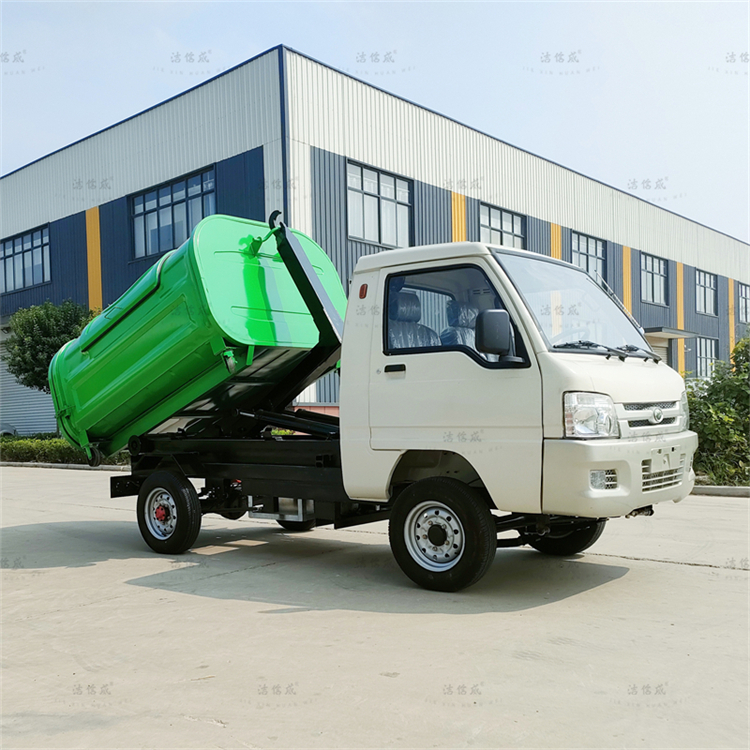
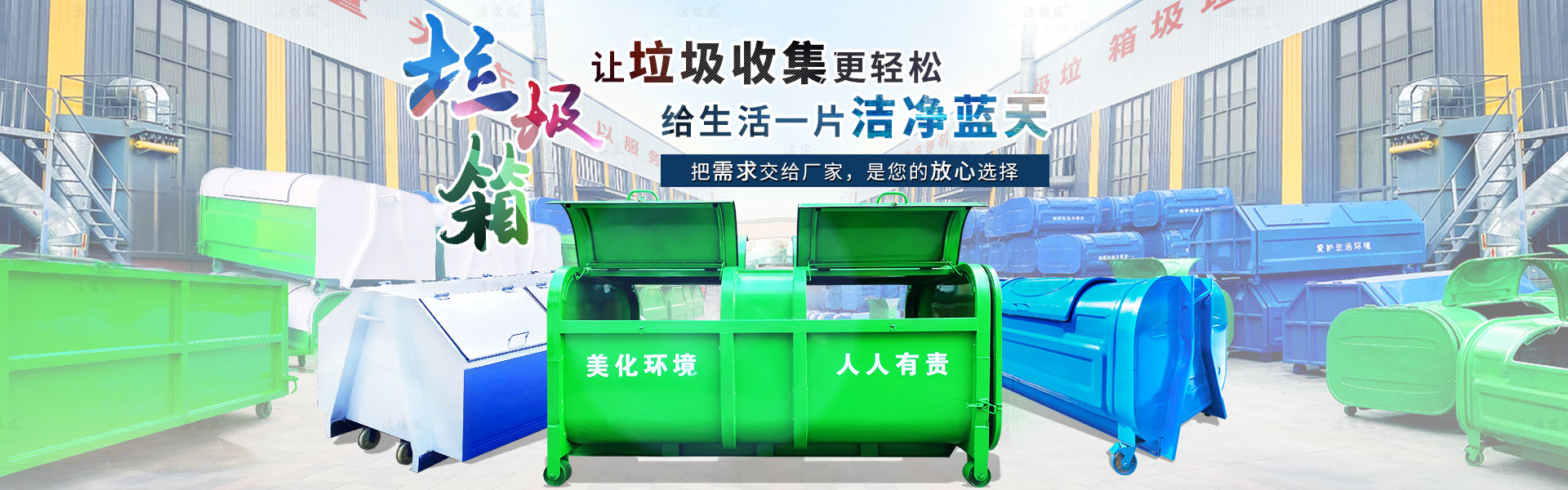
The hook arm trash bin primarily utilizes the engine of the hook arm garbage truck's chassis for power. It operates through a power take-off installed on the transmission, equipped with a pump at the power take-off location. The bin's lifting, unloading, and self-unloading functions are manually or electrically controlled by a hydraulic mechanism.

The Trash Can Connects with the Garbage Truck: As the garbage truck arrives beside the trash can, its hook arm aligns with the hook hole of the trash can. This step requires ensuring the hook arm is accurately aligned with the hook hole to safely and stably lift the trash can.
Waste Transfer: Upon arrival at the waste transfer site, the operator operates the crane arm to hoist the waste bin. The waste automatically detaches from the bin and is transferred as the waste truck moves, completing the transfer process.
Garbage Can Reset: After the waste transfer is completed, the garbage truck's hook arm extends, and the garbage can automatically returns to its original position, ready for the next waste collection.
Throughout the transportation process, sanitation workers must adhere to operational standards and safety measures to ensure the proper use of hook arm bins and the efficient transfer of waste. Additionally, regular maintenance and care of the hook arm bins can extend their lifespan and enhance transportation efficiency.

In summary, the transportation process of the hook arm waste bins is simple, time-saving, and labor-saving, effectively handling urban waste while maintaining cleanliness and sanitation of the environment.