

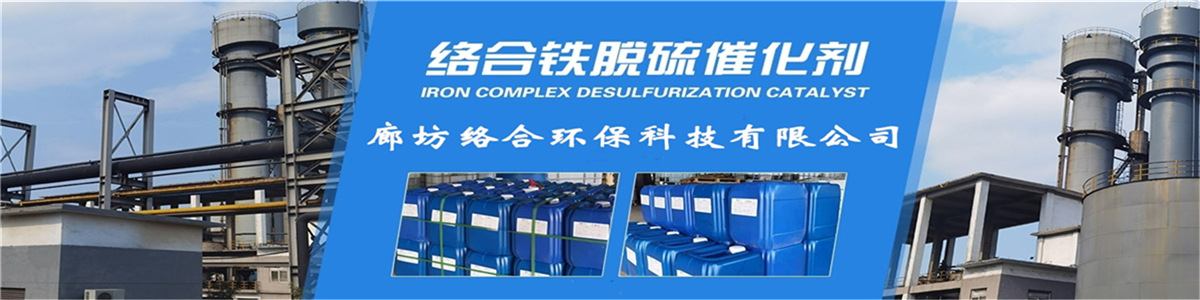
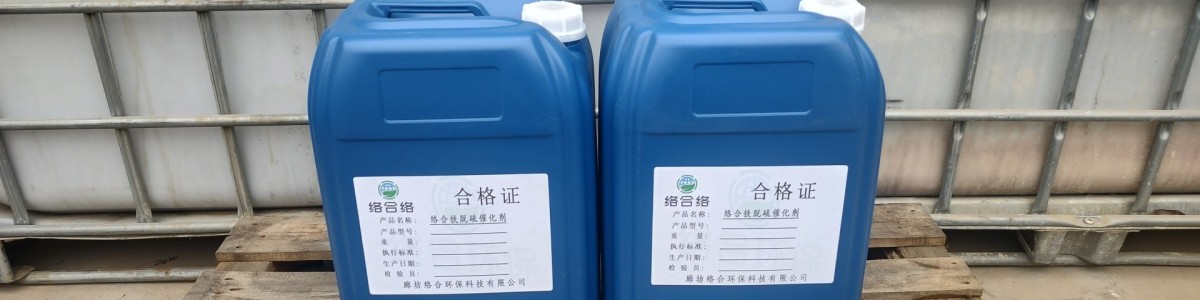

The complex iron desulfurization agent utilizes water-soluble high molecular polymer as the stabilizing component in the complexing agent system, ensuring the iron element remains in ionic form in alkaline solutions, effectively reducing the consumption of iron ion precipitation caused by complexing agent degradation. The design and operation of the desulfurization process focus on controlling the iron ion concentration and redox potential of the desulfurization liquid. In a weakly alkaline solution, the redox potential value of Fe3+(L) is moderate, and during the desulfurization process, Fe3+(L) directly oxidizes HS-(L) to sulfur, with a rapid homogeneous reaction rate, fundamentally eliminating direct contact between HS-(L) and oxygen during regeneration, resulting in a high selectivity for sulfur磺 formation and a low rate of byproduct salt generation. This overcomes the drawbacks of traditional desulfurization processes, such as low sulfur capacity, complex desulfurization processes, high byproduct salt generation rates, and frequent discharge of desulfurization waste liquids. The purification treatment unit for hydrogen sulfide can achieve a sulfur recovery rate of over 99%.
Chelated iron desulfurization agents offer the following advantages when compared to traditional chemical desulfurization and biological desulfurization methods:
The ligand iron desulfurization technology boasts adjustable and high elasticity in working sulfur capacity, modular design, low equipment investment, low desulfurization costs, low energy consumption, zero waste liquid discharge, high operational stability, and high removal rates for COS, thiol, and organic sulfur.
News Center Co., Ltd.
