


The vacuum atmosphere furnace is a heat treatment process suitable for electronic components, new materials, and powdered materials under vacuum or atmosphere conditions. It has earned a good reputation in applications such as metallurgy, machinery, and mining enterprises, which is inseparable from its unique characteristics. Below, Star鼎 editor will introduce the characteristics and principles of the vacuum atmosphere furnace!
I. Features of the Vacuum Atmosphere Furnace
The vacuum atmosphere furnace features heating elements made of resistance wire, and the furnace chamber is constructed with alumina polycrystalline fiber material, which boasts excellent insulation properties and high tensile strength, significantly extending its service life.
2. The vacuum can be evacuated, and it can accommodate a variety of protective atmospheres, excluding flammable, explosive, and highly corrosive gases.
The intelligent equipment is user-friendly, featuring over-pressure automatic release, high-temperature alarms with power cutoff, and leakage protection for enhanced safety.
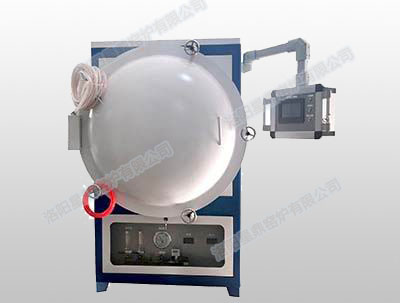
4. The equipment can be connected to computers via 485 or USB interfaces, enabling remote control, historical record, real-time tracking, and report generation for single or multiple furnaces. It can also be equipped with a paperless recording device to store and output data according to user requirements.
5. User-friendly, programmable with PID self-tuning, automatic heating, automatic temperature maintenance, automatic cooling, no need for constant supervision.
6. The vacuum, inflation, and temperature control systems can be programmed via a touchscreen interface, offering simple and accurate operation.
7. A variety of temperature options available, mainly including 1200°C, 1400°C, 1600°C, 1700°C, and 1800°C, with five types in total.
8. The furnace material is imported refractory material, featuring excellent thermal insulation properties, high temperature resistance, and the ability to withstand rapid changes in temperature.
9. The vacuum atmosphere furnace's body is meticulously electrostatically coated, offering resistance to corrosion and acidity, with the furnace body and combustion chamber isolated by a wind-cooled wall that maintains temperatures close to room temperature.
Section II: Principle of the Vacuum Atmosphere Furnace
In the early 1980s, during the development of the oxygen-nitrogen co-diffusion technology for high-speed steel tools, low-vacuum principles were employed to manufacture equipment and test the accompanying processes (i.e., low-pressure oxygen-nitrogen co-diffusion technology). The workpieces are automatically cycled heated within the specified low-vacuum upper and lower limits. The furnace gas is continuously refreshed within the set time cycle, resolving challenges such as dense production, furnace gas aging, and uniformity of the diffusion layers during the nitriding and carburizing processes. By appropriately increasing the furnace pressure, the diffusion rate of nitrogen and carbon atoms can be enhanced [2-4], and a process of positive pressure variation is added on the basis of low-vacuum pressure variation. This process, which involves first applying pressure variation heating in the low-vacuum range followed by positive pressure variation heating, and the associated equipment, is known as low-vacuum pressure variation heat treatment technology. The furnace undergoes a wide range of pressure variation heating from low vacuum to positive pressure, quickly replacing the air, moisture, and other oxidizing substances in the furnace with neutral gas, and then filling it with the specified diffusion agent. This allows the workpieces to be heated in the set atmosphere. After heating, if cooled within the furnace, it achieves oxidation-free and decarburization-free quenching. If cooled outside the furnace, the workpiece, upon removal, contacts the air, causing minimal oxidation to achieve a low-oxidation heating process.
Above is the answer to the question, "What are the characteristics of a vacuum atmosphere furnace?" From the above introduction, we can see that the characteristics of a vacuum atmosphere furnace include good thermal insulation performance, high tensile strength, the ability to introduce multiple protective gases, no need for专人 to be on duty, a variety of temperatures, and resistance to corrosion and acids and alkalis. Its principle involves first heating under a low vacuum range with pressure variation, followed by a process of heating under positive pressure with pressure variation. The vacuum atmosphere furnaces produced by Luoyang Xingding Kiln Co., Ltd. are of excellent craftsmanship and equipment. We welcome calls or messages for inquiries at any time, adhering to the principles of ensuring quality, service, and reputation.
Disclaimer:Some images and text on this site are collected and compiled from the internet for learning and exchange purposes only, and are the property of the original authors. They do not represent the views of our site. We assume no liability for any legal issues. If any content infringes upon your rights, please contact us immediately for removal.
