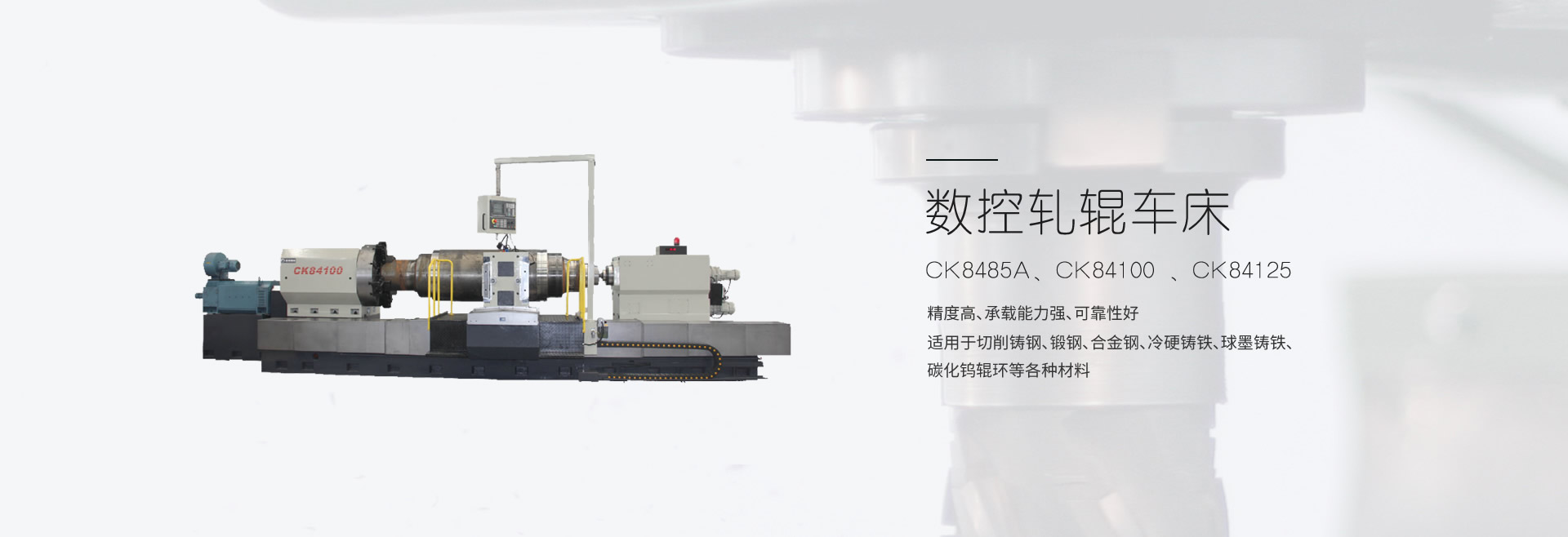
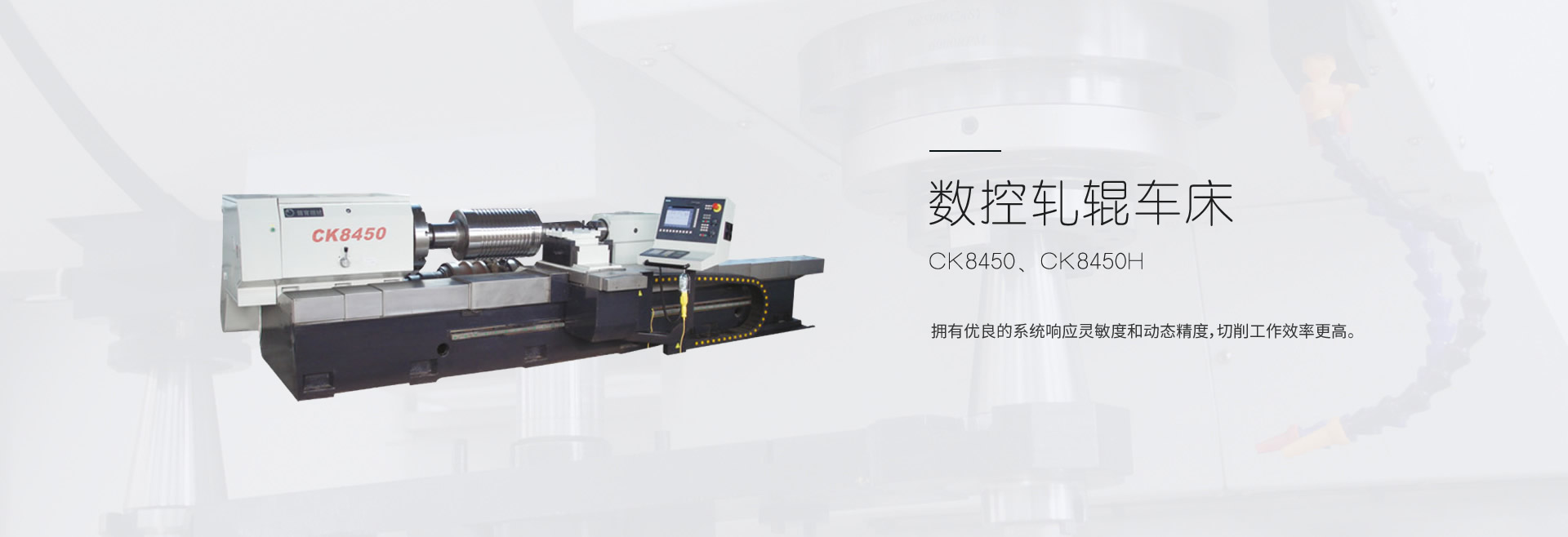


Equipped with a Siemens 828D CNC system and servo motor drive. The machine tool was designed by thoroughly analyzing the technical performance indicators and innovative mechanical structure of roller grinding machines from Italy's ATOMAT and Germany's HERKULES companies, while also incorporating experience from similar machine tools of well-known domestic enterprises.
This series of machine tools is primarily used for rolling mill hole profiling, and can also turn the outer diameter and roll necks of rolling mills. It is capable of machining similar parts as well. Suitable for cutting materials such as cast steel, forged steel, alloy steel, chilled cast iron, ductile iron, and tungsten carbide roller rings, it is ideal for processing large-scale special steel rolling mills, reducing costs and enhancing efficiency.
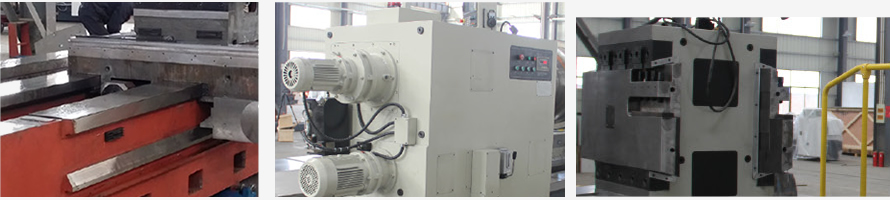
The CK84100 CNC roller grinding machine bed adopts an integrated 4+1 guideway structure, with four rectangular guideways horizontally arranged on the bed body to provide movement and positioning for the saddle and tailstock, and an auxiliary guideway is set on the vertical face of the front side of the bed body for additional support of the saddle. This ensures better rigidity for the saddle and tool holder, capable of handling greater cutting torque.
The bed基准guide rail is heat treated with overall ultra-audio frequency, complemented by imported guide rail soft strips for a micro-wear movement of all feeding components, ensuring long-term high precision and stability. The design features a certain height difference between the saddle guide rail and the tailstock guide rail to prevent chips and coolant from entering the saddle guide rail.
The tailstock features an independent rotating main shaft + sleeve axial extension and adjustment structure. The tailstock main shaft cone bore is 100-1:5. The tailstock body is designed with an integral structure, eliminating the drawbacks of traditional top-bottom split structures, such as unstable precision, poor load-bearing capacity, and reliability issues.
The lathe tailstock is equipped with a high-performance pressure sensor for setting and measuring the clamping force during workpiece clamping on the lathe, as well as feedback. The operation pressure sensor controller can be adjusted to automatically control and display the clamping force of the tailstock point on the workpiece. The release and clamping of the tailstock sleeve are automatically achieved through the hydraulic control system.
The tailstock sleeve is designed with a workpiece thermal deformation compensation mechanism, which absorbs and compensates for the axial length change of the workpiece during the machine tool's operation, utilizing the disc spring inside the sleeve.