
Bed-Type Planer Milling Machines, Vertical-Axis Planer Mi...

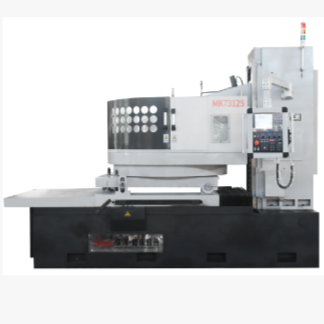
The CNC system and automation of vertical CNC grinding machines are indispensable components in modern manufacturing, jointly providing robust technical support for high-precision and efficient production processes. Below is a detailed explanation of the CNC system and automation of vertical CNC grinding machines:
Numerical Control System
System Composition & Brand
The vertical CNC grinding machines are equipped with advanced CNC systems, typically provided by renowned brands such as Siemens or Fanuc. These systems integrate multiple functional modules including computers, PLCs, and servo drives, achieving precise control over the machine tool's movement.
2. Precision and Stability Control
The CNC system employs high-precision control algorithms and sensors to monitor and adjust machine tool motion parameters in real-time, ensuring machining accuracy and stability. Through closed-loop or semi-closed-loop control strategies, the system can automatically adjust tool feed rate and speed to accommodate different workpiece processing requirements, achieving high-precision machining results.
3. Programming and Flexibility
The CNC system supports various programming languages and software, such as G-code and M-code, facilitating users in programming based on their machining requirements. Additionally, the system boasts flexibility and programmability, allowing users to achieve different machining methods and effects by modifying the machining programs and parameters according to varying processing demands and workpiece shapes. Moreover, the CNC system can store and manage multiple machining programs, making it convenient for users to switch and call them as needed.
Automation
Automatic feeding and unloading
Many CNC vertical grinding machines are equipped with automatic loading and unloading capabilities, transferring workpieces to the worktable via mechanical arms or conveyors, thereby reducing the complexity and labor intensity of manual operations. This feature not only enhances production efficiency but also minimizes errors caused by human factors.
2. Automatic Grinding Parameter Adjustment
During the processing, the CNC system can automatically adjust and optimize grinding parameters. Based on preset programs and sensor feedback, the system can automatically control the speed of the abrasive wheel and feed rate, etc., to accommodate the processing requirements of different workpieces. This automatic adjustment feature ensures the consistency and stability of the processing quality.
3. Automatic Detection and Compensation
Some high-end CNC vertical grinding machines also feature automatic detection and compensation capabilities. By continuously monitoring the processing accuracy and workpiece status, the system can automatically identify deviations and make compensation adjustments, further enhancing the precision and reliability of the processing. This intelligent function reduces the need for manual intervention, thereby improving production efficiency.
4. Remote Monitoring and Fault Diagnostics
Numerical control systems typically support remote monitoring and fault diagnosis capabilities. Users can remotely view the machine tool's operating status, processing progress, and fault information via the internet, allowing for timely detection and resolution of issues. This feature enhances the maintenance efficiency and operational stability of the machine tool.
In summary, the CNC vertical grinding machine's CNC system and automation technology offer high-precision, high-efficiency processing solutions for modern manufacturing. Through continuous technological innovation and development, the CNC vertical grinding machine will play a significant role in more fields.
www.114global.com © Zhongshang 114 Hebei Network Technology Co., Ltd.Address: Room 6009, Oriental New World Center, No.118 East Zhongshan Road, Qiaoxi District, Shijiazhuang City, Hebei ProvincePlatform Service Hotline: 4006299930