
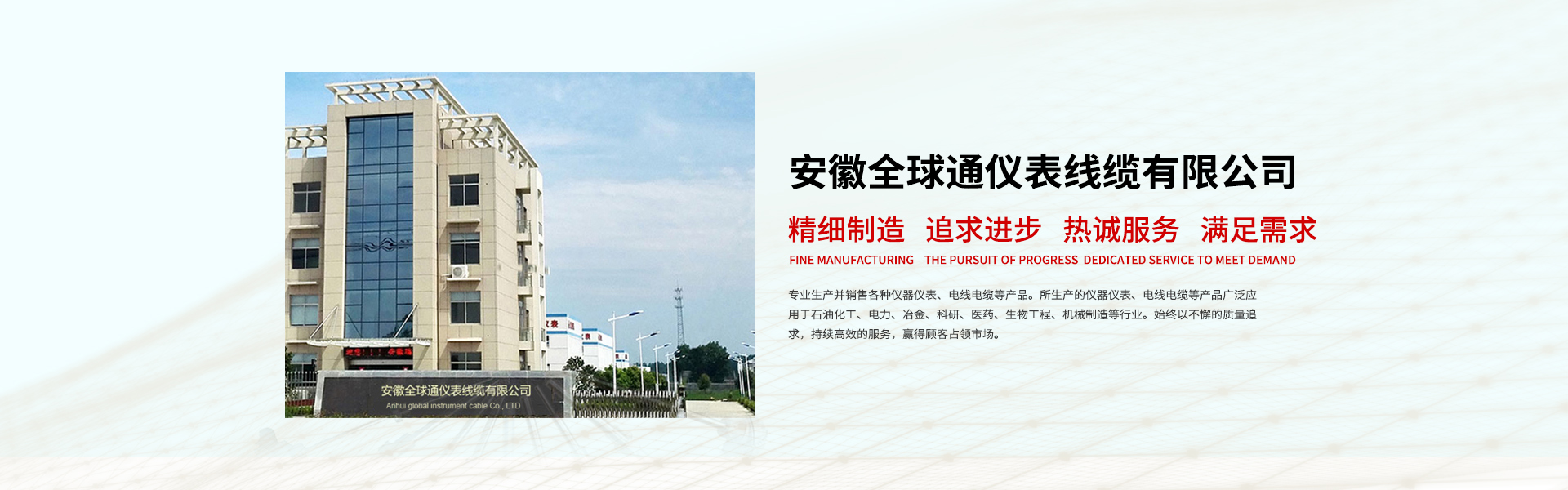

Steel drum cable manufacturers discuss wire and cable today. Wire and cable are commonly used items in daily life. Due to the large domestic demand, there are numerous manufacturers of wire and cable, varying in size. How can consumers choose the right wire and cable among so many companies and manufacturers? Next, Anhui Globalcom Instrument Cable Co., Ltd. will tell you how to select cables. Today, I'll explain it to you.
Consumers should keep the following points in mind when selecting electrical wires and cables:
1. Look for the "CCC" certification mark. As electrical wire and cable products are closely related to the daily lives of a wide range of consumers, their quality and safety directly affect the personal and property safety of consumers. Therefore, electrical wire and cable products are mandatory for safety certification, and all producers must obtain the "CCC" certification from the China Electrotechnical Product Certification Committee, obtain the "CCC" certification mark, and have the "CCC" certification mark on the certificate of conformity or the product itself.
Packaging is exquisite. For wire and cable products, the packaging is as meticulous as other products. Large and medium-sized enterprises that produce products in compliance with national standards pay great attention to the packaging of their wire and cable products.
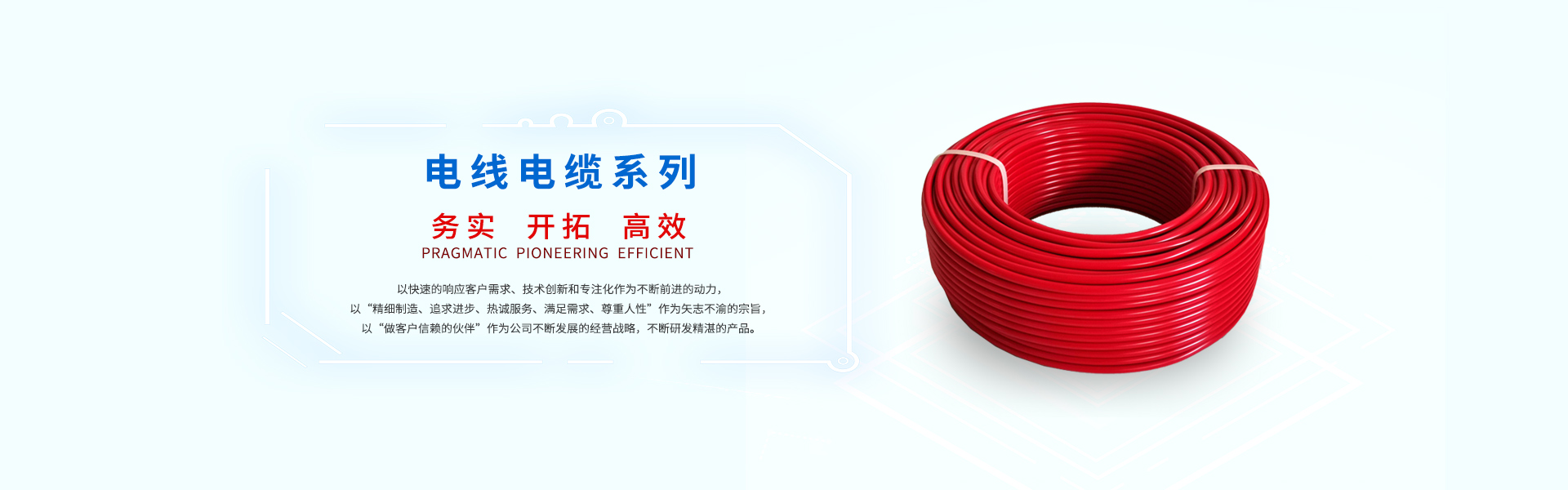
3. Our products boast a smooth and round appearance with even coloration. As a wire and cable enterprise that meets national standards, we strictly ensure product quality and compliance with national standards in terms of raw material selection, production equipment, and production processes. Consequently, our produced wire and cable products meet the standard requirements: smooth, round, and evenly colored. Counterfeit and low-quality products, however, have a rough and lackluster appearance. For rubber-insulated soft cables, the requirement is for a round appearance, with a tight jacket insulation and conductor that is not easily peeled off. Counterfeit and low-quality products have a rough appearance, significant ellipticity, and a jacket with low insulation strength, which can be easily torn off by hand.
4. The conductor has a glossy appearance, and its direct current resistance and conductor structural dimensions meet national standards. Products of wire and cable that comply with national standards, whether made with aluminum or copper conductors, are both bright and free of oil stains. As a result, the conductor's direct current resistance fully meets national standards, exhibits excellent electrical conductivity, and ensures high safety.
5. Accurate Length. Length is a primary and直观 method to differentiate between products that meet national standards and counterfeit or inferior ones. Products that meet national standards for electrical wires and cables have a length that complies with the national standard of 100+0.5m (i.e., based on 100 meters with an allowable error of 0.5 meters), protecting the interests of consumers.
Certificate of Conformity clearly marked. The certificates of compliance for wire and cable products meeting national standards are printed clearly with the "CCC" certification mark, trademark, model specifications, rated voltage, length, inspection, manufacturing date, certification number, execution standards, factory name and address, phone number, and other markings are all clearly identifiable and correspond to the product. Some companies also include "Caution to User" and other content on the certificate to facilitate consumers in making correct purchases and installations.
Section 2: Differences Between Soft Cables and Hard Cables
1. The core wire structure is different.
Soft-core cables, also known as soft-structured conductor cables, are typically composed of multiple strands, twisted together from bare copper wires, and are classified as Category 3 or 4 conductors. They can have as few as 7 cores and as many as over 30 cores for the same cross-sectional area. The more strands, the softer the cable, and correspondingly, the higher the manufacturing cost! The extrusion process for insulation also poses higher technical challenges. The insulation and jacket materials must not only possess general electrical and physical properties but also be soft.
Hard-core cables, also known as solid conductor cables, consist of a single-strand structure, meaning the conductor is a single copper wire. Compared to other types, they are simpler in manufacturing, as insulation can be extruded using a mandrel, making the process straightforward, easy to control, and cost-effective. However, the drawbacks include the cable cores being prone to breakage and difficult to bend.
2. Varying load capacities
Soft-core cables have a higher current-carrying capacity than hard-core cables. In the same cross-sectional area, the surface area of a soft cable is significantly greater than that of a hard cable.
Due to the skin effect in alternating current (where the distribution of current within a conductor is uneven when there is AC current or a varying electromagnetic field, with current concentrating in the "skin" part of the conductor, meaning it is concentrated in the thin outer layer of the conductor, and the closer to the conductor's surface, the higher the current density), the current-carrying capacity of soft-core cables is greater than that of solid-core cables. Additionally, soft cables, with a larger surface area, also have better heat dissipation than solid cables. Solid-core copper cables have poor heat dissipation, low overload capacity, but reliable connections; soft-core copper cables have better heat dissipation and a higher overload capacity than single-core wires but are prone to loose connections.
3. Varying Expressions
- General soft cables have an extra letter "R" compared to rigid cables. For instance, a certain cable may be denoted as BV for a rigid core, while a soft core is represented as BVR. There's also a type of soft wire called RV. However, although both BVR and RV are soft wires, they use different copper filaments and have different insulation thicknesses, suitable for different conditions. Standard power cables typically have a rigid core, denoted as YJV. If a soft core is required for special requirements, it can also be represented as YJVR. For sheathed cables, all are soft-core, so the letter "R" is omitted when denoting them, such as YC, YZ, etc.
4. Varying construction difficulties
Hard-core copper cables are relatively easy to install, but they have a smaller contact area and tend to loosen more easily over time compared to multi-strand cables. Soft-core copper cables have a larger contact area, but they are more complicated to install.
5. Varying Applications
Flexible cables are widely used in various electrical equipment, such as household appliances, electric machinery, and portable power cords for electrical installations and appliances. They are suitable for both indoor and outdoor environments. Hard-core wires are generally used for direct current due to their lower power consumption, while soft-core wires are employed for alternating current to achieve the same reduction in power consumption.
That concludes the explanation. For more information about the company, please consult our website customer service.
