


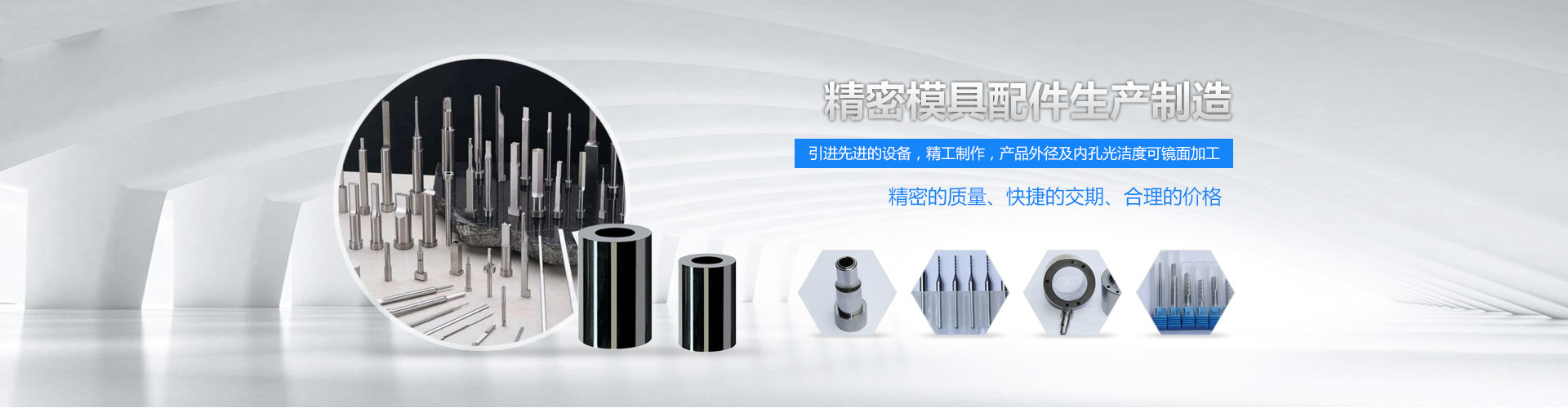

Tungsten carbide needle gauges are categorized by grain size, with hard alloy punches including general-purpose hard alloy punches, fine-grained hard alloy, and ultra-fine-grained hard alloy punches. Distinguished by their primary chemical composition, hard alloys can be classified into tungsten carbide-based hard alloys and titanium carbide-based hard alloy punches. Tungsten carbide-based hard alloys consist of tungsten cobalt (YG), tungsten cobalt titanium (YT), and rare carbon-added tungsten carbide (YW) types, each with its own advantages and disadvantages. The main components are tungsten carbide (WC), titanium carbide (TiC), and niobium carbide (NbC), with cobalt (Co) as the commonly used metallic binder. Titanium carbide-based hard alloys are those primarily composed of TiC, utilizing molybdenum (Mo) and nickel (Ni) as the metallic binders.
Cold-forming materials for stamping and shaping have numerous applications, such as piercing, cutting, deep drawing, cold forging, cold extrusion, cold rolling, and powder compaction. All these processing operations involve high mechanical pressure and sliding contact between the punch and the workpiece material. Excellent wear resistance and resistance to plastic deformation are primarily determined by the hardness of the tungsten carbide punch steel. Tungsten carbide punches, with a high concentration of hard particles (carbides), exhibit superior wear resistance compared to low-alloy punches, even under the same hardness conditions. However, a large number of hard carbide particles can weaken the machinability of the steel.
We offer a wide range of high-quality steel series to provide suitable tungsten carbide inserts for your needs. The provided tungsten carbide insert series features various characteristics to accommodate applications, processed materials, and product types, including: wear resistance, resistance to plastic deformation, impact and cracking resistance, cutting and grinding properties, heat treatment characteristics, and stability.
