
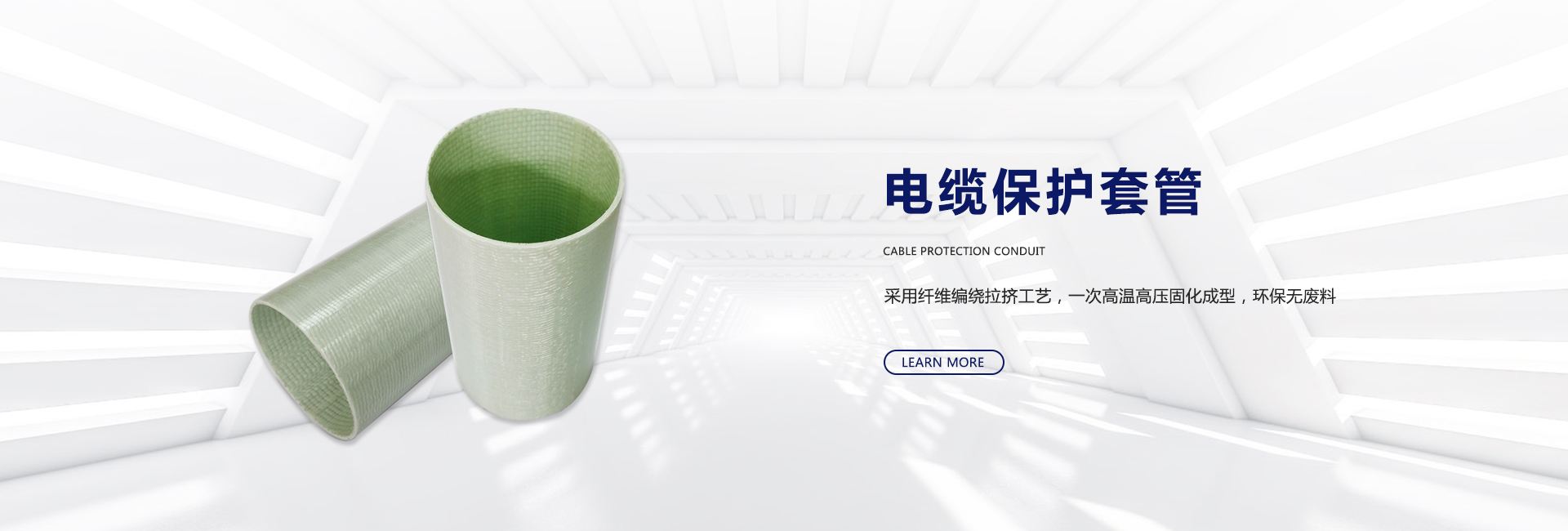

To ensure the smooth operation of cables, cable protection conduits are commonly used during their underground installation. These conduits must possess high strength, excellent corrosion resistance, resistance to both high and low temperatures, and good insulation properties. Currently, widely used types in the market include PE pipes, plastic-coated steel pipes, and CPVC. However, in recent years, the new material BWFRP piping has been increasingly favored by customers.
Comparing PEX pipes, coated steel pipes, CPVC pipes, and BWFRP pipes, experimental tests reveal that in terms of strength, BWFRP pipes have the highest strength, followed by PEX pipes. Coated steel pipes show good performance, while CPVC pipes have the lowest strength, which is also verified in actual construction—PVC pipes are prone to damage at construction sites. Areas where cables pass may have water sources or high salt content, so being corrosion-resistant as a cable protective conduit is essential. In this aspect, only coated steel pipes perform poorly, while the other three types of pipes are all good.
The complex construction environment necessitates that protective sleeves adapt to various extreme conditions. In terms of withstanding high and low temperatures, all four types of pipes can be used in environments as low as minus十几 degrees Celsius. However, when it comes to high temperatures, the PE pipe can only withstand up to 60 degrees Celsius, while the BWFRP pipe demonstrates excellent resistance to both high and low temperatures, usable within a temperature range of minus 50 degrees Celsius to 200 degrees Celsius. Regarding insulation, only the plastic-coated steel pipe shows poor performance; the others are all good.
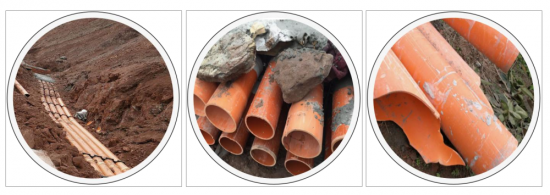
PVC piping materials in actual construction
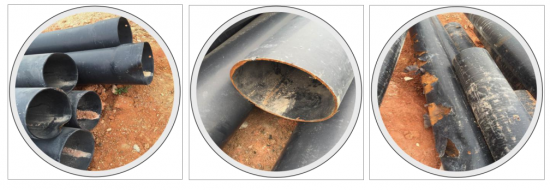
Coated steel pipes in actual construction
Overall, considering factors such as strength, corrosion resistance, high and low temperature resistance, and insulation, only bwfrp pipes demonstrate excellent performance in all four aspects, overcoming the disadvantages of other piping materials to varying degrees. It is reported that bwfrp pipes are a new type of piping material produced using a high-performance alkali-free glass fiber and high-performance resin as raw materials, through a combined weaving and pultrusion molding process. Currently, bwfrp pipes are widely used in the construction of power and telecommunications projects. bwfrp pipes have already been successfully applied in the power engineering of the artificial island at the Zhuhai Port of the Hong Kong-Zhuhai-Macau Bridge and other power grid projects.
