
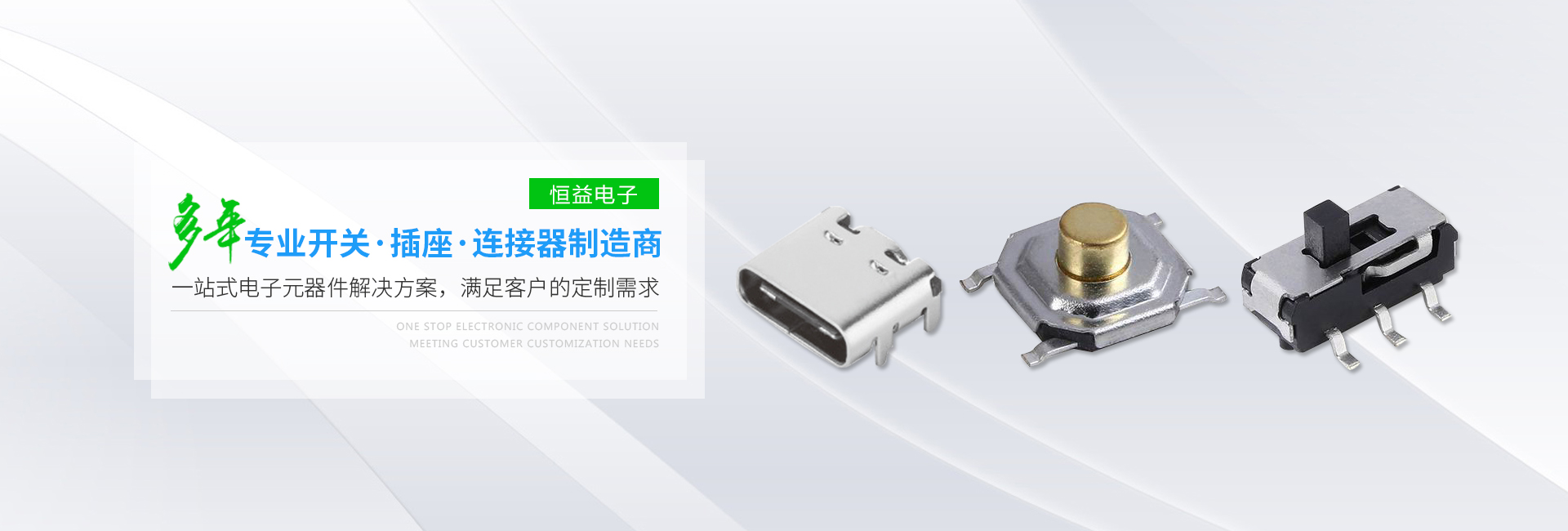

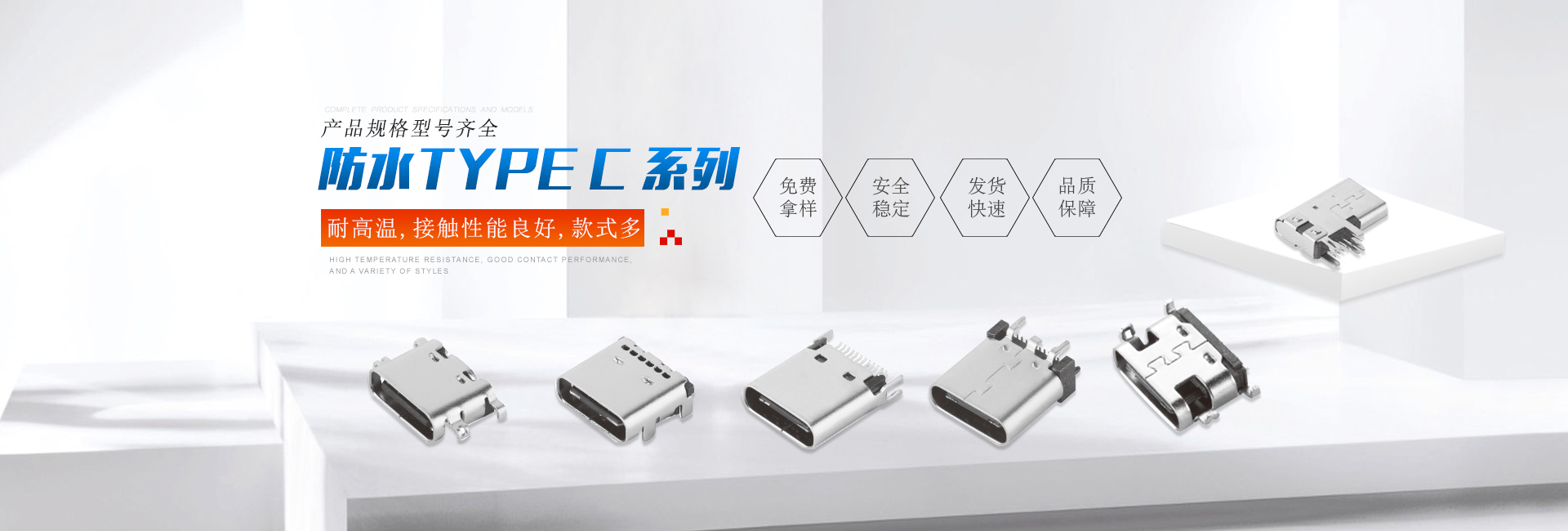

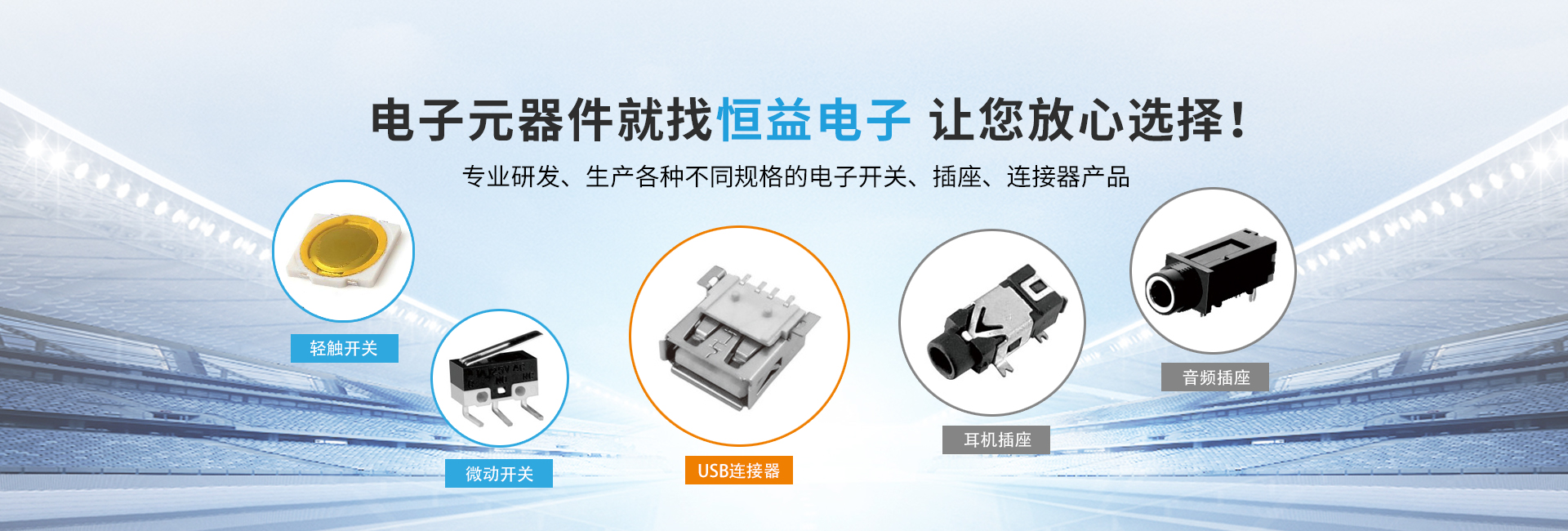

Connectors, also known as connectors, serve as bridges between interrupted or isolated points in circuits, allowing the flow of electricity and enabling the circuit to perform its intended functions. In China, they are also referred to as joints and sockets, generally referring to electrical connectors. These are devices that connect two active components, transmitting current or signals.
Performance of connectors
1. Mechanical Properties: In terms of connectivity, the insertion force is a critical mechanical property.
Insertion force and extraction force (also known as separation force) are different in their requirements. The relevant standards specify large insertion force and small separation force, indicating that from a usage perspective, insertion force should be minimized (resulting in low insertion force LIF and zero insertion force ZIF structures), while an excessively small separation force can affect the reliability of the contact.
Another critical mechanical property is the connector's mechanical lifespan. The mechanical lifespan is essentially a durability indicator, referred to as mechanical operation in the national standard GB5095. It is evaluated based on whether the connector can normally complete its connection function (such as contact resistance value) after a specified number of insertion and extraction cycles, with each cycle consisting of one insertion and one extraction. The insertion and extraction force of the connector and its mechanical lifespan are related to the structural design of the contact parts (magnitude of positive pressure), the quality of the plating on the contact area (coefficient of sliding friction), and the dimensional accuracy of the contact parts (alignment).
2. Electrical Performance: The main electrical properties of the connector include contact resistance, insulation resistance, and dielectric strength.
① Contact Resistance: High-quality electrical connectors should possess a low and stable contact resistance. The contact resistance of connectors varies from a few milliohms to tens of milliohms.
Insulation Resistance: A measure of the insulating performance between connector contact pieces and between contact pieces and the housing, with values ranging from hundreds to thousands of megohms.
③ Dielectric Strength: Also known as voltage resistance or dielectric withstand voltage, it refers to the ability of the connector contact parts or the contact parts with the housing to withstand the rated test voltage.
④ Other electrical performance: Electromagnetic interference (EMI) leakage attenuation is used to evaluate the shielding effectiveness of connectors against EMI, typically tested within the frequency range of 100MHz to 10GHz.
For RF coaxial connectors, there are electrical specifications such as characteristic impedance, insertion loss, reflection coefficient, and voltage standing wave ratio (VSWR). With the development of digital technology, to connect and transmit high-speed digital pulse signals, a new type of connector, known as a high-speed signal connector, has emerged. Consequently, in terms of electrical performance, in addition to characteristic impedance, some new electrical specifications have also arisen, such as crosstalk, transmission delay, and skew.
