
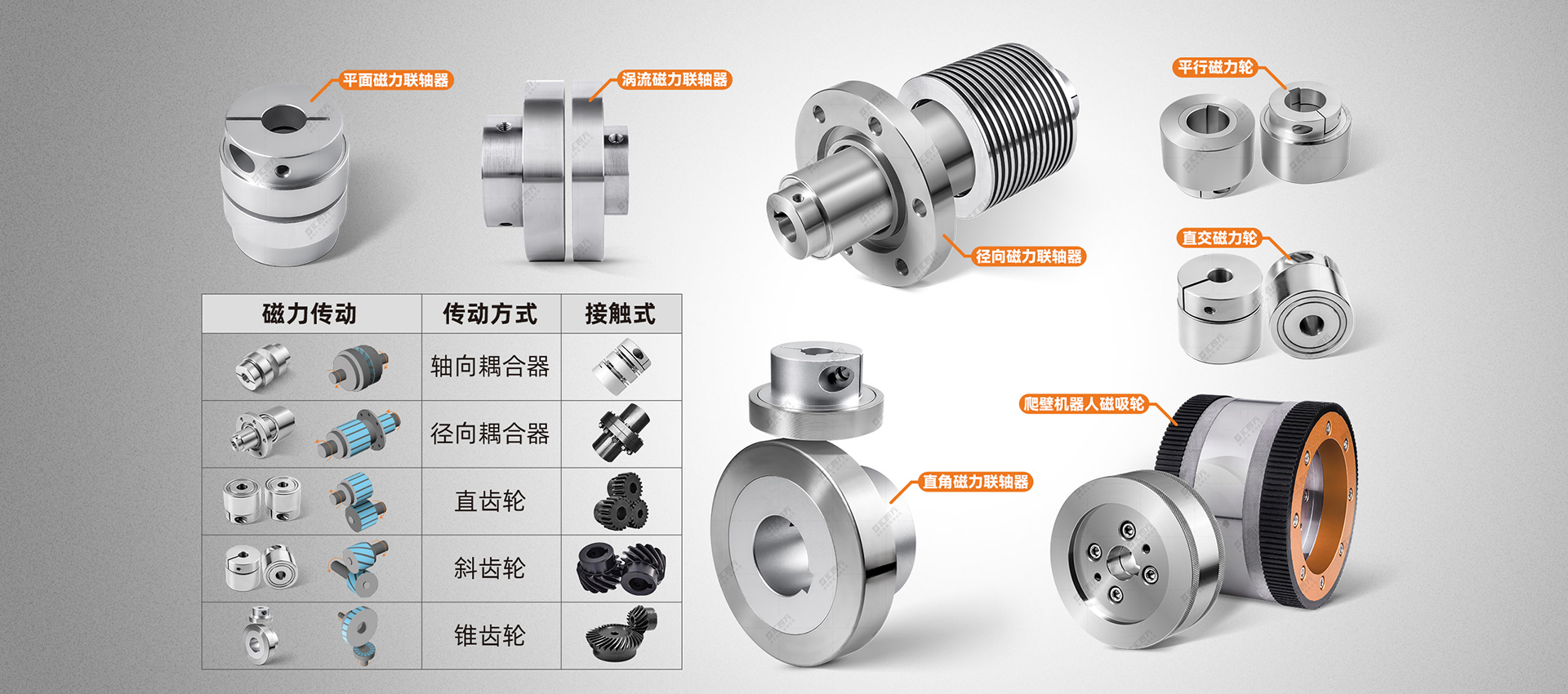
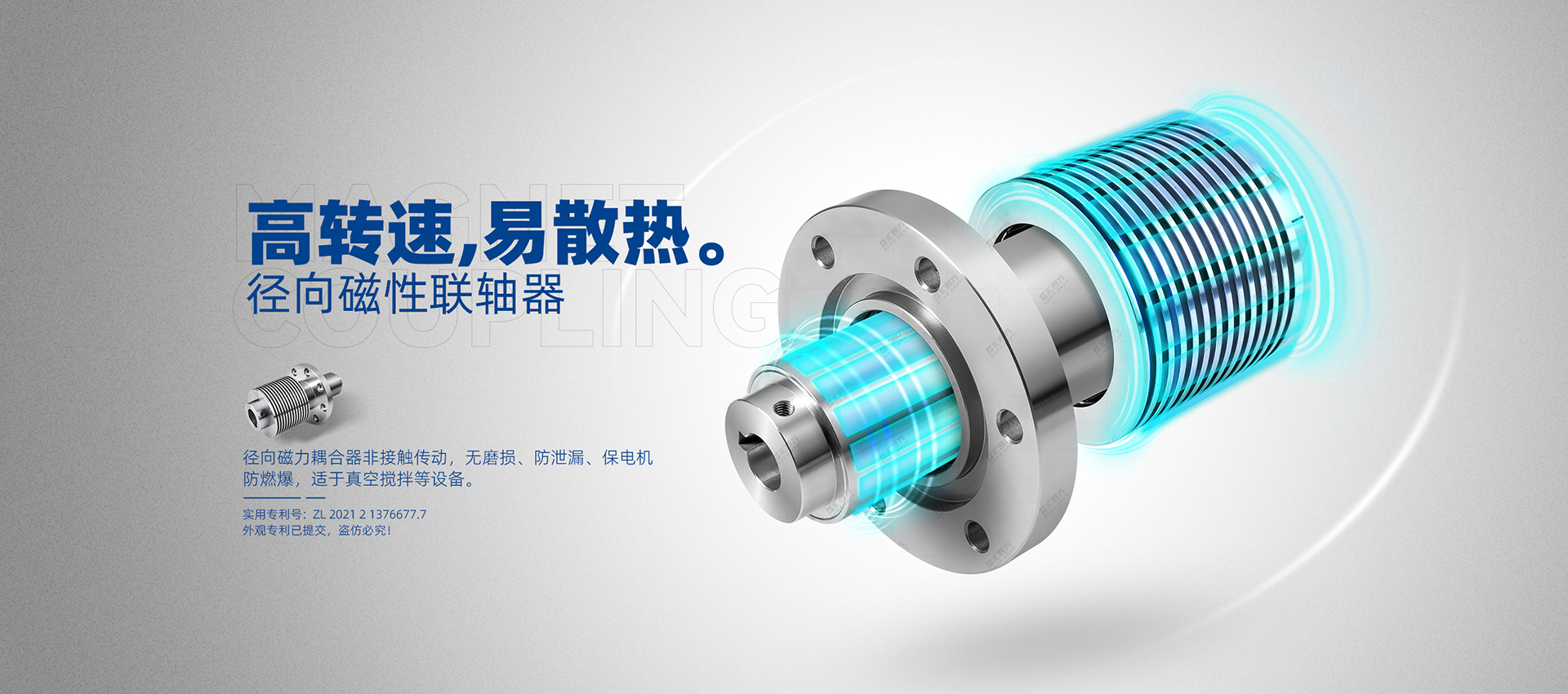

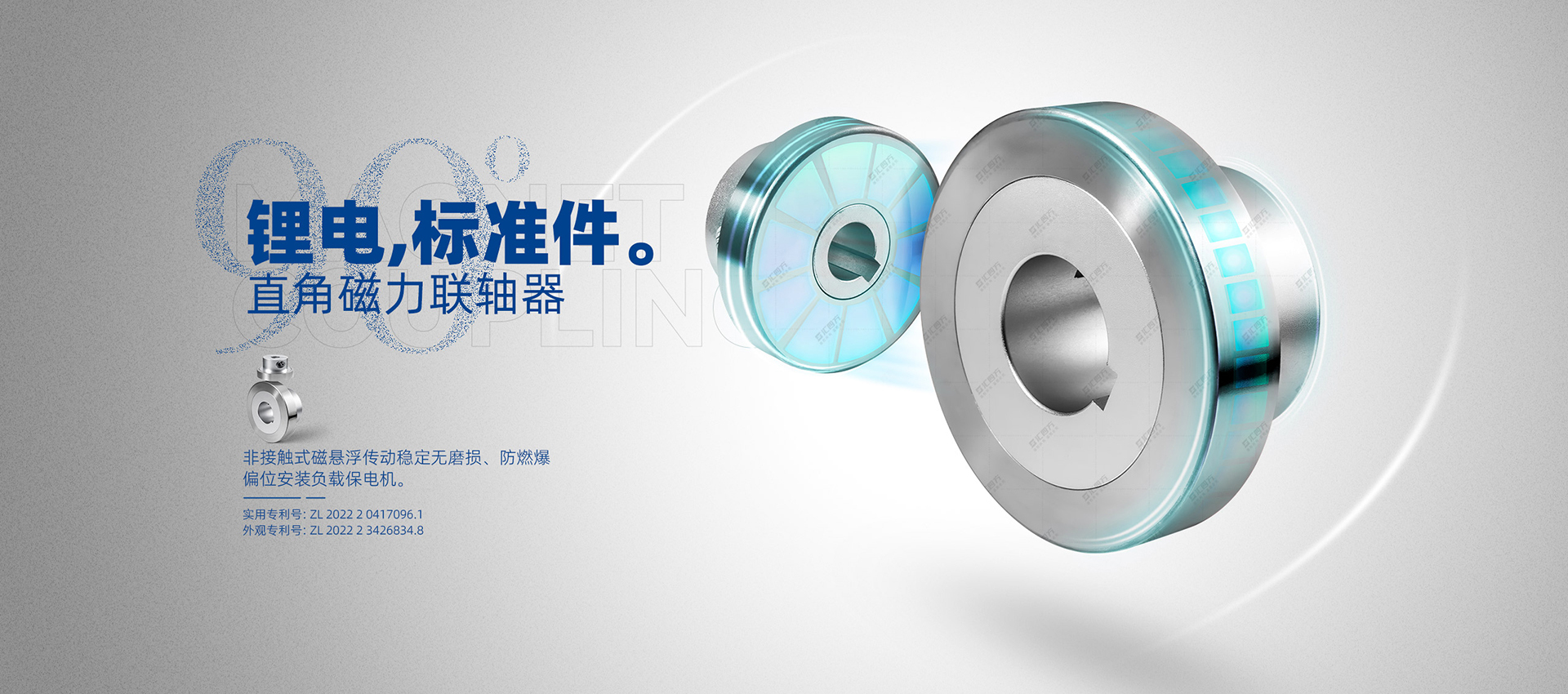
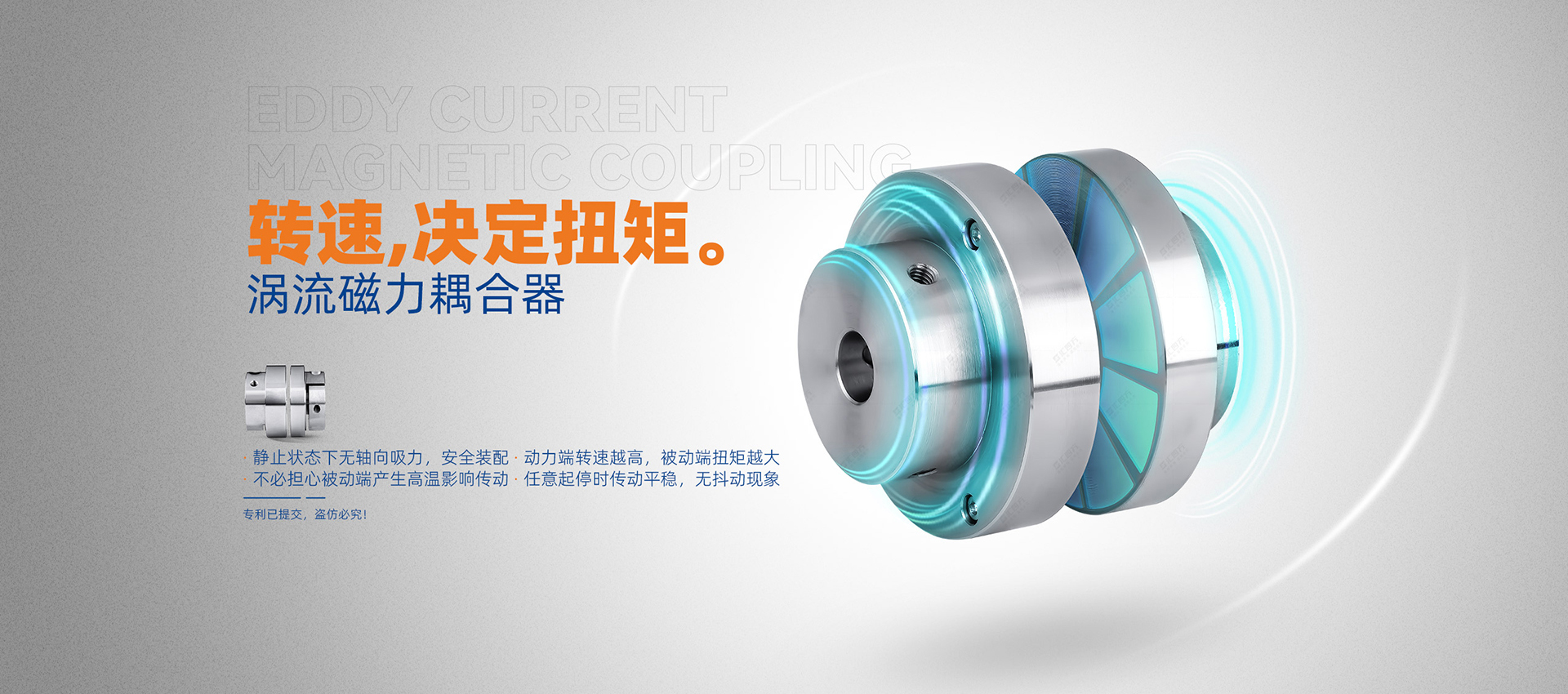

Magnetic couplings, also known as magnetic couplers or permanent magnet drives, are a type of non-contacting coupling. They are primarily composed of three parts: a copper rotor, a permanent magnet rotor, and a controller. The copper rotor is typically connected to the motor shaft, while the permanent magnet rotor is connected to the work machine's shaft. There is an air gap (referred to as the air gap) between the copper rotor and the permanent magnet rotor, with no mechanical connection for torque transmission. This creates a soft (magnetic) connection between the motor and the work machine, allowing for changes in the work machine's shaft torque and speed by adjusting the air gap. Depending on the method of air gap adjustment, permanent magnet eddy current drives are categorized into different types such as standard, delayed, torque-limited, and speed-regulated. The advantages of magnetic couplings include:
1. It achieves the transfer of force and torque between the driving and driven shafts without direct contact, and can convert dynamic seals into static seals, achieving zero leakage. Therefore, it is widely used in applications with special requirements for leakage.
2. Features a flexible coupling damper that reduces shock and vibration to the equipment.
3. Offers high transmission efficiency with significant energy-saving effects.
4. Simple structure, easy maintenance, and long lifespan.
