


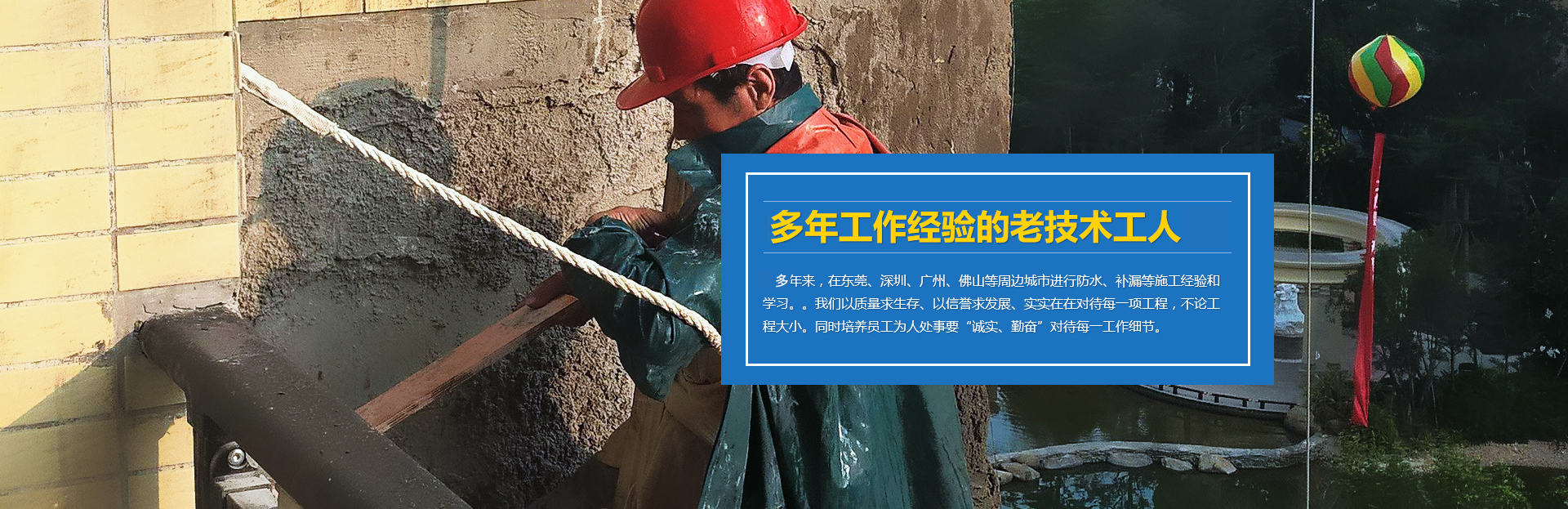

Ensure the process is meticulously followed when conducting exterior waterproofing and leak repairs, as the process is the key to successful waterproofing. A wrong process can result in subpar waterproofing work, leading to inefficient efforts. Here's an introduction to the process:
1. Field-cast concrete
1) Surrounding the opening, not limited to concrete structures, the area around the opening is where the initial waterproofing construction defects are typically found. In cases where concrete is poured or tile template pre-laying methods are used, attention to the window sill is sufficient. However, in situations involving painting and decoration or tile installation after the fact, the surrounding area of the window may exhibit issues such as cement floaters or debris, open spaces, or concrete tops that are level or inclined in reverse, creating areas prone to overflow defects.
2) Continuity at Grouting Points and Cold Joints: Due to the lack of expected bonding between concrete layers, the continuity at grouting points and cold joints may be obstructed in the event of minor earthquakes or concrete shrinkage, leading to a potential leakage issue.
3) Concrete Cracks: Field-cast concrete often features continuous joints or cold joints in each layer, leading to honeycomb or poor-filling areas, which can result in innate shrinkage cracks. This phenomenon is more prevalent in large-span walls or in the connecting corbels that project outward from the wall structure.
2. Cement bricks and ALC panels
1) Lightweight cement bricks, despite their considerable permeability, are not suitable for direct use on exterior walls. Even with reinforced steel, the lack of sufficient mortar filling around the transverse steel prevents achieving adequate grip between the bricks and the steel. When subjected to compression and vibration, the joints become partially blocked. Rainwater then enters through this area, gets trapped within the hollows of the bricks, and eventually seeps into the interior.
2) The joints around ALC panels are prone to leakage due to the high permeability and absorbency of ALC panels, which are weak and lack strength. Without proper joint filling materials, rain often leaks through the joints. Even slight movements can cause cracks in the ALC panels at the filled cement mortar sections, leading to leaks. During transportation, the panels are often surrounded by materials prone to damage, and if repairs are not properly executed, the patched areas with cement mortar will peel off in the short term, allowing rain to seep in through the joints.
3. Water leakage at the PC board joint area is caused by incomplete repairs of damaged PC components, horizontal joints, and cracks around the window sills. Poor compaction of solid jointing material in horizontal joints and cracking, falling of jointing material in direct joints are all contributing factors to water leakage in the exterior wall of the PC construction method.
4. As for asbestos board and its composite panels, the methods appear similar to those used for wallboard installation or exterior siding, involving open-joint techniques where the joints are secured with molding or sealed with filling materials. During the waterproofing and leak repair of non-demolition toilets, the open-joint method is often used. However, due to the lack of adhesion area between the filling material and the bonded material, the filling material tends to peel off. The shrinkage of the asbestos board and the movement of the sub-layer can cause damage starting from the screw holes, leading to water leakage. Additionally, water leakage from screws is also a common issue. For the equipment of these board types in non-demolition toilet waterproofing and leak sealing, it is necessary to adopt methods that accommodate the movement of the trunk and sub-layer. The screws around the boards should be installed about 30mm inward from the starting edge, and the clear distance between holes should be maximized. The screws should be securely fastened using larger washers.
