
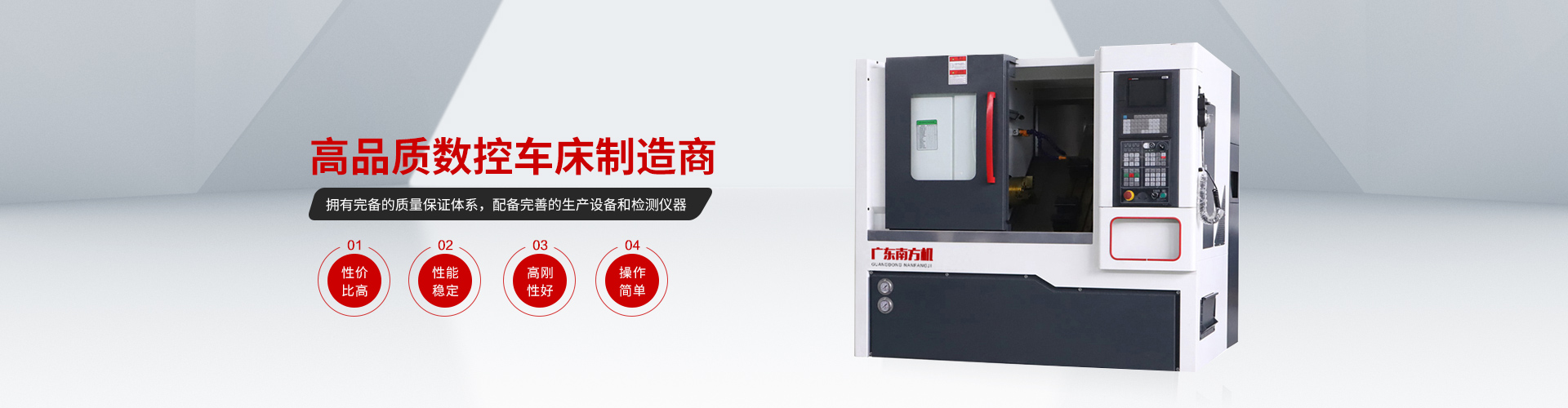

The selection of CNC lathes involves multiple factors. Below are three key selection elements, accompanied by detailed explanations:
One, define requirements and processing characteristics
Be Clear on Machining Requirements: Firstly, it's essential to define the primary use of the CNC lathe, whether it's for simple part machining or requires a machine with complex functions and advanced technology. Additionally, consider the production scale, whether it's suitable for small batch production or capable of handling large-scale production.
Consider machining characteristics: Take into account factors such as the type, dimensions, complexity of shape, and precision requirements of the parts to be machined. For instance, for parts with complex contour shapes and high precision requirements, it is advisable to choose CNC lathes with high precision, high rigidity, and high stability.
Section II: Performance and Technical Specifications
Choose machine tools with appropriate cutting speeds and high precision to ensure production efficiency and processing quality. For instance, high-speed machine tools are suitable for producing products with high efficiency and short cycles, while high-precision machines are more ideal for products requiring high precision and stringent standards.
Rigidity and Thermal Stability: The rigidity and thermal stability of machine tools are crucial for ensuring processing accuracy and stability. Choose machines with high-strength, rigid beds, and stable thermal deformation performance.
Control Systems and After-Sales Service
Control Systems: The control system is the core component of a CNC lathe, determining the machine's performance and ease of operation. Consider the advancedness, stability, and usability of the control system, as well as whether a touchscreen interface, network connectivity features, and more are required.
Choose a CNC lathe supplier with excellent after-sales service to ensure timely assistance and support when issues arise, avoiding downtime and production losses.
In summary, when selecting a CNC lathe, one should consider factors such as processing requirements, characteristics, performance and technical parameters, control systems, and after-sales service. By clearly defining needs, evaluating processing characteristics, selecting appropriate performance parameters and control systems, and ensuring excellent after-sales service, a CNC lathe that meets production demands, offers stable performance, and is easy to operate can be chosen.
