

Numerical Control Machine Tools Utilize Threaded Rod Fixed Bearings
One end fixed — one end free
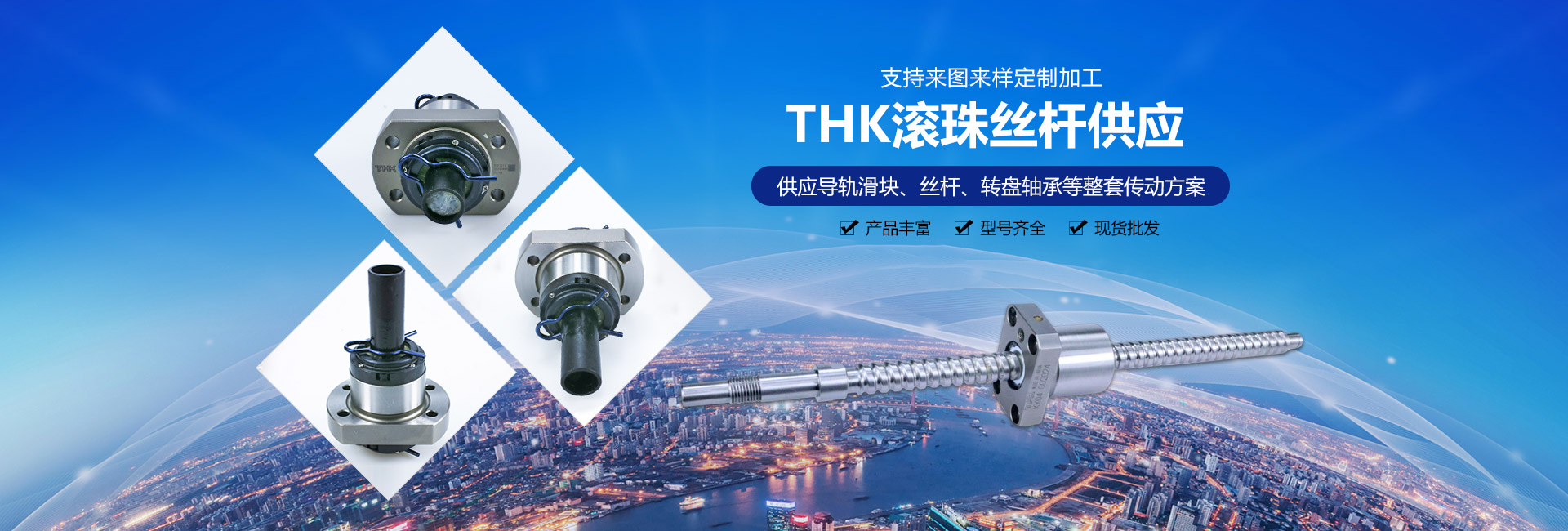
The screw is fixed at one end and free at the other. The bearing at the fixed end simultaneously withstands both axial and radial forces. This type of support is used for short lead screws with small travel or for machines with full closed-loop control, as the mechanical positioning accuracy of this structure is unreliable, especially for screws with a large length-to-diameter ratio (such as ball screws that are relatively slender). Thermal deformation is quite apparent; a 1.5-meter-long screw can change by 0.05 to 0.10mm under different cold and hot environments, which is quite normal. However, due to its simple structure and ease of installation and adjustment, many high-precision machine tools still use this design. In such cases, it is necessary to add a grating and employ full closed-loop feedback.
One end fixed — the other end supported
A screw is fixed at one end and supported at the other. The fixed end withstands both axial and radial forces; the support end only bears radial forces and can have minor axial float, which can reduce or prevent bending due to the screw's own weight. Additionally, the screw can freely elongate in one direction due to thermal deformation. This structure is widely used and is currently adopted by domestic small and medium-sized CNC lathes, vertical machining centers, and other equipment.
3. Fixed at both ends
Both ends of the screw are fixed. The fixed-end bearings can simultaneously withstand axial forces. This type of support can apply an appropriate preload to the screw, enhancing the rigidity of the screw support, and can partially compensate for the thermal deformation of the screw.
Summary: This approach is commonly used for large and heavy machine tools, as well as high-precision boring and milling machines. However, adjusting this type of screw is quite complicated. If the preload at both ends is too high, it will result in a longer travel than the designed stroke and a larger pitch than the designed pitch. Conversely, insufficient preload on the lock nuts at both ends can lead to the opposite outcome, easily causing machine vibration and reduced accuracy. Therefore, it is crucial to adjust these screws according to the original manufacturer's instructions or with the aid of instruments (such as a dual-frequency laser gauge) during disassembly and assembly.
