

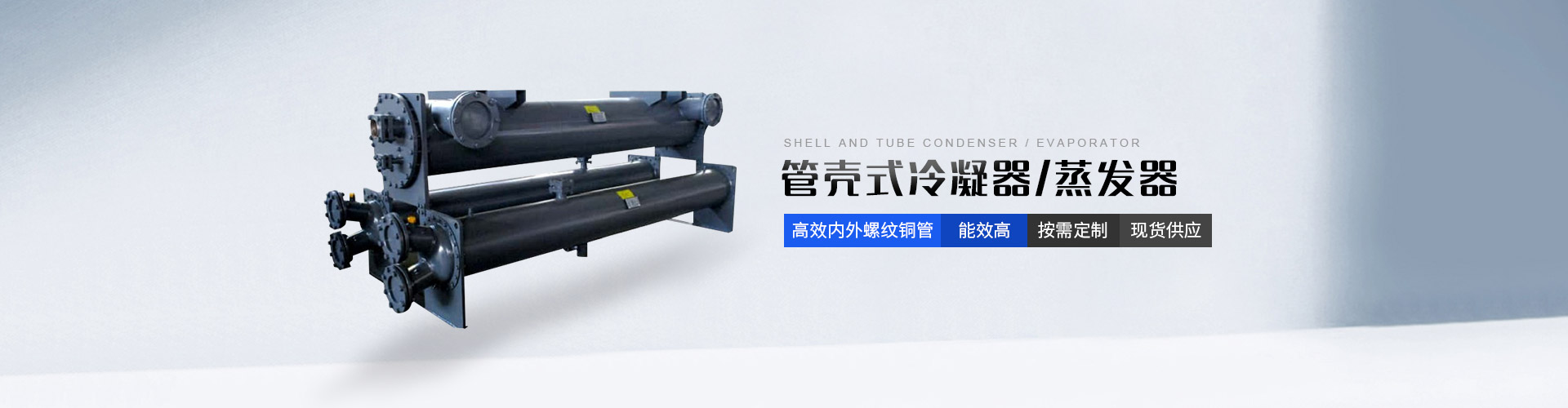


1. Based on the refrigeration method, the evaporator is categorized within the refrigerator's internal structure into evaporative cooling types, which can be further divided into natural convection and forced convection types, tube-plate types, composite blowing expansion types, single-ridge fin and rigid wire-wound tube types.
Of course, they all belong to the convective type. The finned plate coil type is a forced convection type that relies on fans. Generally speaking, they are convective within homes. There's a lot of frost inside the refrigerator. After a long time, it gets cleared out.
If there is too much frost on the refrigerator evaporator (forced convection type), it will affect the actual cooling effect. Frost must be cleared.
The finned evaporators feature copper tubes with aluminum fins. The structure of the copper tube aluminum fin design involves inserting cold-pressed aluminum fins into U-shaped copper tubes, then processing through expansion pipes to ensure the fins are symmetrically in contact with the copper tubes. Subsequently, the adjacent U-shaped tubes are welded and interconnected using small bends in the U-shaped copper tube.
Copper tubes with a standard diameter of 8-12mm are used for the cylindrical section, while aluminum blocks with a wall thickness of 0.15-3mm serve as part of the fins. The spacing between the fins is 8-12mm. This evaporator's cylindrical section is applied to the commercial circulation of refrigerants, and some fins are used to absorb heat from refrigerators. The evaporator boasts high conductivity. It occupies minimal space and is typically used in forced-air-cooled refrigerators (i.e., frost-free models).
