

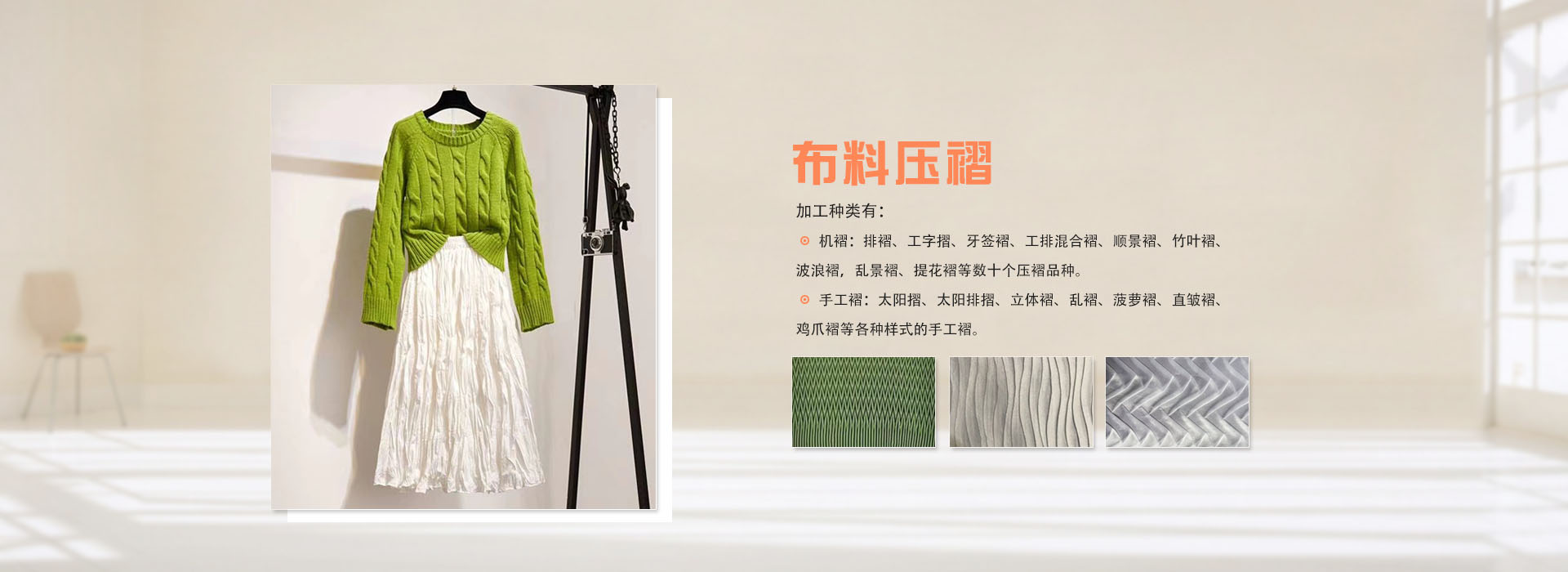
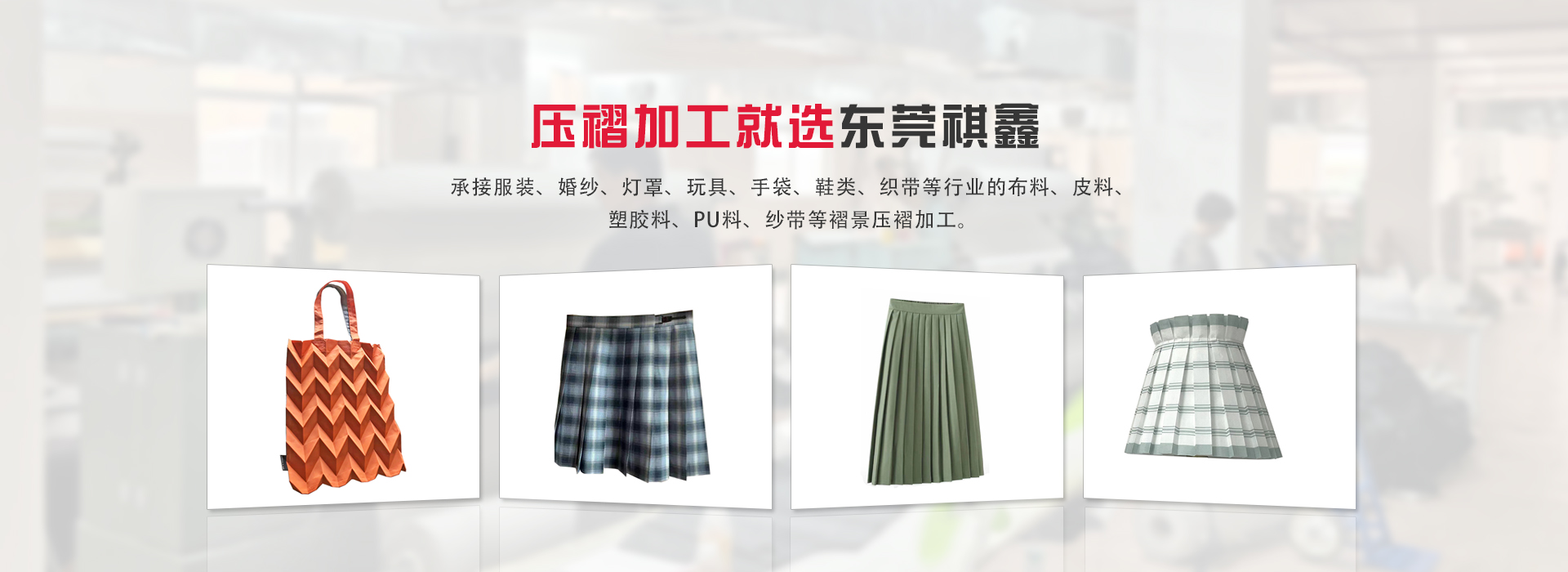

1. Pleats are categorized into machine-pressed and hand-pressed.
The machine is suitable for creasing rolled fabrics, typically in straight grain creases. For cross grain creases, the fabric needs to be cut, with the length usually not exceeding 1.5 meters.
Handcrafted pleating is suitable for cutting and pressing different pleat patterns and sizes, with corresponding molds designed for each type. Typically, a mold accommodates only one piece of fabric, making the process significantly slower compared to machine pleating.
2. If the fabric needs to be rolled before pleating, the edge must be ironed flat first before pleating, otherwise it won't be reversible after pressing. Additionally, the fabric pieces should be stacked neatly to avoid creases, stains, and dust, which are difficult to clean after high-temperature shaping. For garments with strict size requirements, it is recommended to leave the selvage on the fabric pieces, press the pleats, and then clean them up.
3. For pleated fabric, it is not advisable to choose 100% cotton, silk, or linen as these fabrics do not hold pleats well and tend to distort after washing.
4. Common quality issues in pleating processes include: not fully pressed, incorrect dimensions, uneven threads, fabric damage from high temperature, discoloration, and the formation of small creases.
