
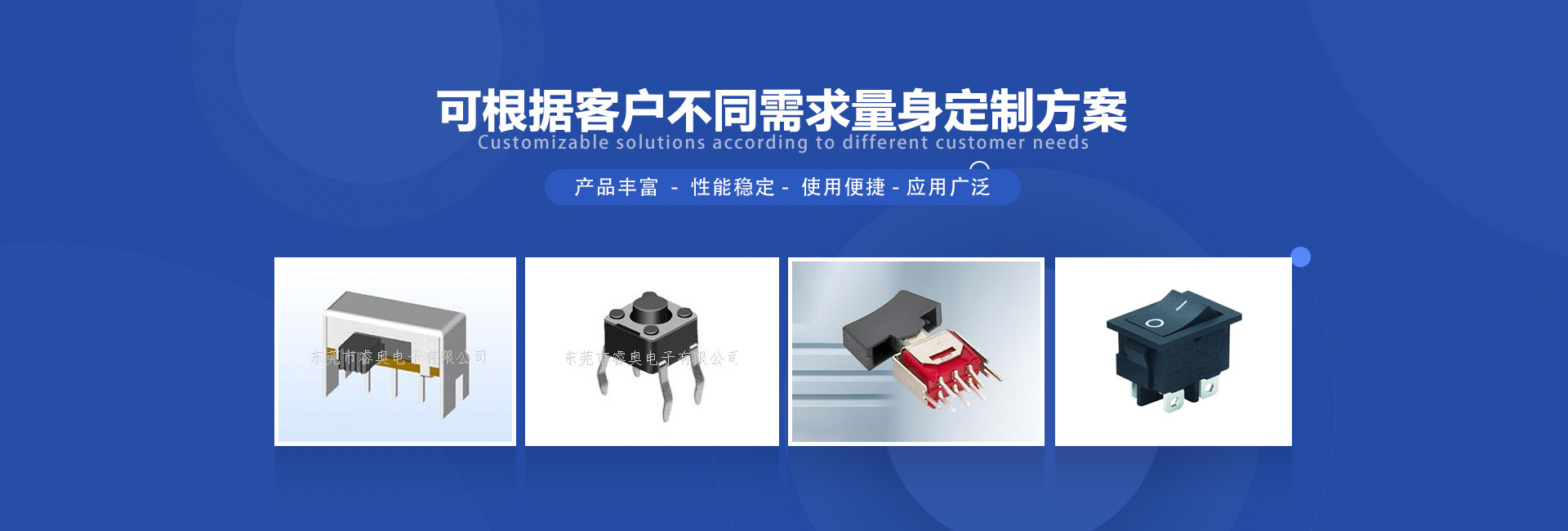


In everyday life, the touch switch is ubiquitous, widely used, particularly in household appliances.
A touch switch is an electronic switch that connects when the switch button is gently pressed, and it disconnects when the hand is released. The internal structure relies on the springy movement of metal strips to achieve the on-off function.
The touch switch is widely used in household appliances due to its small contact resistance, crisp tactile feel upon pressing, and a full range of height specifications. Its applications include audio-visual products, digital products, remote controls, communication devices, home appliances, security products, toys, computer products, fitness equipment, currency check pens, laser pen buttons, and more. However, there are drawbacks to the touch switch, as frequent pressing can cause the metal spring to fatigue and lose elasticity, leading to failure. Therefore, most electronic devices now use conductive rubber or metal spring switches directly, such as computer keyboards and remote controls.
Regarding the pin connection method of the five-pin touch switch: two pins form a group, and the corners are for more stable welding. The fifth pin is used for the ground wire. It is suitable for high-density surface mount technology; some can be cleaned after welding; the sealed type can prevent dust, and is suitable for harsh environments; the circuit design is simple. The product lifespan varies from 1 million to 10 million times, and the product has become a series.
Touch-sensitive switches have their drawbacks; frequent pressing can fatigue the metal spring strips, causing them to lose elasticity and fail. As a result, most electronic devices now use conductive rubber or metal spring strips directly, such as computer keyboards and remote controls.
