
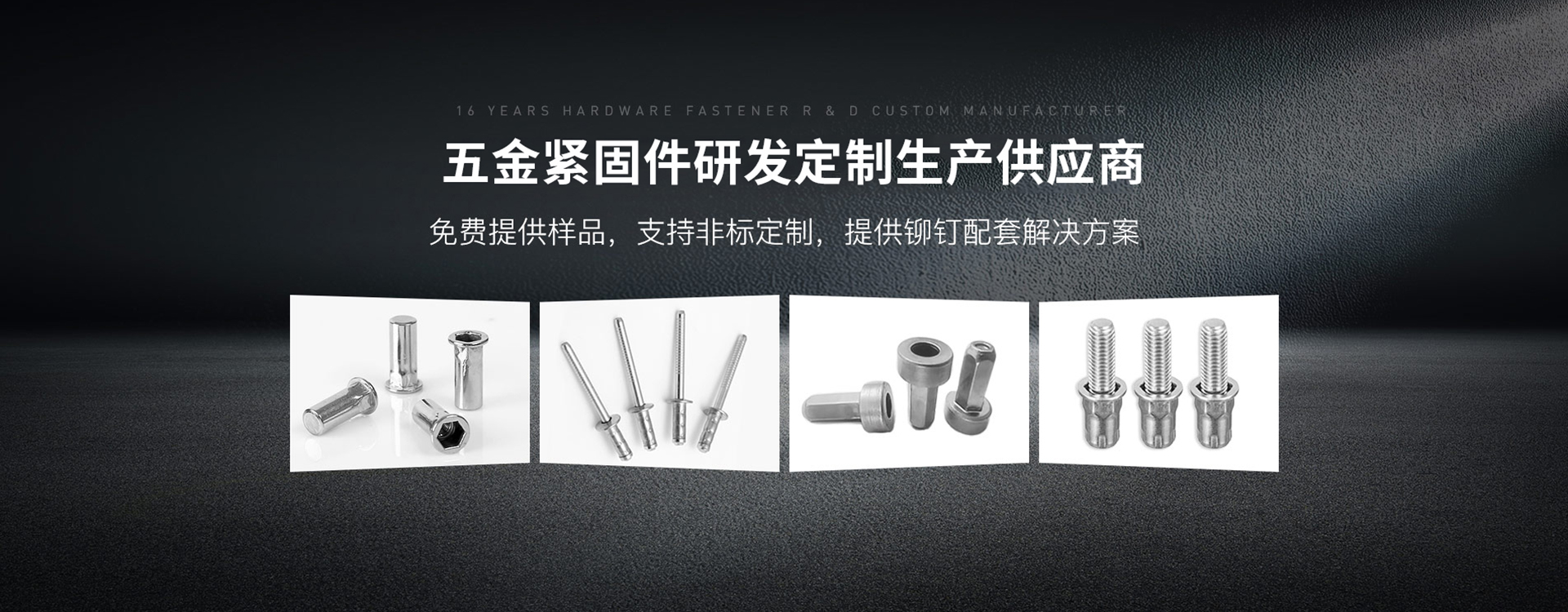
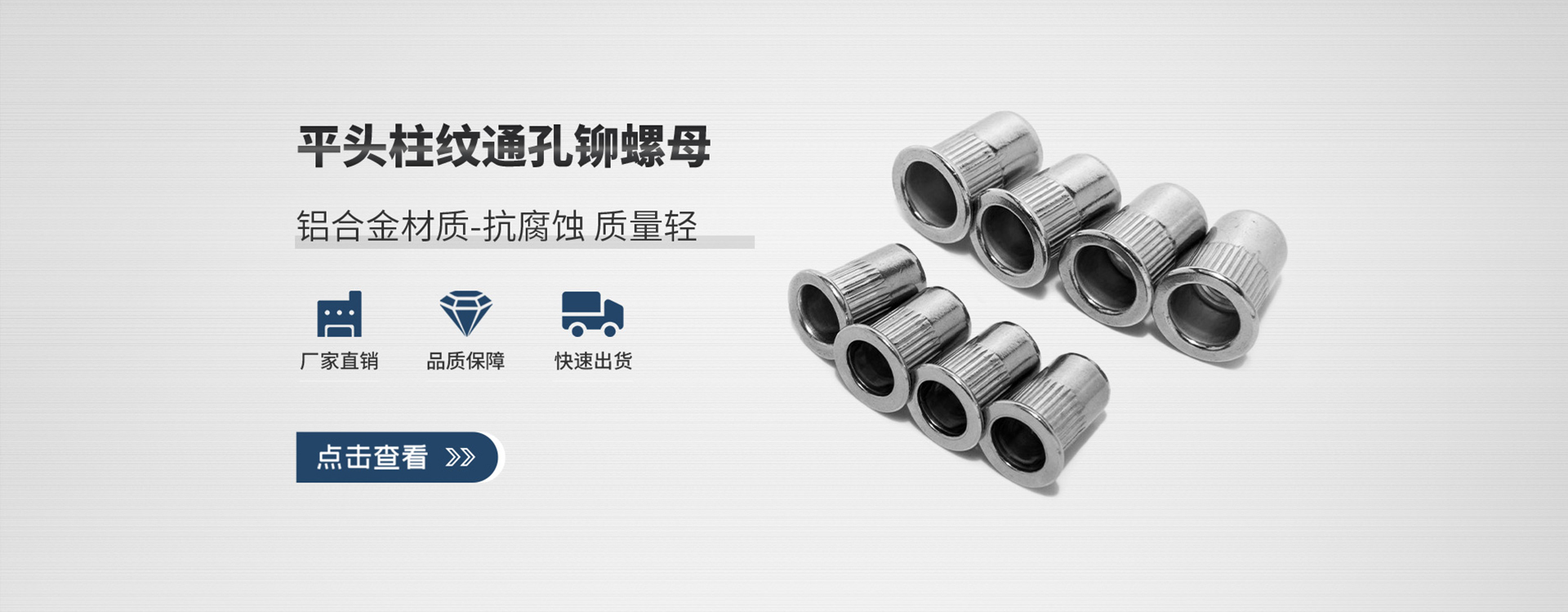
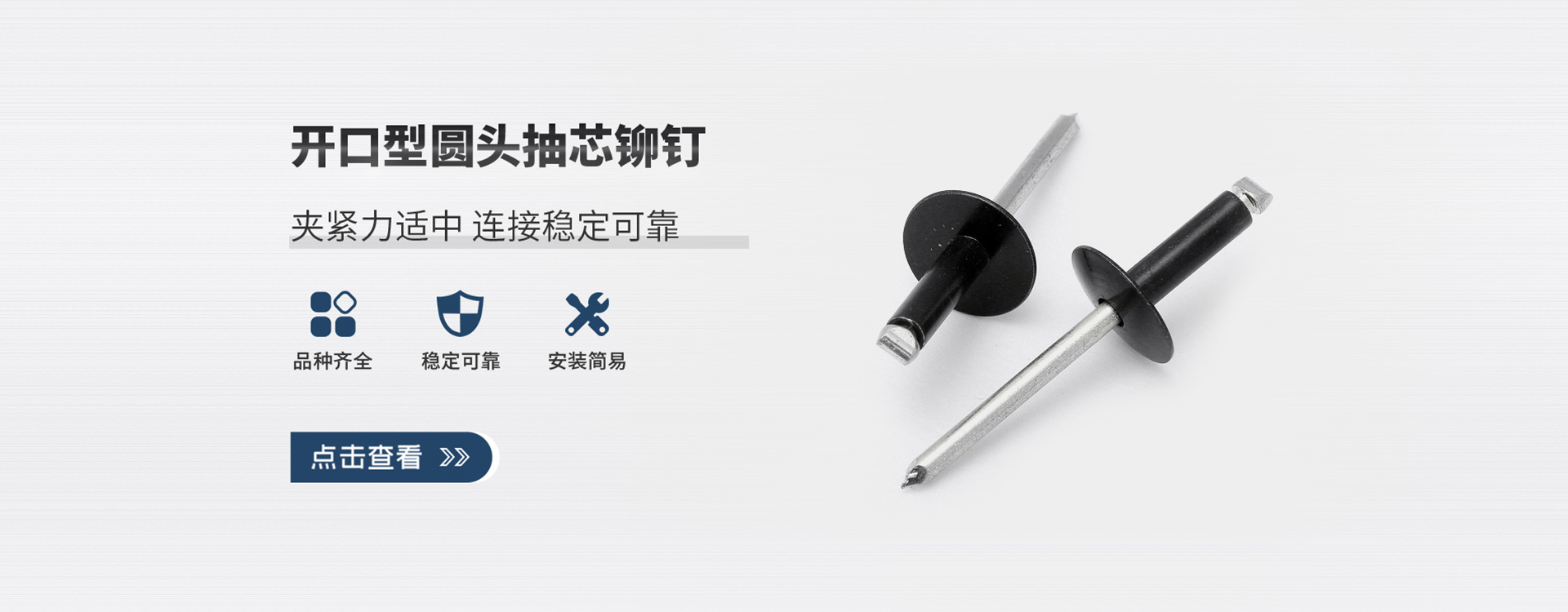

A rivet is a metal rod with a head at one end, which is inserted into the components to be joined. After the rod is inserted, the outer end is hammered or pressed to form another head, securing and fixing the components. There are also special insert rivets, which are divided into two parts: a thicker section with a headed rod body having a hole in the center, and a thinner section with a headed rod body that fits tightly with the thicker one. During riveting, the thinner rod is simply inserted into the thicker rod. Rivets are also known as Huck rivets or Huck bolts, and they utilize the principle of Hooke's Law. Using a specialized riveting equipment, two mating parts are clamped together, and the metal ring (or threadless nut) is deformed and filled into the grooves of the bolt body to tightly secure the ring to the bolt. Therefore, each rivet fastener has the same clamping force and characteristics such as loosening after assembly. Rivet fasteners can be used for general bolted or riveted components. Due to their high clamping force, resistance to loosening, and high shear strength, rivet fasteners are often used as a substitute for welding. Rivets are categorized by material type into open-core aluminum rivets, closed-end aluminum rivets, stainless steel rivets, and painted rivets.
The principle of riveting:
1. Place the rivet on the single-sided locked hole component, insert the rivet mandrel into the end of the pull riveter, ensuring the head is tightly against the rivet face.
2. Perform riveting until the opposite face of the rivet swells and the rivet mandrel breaks.
Step 3: Riveting completed.
Difference between Rivets and Bolts:
The rivet has two operating surfaces: one side supports the rivet while the other敲击, and it can only rivet through holes. During pull riveting, the other side does not need to be supported; simply press it directly. It can also rivet blind holes.
