
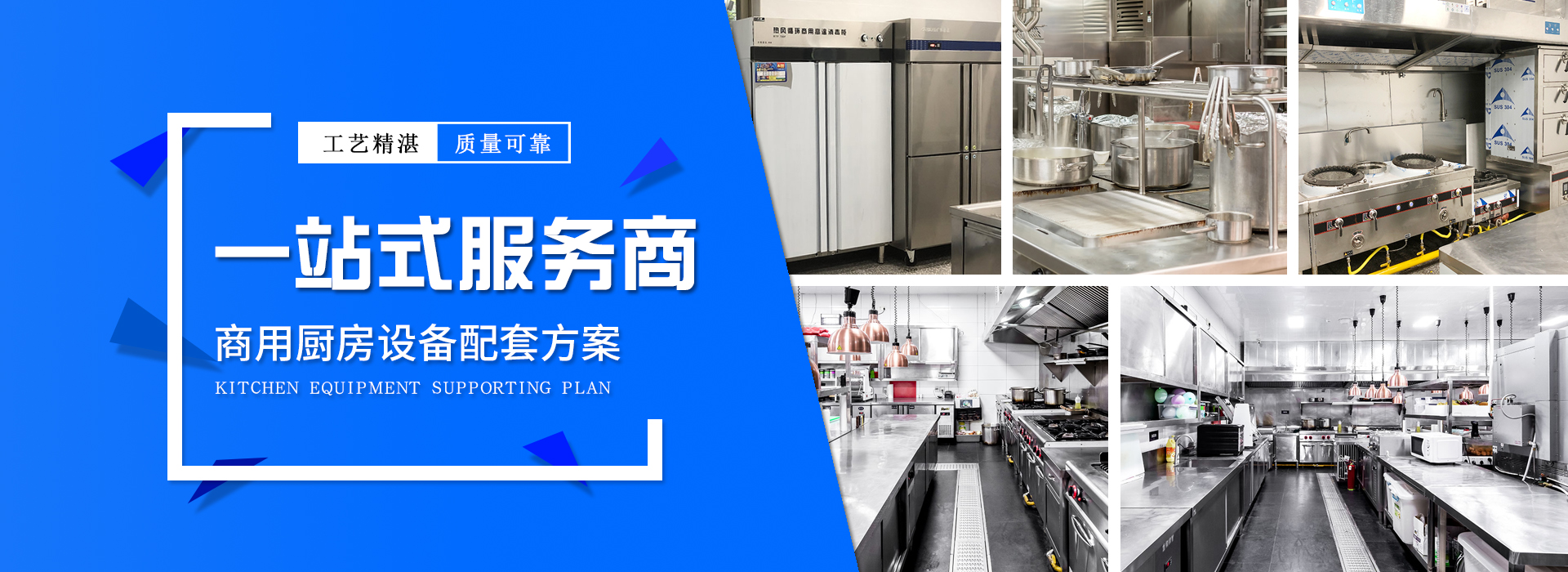



In this bustling era, competition is fierce across all industries, and the hotel industry is no exception. Most hotels attract consumers through their interior design styles. Therefore, the kitchen's interior design is also crucial, as it directly impacts the overall style. Let's take a look at the key points and standards for commercial kitchen design in hotels!
I. Key Points:
1. Standard kitchen sizes for restaurants should not be less than 35% of the dining area, with a ceiling height of no less than 2700mm.
2. The kitchen's后勤area requires a reduction in the floor level of at least 300mm to 350mm, while the open kitchen needs a reduction of 150mm to accommodate the installation of the walk-in refrigerator and the trench.
3. The general load requirement for kitchen areas is 500kg, while for special structure areas, it is 700kg. For general storage and cold storage, the load requirement is 800kg.
4. Grease-laden wastewater from the kitchen and food processing areas must first pass through an oil separator before being discharged into the sewage channel. The kitchen oil separator should be designed outside the kitchen area and its capacity should meet the requirement of being processed once a week.
5. Some food processing equipment and dishwashers require steam heating, but the equipment itself does not come with a steam heater; steam is provided through steam pipes.
Section II: Standards
1. Sanitation Issues: As the kitchen is a critical area for food preparation, it is imperative to ensure kitchen hygiene in hotel kitchen design. The upper part of the kitchen should not be adjacent to the restroom, and the lower section should not hold items prone to dampness and spoilage. The vicinity of the kitchen must be free from pollutants such as smoke, dust, garbage dumps, and drainage ditches. The kitchen's food service exit should also be distant from the restroom, and not aligned in the same direction. Since the kitchen generates a significant amount of smoke, noise, steam, and wastewater during operation, it is a highly polluted area. Therefore, hotel kitchen design must consider its impact on the surrounding environment and avoid proximity to guest rooms, meeting rooms, VIP rooms, and residential buildings.
2. Internal Facilities: The exhaust fan, an essential appliance in a kitchen, is a crucial functional feature that maintains fresh air quality. In hotel kitchen design, it is important to ensure adequate ventilation. While removing the main smoke and grease from the kitchen, attention must also be given to the exhaust gases and fumes produced by steam ovens, steam pots, ovens, and dishwashers, ensuring that smoke is effectively expelled.
3. Kitchen Sinks and Lighting: The kitchen is a high用水area, making sinks an indispensable necessity and a crucial conduit for wastewater disposal. Some kitchen sinks are too shallow or not smooth, leading to a junction between the kitchen and water areas, which generates an unpleasant,刺激性 odor. How can one feel confident about the cleanliness of such a kitchen? Such hotel kitchens find it challenging to maintain cleanliness and orderliness.
