
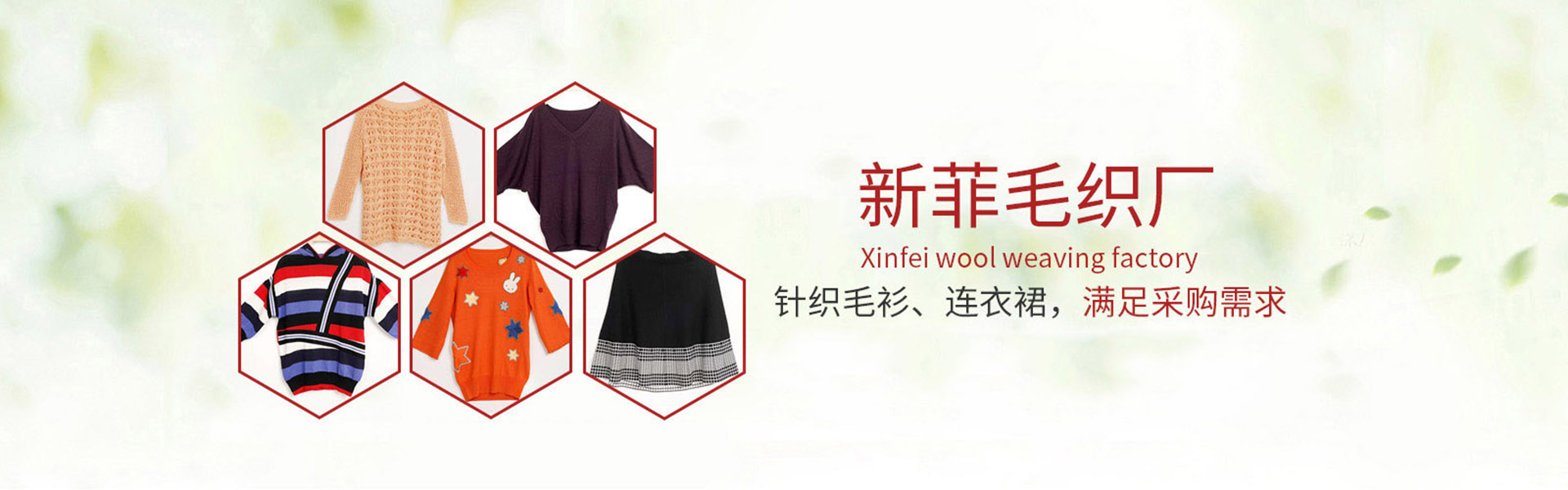


Knitted Fabrics:
Knitted fabrics, whether warp or weft, are primarily composed of loops connected by a single system running vertically or horizontally. Weft knitted fabrics are formed by loops of yarns interlocked horizontally; warp knitted fabrics are created by loops of yarns interlocked horizontally from parallel arranged warp yarns.
The structural unit of knitted fabrics is the loop, which forms a curved three-dimensional space curve. The main geometric structural parameters are yarn diameter, loop height and length, and the distance between loops. The actual structure of knitted fabrics is relatively complex and is usually represented by some geometric model (see Knitted Fabric Loop Geometry). Knitted fabrics generally refer to textiles woven using ribbing needles or other patterned needlework techniques.
Textile Products:
Typically woven from threads or filaments in both warp and weft directions. Its overall structural features include a flat, plate-like appearance, with repetitive warp and weft structures. The vertical structure is generally simple, but can also consist of several layers. The warp and weft threads interlace to form a mesh, which is both covering and porous, with a certain thickness.
Woven fabrics refer to textiles produced through a standard warp and weft weaving technique, typically manufactured on a loom.
Detailed Comparison:
Features:
Knitted Goods:
Its features include elasticity, excellent breathability, and a variety of patterns. The process is relatively complex, involving both hand weaving and specialized computerized looms.
Textile Fabric
The fabric is dense, without elasticity, and what we commonly see is mostly woven fabric. Knitted fabric is known as "weft knitted fabric," which is characterized by its elasticity.
Please provide the Chinese content to be translated.
Knitted Fabrics:
Cotton blend shirts (also known as autumn shirts in the north) and sweaters.
Textiles:
Cotton flannel, sweatshirt fabric.