


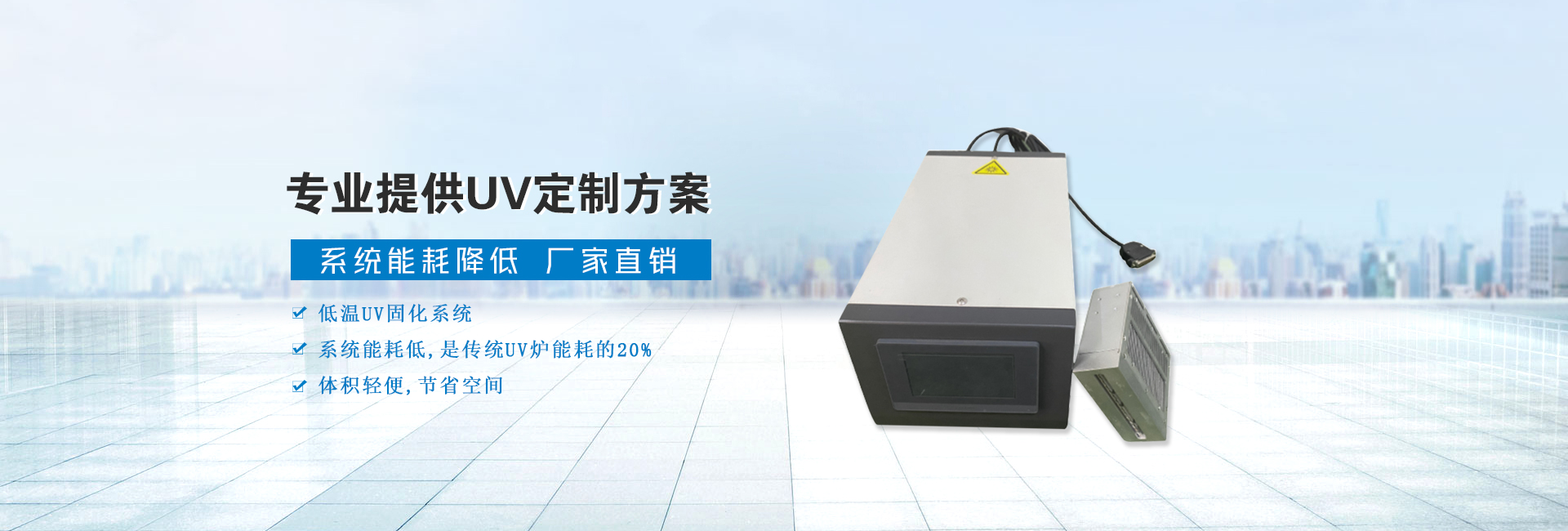

The UV curing machine is designed to accelerate the curing of UV inks. Its principle involves using ultraviolet light of a specific wavelength to excite initiators, which then release free radicals, triggering an instant cross-linking reaction between the polymer and the reactive diluent, transforming the liquid into a solid. What are its functions and advantages?
The role of UV curing machines
The mold's role: Emitting usable strong ultraviolet light to initiate polymerization reactions in special adhesives, thereby solidifying the mold products. Widely used in decorative plateware, decorative accessories (buttons, brooches, hairpins, belt buckles, etc.).
2. The subsequent role: Under the照射 of light or high-energy rays, the special adhesive undergoes a polymerization reaction, causing the bonding point to solidify. Widely used in bonding for PCB CHIP components, various electronic parts, glass bonding, liquid crystal panels, and terminal potting bonding.
3. Coating Applications: Surface coating on wood, glossy coating, plastic flooring coating, and fiber optic wire surface coating. Enhances the surface luster of printed items, features a belt conveyor with infinite speed control, and includes anti-offset devices to ensure smooth transportation.
II. Advantages of UV Curing Machines
Compared to traditional oven curing, UV curing machines offer environmental benefits as well.
2. Its drying function has a wide range of applications, such as in wood, steel, leather, and more.
3. Reduced the time spent on paint drying, effectively shortening the coating process.
After UV curing, the surface hardness of the dried coated object is enhanced, and its luster is brighter.
That wraps up our discussion on the functions and advantages of UV LED curing machines. In recent years, with the introduction of UV curing machines, the UV curing industry has undergone revolutionary changes. They offer consistent light intensity, temperature control, portability, and environmental friendliness, along with relatively low procurement costs and almost zero maintenance costs, which have significantly driven the improvement of UV curing process quality and energy-saving efforts.
