
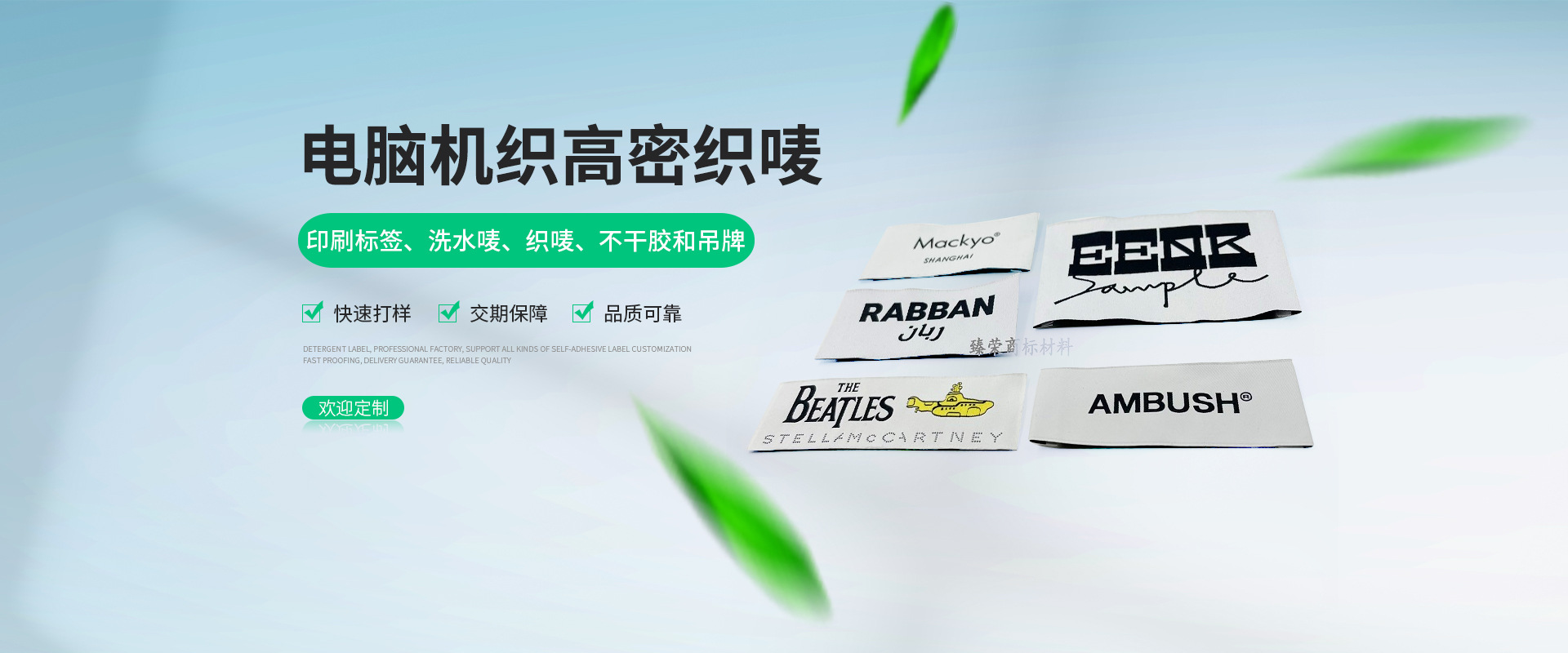
Watermark labels are primarily used in the clothing industry for printing or etching washing instructions. Materials vary, with the most common being white, standard label tape, also known as adhesive tape. The post-processing technique typically involves printing various parameters onto fabric labels using a label machine and then cutting them into finished products.
Laundry tags, commonly referred to as "washing labels" by northerners, are also known simply as "wash tags" or "tags." Southerners tend to call them "laundry marks," "laundry tags," or just "marks." In essence, both "laundry tags" and "laundry marks" refer to the same type of fabric label—the washing label. Other names include "print marks," "mark heads," and "garment fabric tags."
The laundry tag is primarily used on garments to indicate washing instructions. There are various materials for laundry tags, including ribbons, nylon straps, fiber cloth, non-woven fabric, blended fabric, and cotton straps. Higher-end clothing tends to use ribbons and woven-edge ribbons, which can prevent color fading during washing and offer exquisite printing. Nylon straps, being a plant-coated fabric, are difficult to prevent color fading, and are generally not used for high-end clothing. The printing content on laundry tags can be divided into two parts: the washing symbol and the washing requirements.
Laundry tags are not just for clothing, but it's undeniable that the apparel industry is one of the broadest sectors that utilizes them. Naturally, shoes, bags, handbags, electronic products, and various other industries will likely use wash care labels whenever tags are needed!