
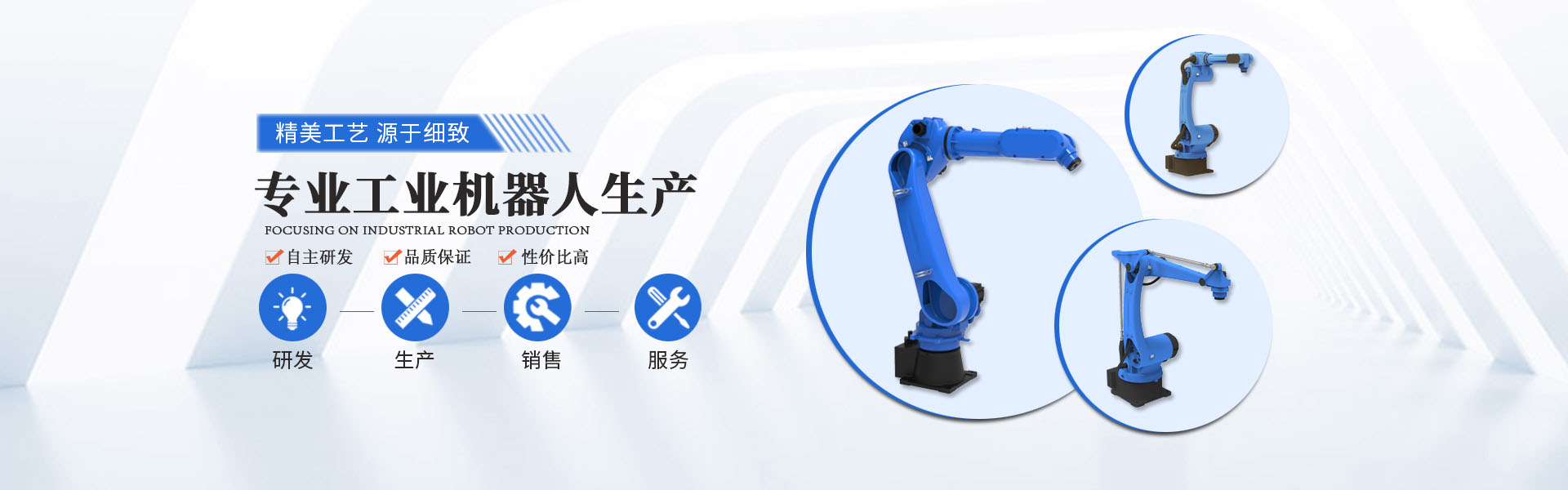
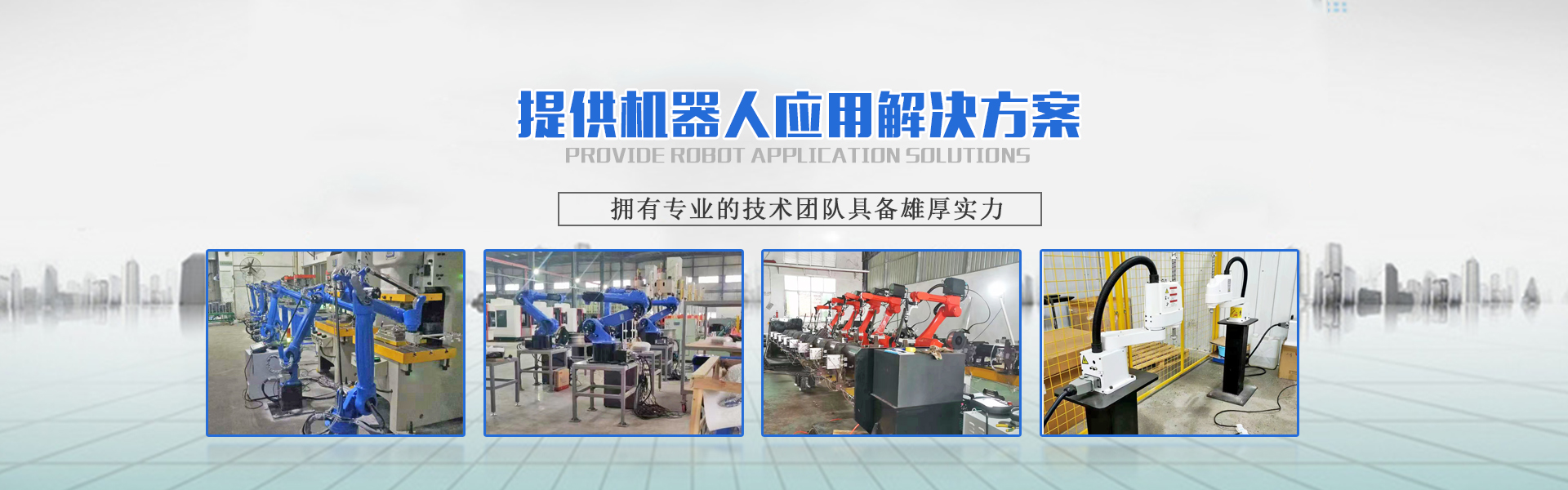

Industrial robots come in various types. In terms of the coordinate system of the arm, there are mainly four basic types: rectangular coordinate, cylindrical coordinate, spherical coordinate, and jointed types, among others.
1. Right-Angle Coordinate Robot Arm
The right-angle coordinate robot, also known as the linear robot, is a type of robot suitable for use in rows of work positions or in conjunction with conveyors. Its arm can extend and retract, move left and right, and up and down, and operates in a straight line along the X, Y, and Z axes in a right-angle coordinate pattern. Its working range can be a single linear movement, two linear movements, or three linear movements. This type of robot has a simple structure, intuitive motion, and is easy to achieve high precision. The drawback is that it occupies a large space, resulting in a smaller working range.
2. Cylindrical-coordinate robotic arm
The cylindrical-coordinate articulated robot, also known as a rotating arm robot, is a widely used type for handling and measuring workpieces. It boasts advantages such as good intuitiveness, simple structure, compact size, and a large operational range. The cylindrical-coordinate articulated robot consists of three movements: X, Z, and small. Its operational range can be divided into: one rotational movement, one linear movement, and one rotational movement not in the plane of the linear movement; or two linear movements and one rotational movement. The characteristic of the cylindrical-coordinate articulated robot is that it features sliding sleeves on the vertical guide posts, with the arm mounted on the sliding sleeve, allowing it to perform linear movements in the vertical direction and circular oscillations left and right within the horizontal plane.
3. Spherical Coordinate Mechanical Arm
The spherical coordinate robot, also known as the pitch robot, is a versatile manipulator with a high degree of freedom. Composed of mechanical arms in the X, Y, and Z dimensions, the working range of the spherical coordinate robot encompasses: one rotational movement, two rotational movements, and two rotational movements combined with one linear movement. Compared to the rotary robot, it expands its working range while occupying the same spatial position. It can also extend its arm to the ground to retrieve workpieces from the floor. Its drawback is the poor intuitiveness of movement. The structure is complex, and the disadvantage is that position errors can be magnified as the arm extends.
4. Articulated robotic arm
Articulated robotic arms, also known as flexion-extension arms, are designed for operations close to the body. Similar to human hands, they have elbows and offer multiple degrees of freedom, allowing for flexible movement, making them suitable for work in confined spaces. Key features of articulated robotic arms include the swinging of the upper and lower arms, as well as the movement of the elbow and shoulder joints; they possess an upper limb structure that enables skills similar to those of human hand manipulation.
