

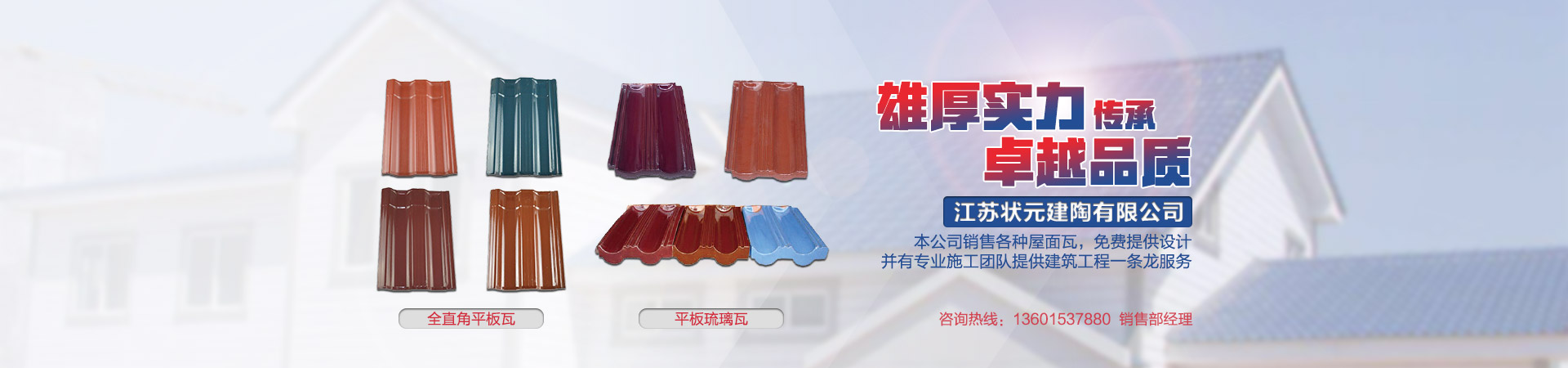
Ceramic tiles, a type of roofing building material, feature rectangular tiles with longitudinal grooves on their front. At the top of the grooves, there are tile stoppers, and the left and right sides have left and right lap edges, respectively. The back of the tile has a rear claw boss at the bottom and a rear rib at the raised portion. This ceramic tile structure is rational, ensuring smooth drainage and preventing leaks. It also boasts high impact resistance and chemical resistance. Another notable advantage of the new ceramic tiles is their stable performance in large sizes without cracks. Installation is straightforward, requiring only the interlocking of tiles, offering high convenience, tight joints, and strong connections. The tiles can be made from ceramic materials, with high flexural and compressive strength, uniform density, light weight, and non-absorbent properties. Unlike earthenware or cement tiles, they do not increase roof load due to water absorption. The smooth and flat surface of the tiles can be available in various colors, making them an ideal roofing material for modern buildings.
We've reached the end of our introduction to the use of ceramic tiles. We believe everyone has gained an understanding of the overall performance of these tiles. As we use more tiles around us, the selection process becomes more complex. When choosing tiles, we not only need to consider their appearance but also understand their various performance characteristics.


