
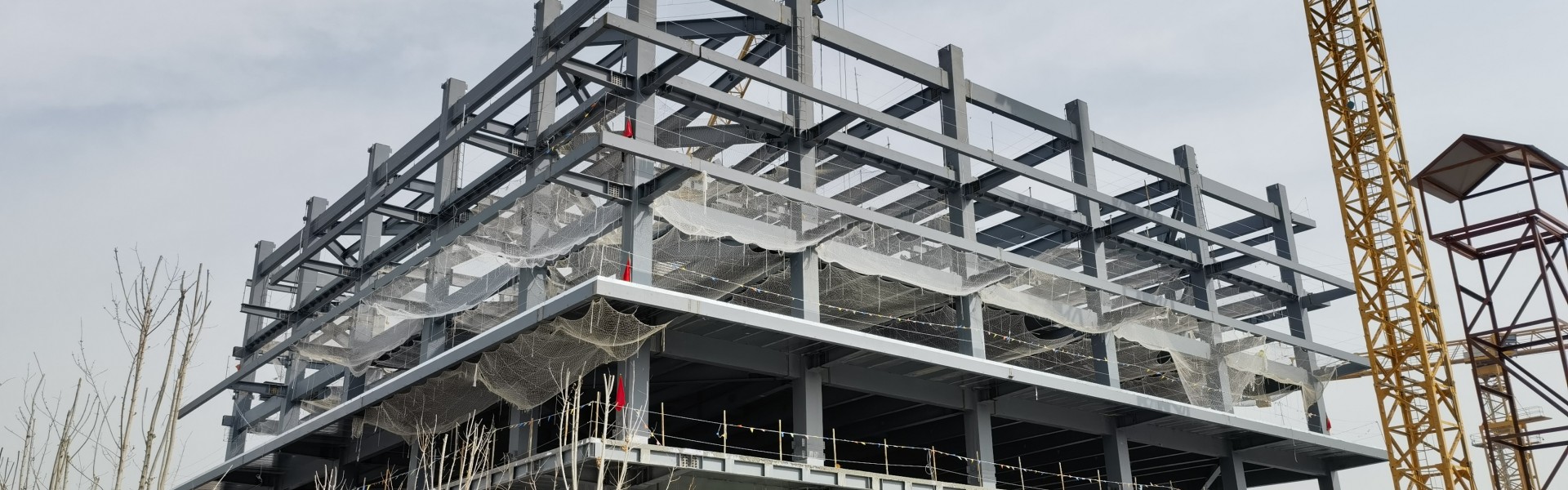
Primary and secondary steel structures are all treated with sandblasting and painting to meet anti-corrosion requirements. The amount of paint used is largely related to the dry film thickness, and it also depends on the application method and coating system (spraying has a higher loss rate than hand brushing). The following data is the theoretical coating rate (for reference only); the actual amount should be multiplied by a coefficient of 1.5-1.8.
75 micrometers thick, approximately 8.5 square meters per liter.
Approximately 125 micrometers thick, about 6.5 m²/L.
Approximately 200 micrometers thick, with a density of about 4 square meters per liter.
It is typically measured in volume units.
The paint manual includes a theoretical coverage rate, which indicates the amount of paint (in liters) needed to cover 1 square meter with a thickness of 100um (or 50um, etc., depending on your conversion). For instance, this number is X%.
The paint usage is calculated as x% * 25,000 * paint thickness / 100.
The result is then multiplied by a loss coefficient, such as 1.3, generally related to the construction equipment.
The net weight of the weld on steel structures is approximately 1.5% to 2% of the steel component's weight. Based on this, the welding rod weight is increased, considering the net weight and the added weight of the welding rod head, as well as the flux coating. Generally, the weight of the welding rod needed is about 1.8 to 2.2 times the weight required.
Estimation of Steel Structure Paint Consumption
Theoretical Coverage Rate and Actual Coverage Rate Calculation Formula for Paint
The theoretical spreading rate of the paint refers to the area covered by one liter of paint applied to a smooth, flat, and poreless glass surface, after it has dried to the specified film thickness.
Theoretical Coating Rate = Solid Volume Content*10/Dry Film Thickness (micrometers) Please provide the Chinese content to be translated.²/Ascending)
During actual construction, due to various factors such as the surface shape of the construction workpieces, the required film thickness, the application method, the worker's skills, the construction environment, and weather conditions, the actual amount of paint used will always be greater than the calculated amount derived from dividing the construction area by the theoretical coating rate.“Theoretical Usage”。
Paint Actual Consumption/Standard Consumption (this ratio is defined as the "Loss Coefficient")CF。)
Actual Usage of Engineering Paint = Construction Area / Actual Coating Rate=Construction Area*CF/Theoretical Coating Rate= Theoretical Usage× CF
“Coefficient of Loss”CFAnalysis and Estimation:
Paint Loss Caused by Workpiece Surface Roughness
During surface painting over galvanized steel sheets, the film thickness at the crest should be less than that at the trough. To meet the corrosion protection thickness requirements at the crest (to avoid pitting), the...“Tibet”The paint is essentially worn out; that is it.“Steel roughness consumption loss”The following table presents paint loss due to different spraying methods (expressed as dry film thickness):
Inconsistent coating thickness distribution leading to paint loss
After the construction, during the film thickness acceptance, if the film thickness reaches or exceeds the specified thickness, the technical service representative, supervisor, or owner will sign off as normal and合格. However, for the parts that do not meet the specified film thickness, touch-up painting will be required, which will inevitably cause“Thick”Loss. The specific factors leading to uneven distribution of paint film thickness include: worker proficiency, construction environment, simplicity or complexity of the workpiece (flat workpiece), and construction method (airless spraying, conventional spraying, brushing, rolling).
Waste from residual paint in containers
Painting job completed; the average loss of paint remaining inside the paint bucket walls and rubber hoses is approximately5%。
In summary, the paint loss coefficient during construction is primarily caused by losses due to the roughness of the workpiece surface, uneven distribution of the paint film thickness, construction waste, and the waste of leftover paint in containers.