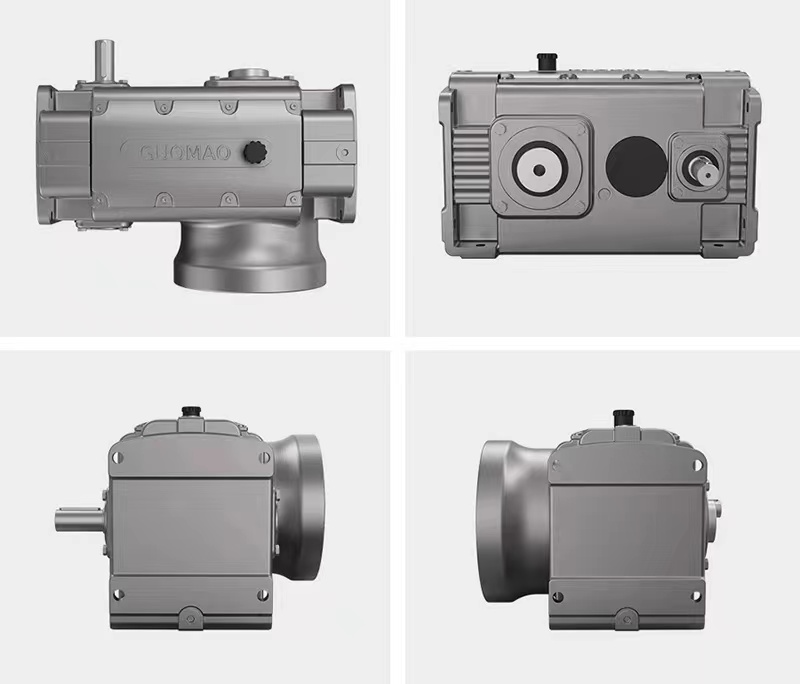

ManyHelical Gearbox ReducerCustomers know that it's used to reduce the speed of the main equipment to increase torque, thereby meeting our requirements. Don't underestimate this small accessory; it's an indispensable auxiliary device for many mechanical manufacturers. However, prolonged operation can lead to high temperatures. So, what are the cooling methods available?
The working environment for reducers is typically poor, and they must also operate in high-temperature conditions. Therefore, cooling becomes particularly important. Below is a brief introduction.Helical Gearbox ReducerFour Main Cooling Methods
During prolonged operation, the oil sump and bearing temperatures of the reducer should not exceed 35°C for the oil sump and should not be higher than 45°C for the bearing.
In cases where an emergency requires the long-term operation of the reducer, it is essential to equip the device with a cooling system to ensure the reducer operates error-free for extended periods. The reducer is equipped with cooling helical tubes, allowing users to connect their own cooling water. As the cooling water flows through the helical tubes, it absorbs heat and dissipates it, thereby achieving the cooling effect.
The flow of cooling water should not be excessive, but it must ensure easy passage through the reducer. If the reducer fails to operate effectively for an extended period, there is a risk of freezing, so the cooling water must be completely drained.
During the normal operation of the reducer, it is necessary for staff to periodically inspect it. In case of any abnormalities, work should be stopped immediately. This can nip potential hazards in the bud and also extend the lifespan of the reducer, as well as improve work efficiency.