

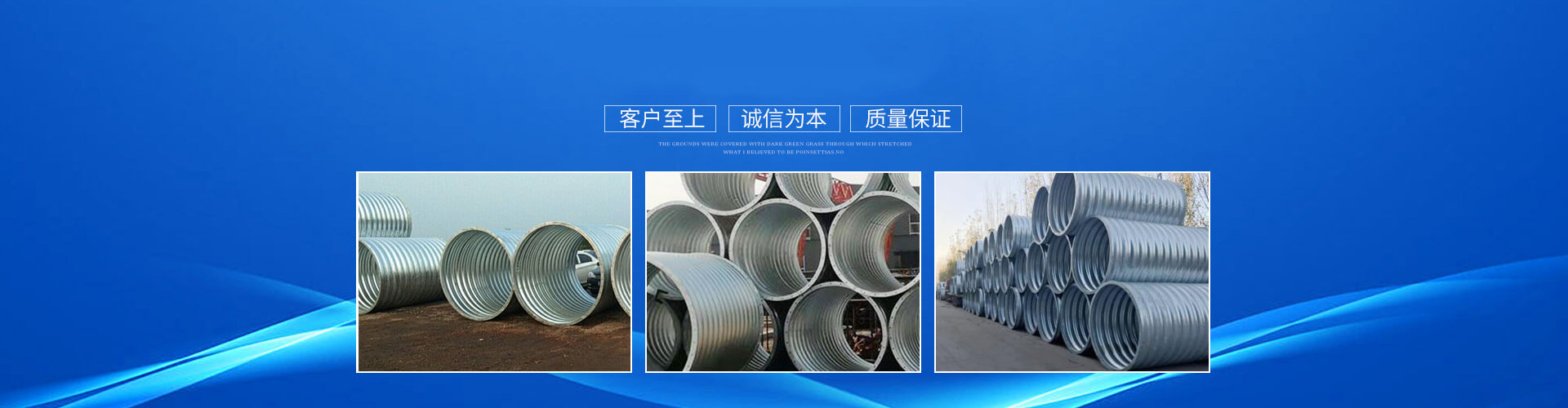


Ripple steel plates are commonly used for the construction of culverts on national, provincial, and county roads, railway underpasses, bridge crossings, and high-speed rail tunnel sections. These structures often suffer from varying degrees of damage due to weather, geological changes, vibrations, oxidation erosion, and overloading. Utilizing ripple steel structures (ripple steel pipes, arch structures, and ripple steel box culverts) to reinforce, widen, or reconstruct existing structures can significantly reduce construction costs and facilitate future expansion or replacement, thereby extending the lifespan of the projects.
Principle of Steel Corrugated Pipe Operation:
Customized corrugated steel structures can be designed according to the cross-section of tunnels or culverts. The ends of the corrugated plates feature L-shaped flanges, and limiting edges are set on both sides of the plates for positioning the bending edges of adjacent corrugated plates. By filling the space between the corrugated steel structure and the existing tunnel or culvert with grouting material, both can function as a unified load-bearing structure, significantly enhancing their load-bearing capacity, seismic performance, and extending their service life.
Corrosion-resistant corrugated steel plate spiral pipe product advantages:
The product unit modules are designed for modularization, facilitating on-site construction and installation of the panels.
(2) The plate units can be individually replaced during later use, thus avoiding waste of a large amount of maintenance resources.
This structure will not cause any damage to the existing structure, no disconnection is required, and it will not affect normal usage.
(4) Short construction period, high material availability, and cost savings on labor and materials.
