
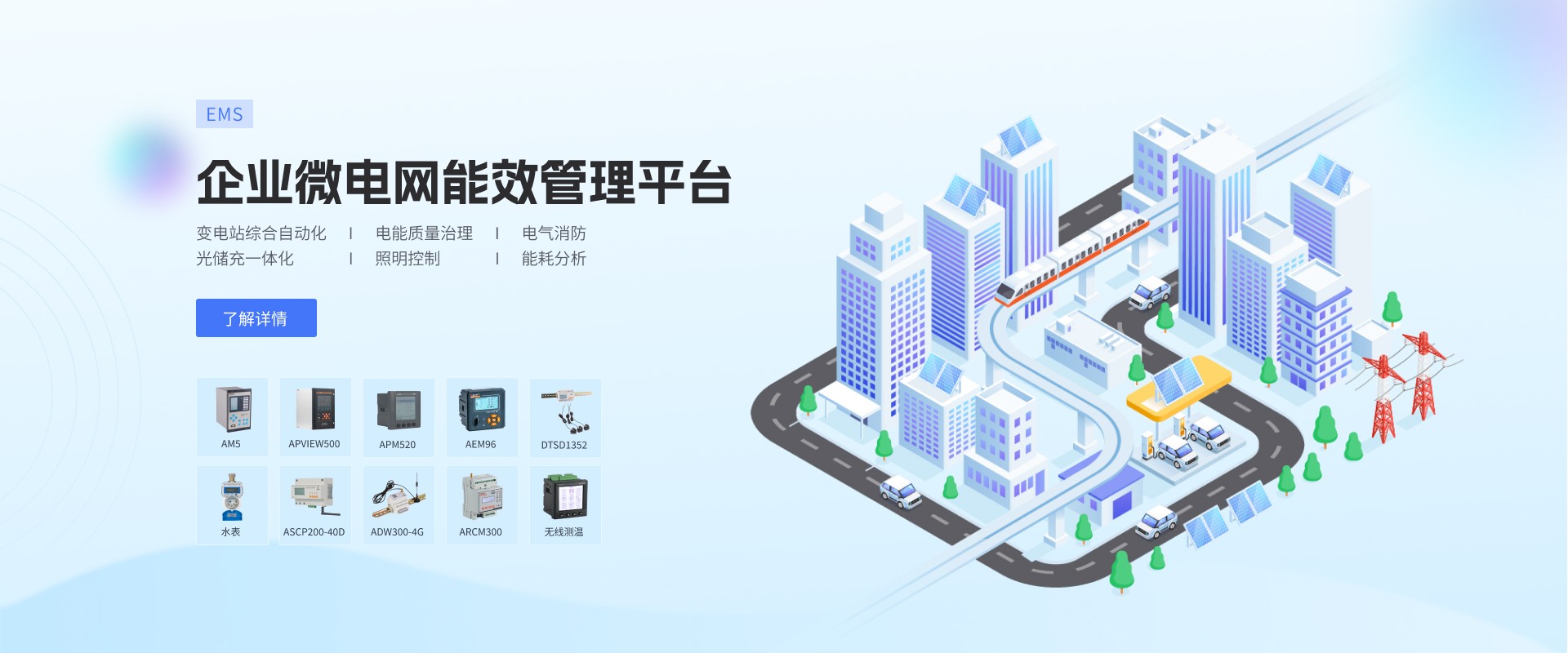
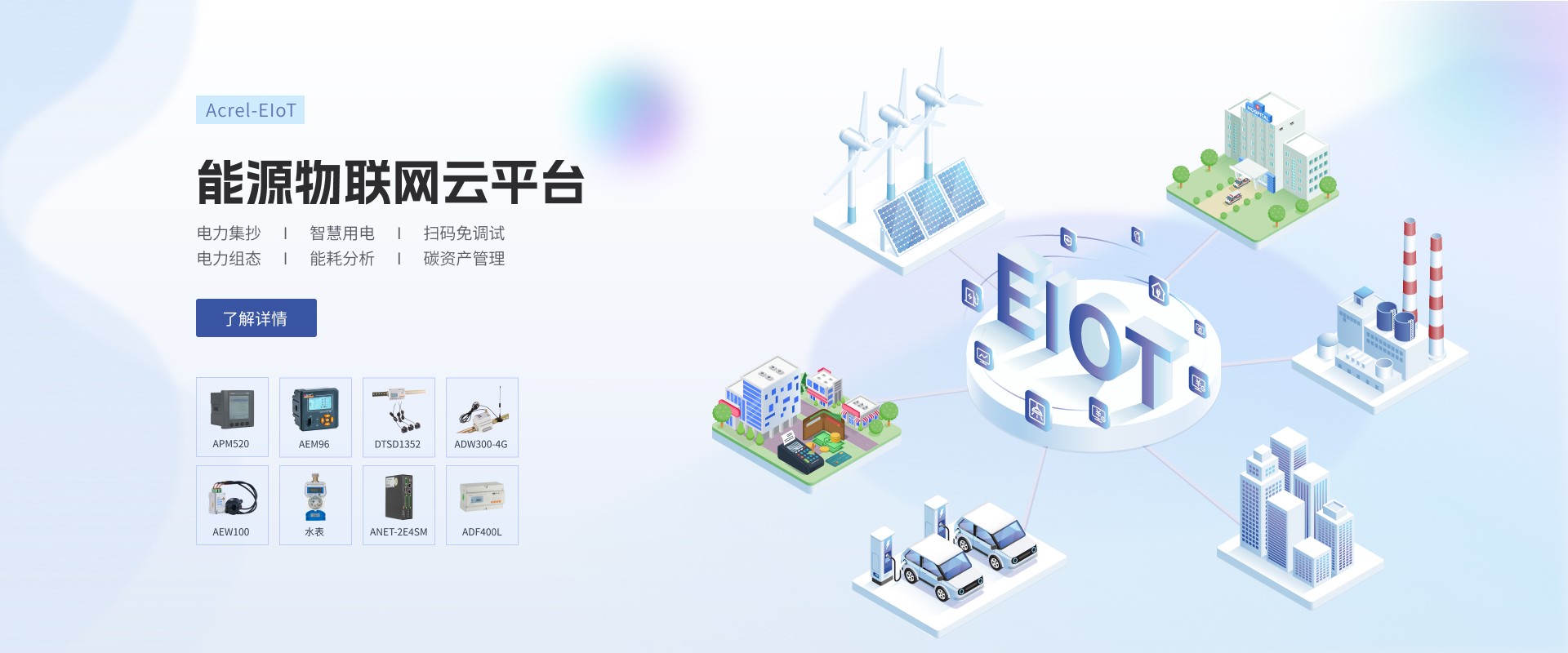

Summary:Detailing the data center, communication layer, device configuration, and system software design in the energy consumption management platform system, which enables data collection, comprehensive energy consumption overview based on GIS, categorized statistical analysis of energy consumption, event and alert information management, real-time data storage, historical data recording, and security functions of the regulatory platform.
Keywords:Energy Management, Data Centers, Energy Classification and Statistics, Events and Alerts
0 Introduction
Energy management has become one of the crucial measures in the management processes of commercial complexes. How to effectively monitor the provided energy, analyze the collected energy data, and then formulate various management reports required by the departments, has become the primary challenge for energy management in commercial complex management enterprises at this stage. Establishing a data-based energy consumption supervision platform, dynamically mastering the energy consumption status of the enterprise, and building a scientific energy consumption model are trends that are imperative for promoting energy-saving enterprises and achieving the goal of energy conservation and consumption reduction. This article takes the Jilin Gate A2A3 commercial complex project in Jinan, Shandong, which was under construction at the end of 2020, as an example. The project, invested by绿地 Group, covers a total floor area of 228,800 square meters and is a multi-format complex consisting of commercial spaces, office buildings, hotels, and apartments. By adopting an energy consumption management system, the project has achieved good results in energy conservation and emission reduction.
Features of the Energy Consumption Management System
As a commercial complex, the goal of constructing an energy consumption management platform is to achieve data-driven energy consumption, dynamic management, data visualization, and standardized energy-saving indicators. It aims to enhance the resource and energy efficiency of buildings through energy-saving and water-saving policies and corresponding technological solutions. Based on the design principles and objectives of the platform, adopting the concept of "centralized management with distributed collection," the system architecture is built upon the intelligent device management network of the enterprise, reducing the cost of system construction. Utilizing the corporate Ethernet as the primary medium, the system implements dynamic monitoring for key energy-consuming buildings and facilities by department and enterprise, constructing a highly reliable, efficient, and shareable corporate energy consumption database. This database establishes an energy consumption monitoring and statistical platform, providing decision support for energy-saving strategies of the enterprise facilities.
System Design for Energy Consumption Management Platform
The Energy Consumption Management Platform is equipped with a data center responsible for collecting, organizing, and processing data for energy-saving regulatory software; it also features on-site data gateways for data collection and provision to the data center. The communication between data gateways and the data center is achieved through a local area network. The network structure is illustrated in Figure 1.

Figure 1: Energy Consumption Management Platform Network Structure Diagram
2.1 Energy Consumption Management Platform Data Center
The data center is located on the first floor of Building A of the commercial complex. It is equipped with: one main workstation server, a maintenance workstation with预留 interfaces for expansion, one UPS backup power supply, one intelligent core switch, and one printer. The main workstation server collects and processes data on water and electricity consumption throughout the commercial complex, storing it in a historical database. The workstation also serves as a human-machine interface for administrators, allowing them to monitor real-time energy consumption dynamics. Through the various energy consumption data statistics and analysis functions of the energy consumption management platform, administrators can promptly identify and address abnormal energy consumption situations, reduce energy consumption, and achieve the goal of energy-saving supervision.
The energy consumption management platform, after collecting various data over a period of time, can generate statistical reports on water and electricity usage within this commercial complex. By comparing equipment horizontally and vertically within the region, it can establish reference values for different types of energy consumption units within the regulated area. These reference values enable targeted analysis of major energy consumers within the region, providing a basis for energy-saving measures. Additionally, comparing these reference values with energy consumption figures of other buildings allows for industry-level comparisons, which will serve as a basis for future energy-saving supervision. The energy consumption management platform software features system equipment configuration, data communication processing, human-machine interface monitoring, remote operation, event alerts, and the establishment and storage of real-time and historical databases.
2.1.1 Communication Layer Structure
The communication layer is composed of data gateways and Ethernet switches; it supports common international and domestic equipment protocols such as TCP/IP, fieldbus, Profibus-DP, MODBUS, DNP, IEC870-5, IEC61850, and DLT645-1997, allowing various energy metering devices within commercial complexes to be conveniently and directly connected to the system.
The regulatory platform utilizes a dedicated network of intelligent equipment within the commercial complex, providing access to devices such as workstations, communication management units (data gateways), ensuring the data security of the energy consumption management platform.
2.1.2 Field Instrument Layer Composition
The on-site instrumentation layer of the commercial complex includes metering instruments for electrical energy data, sub-metering instruments for individual electrical energy within the building, and various water meters for energy consumption measurement equipment.
2.2 Communication Layer of Energy Consumption Management Platform
The commercial complex employs RS485 bus communication for various metering devices on-site, utilizing shielded twisted pair cables for the RS485 bus. The field metering instruments and data gateways are connected via shielded twisted pair cables. The internal two cores of the shielded twisted pair are twisted together, reducing transmission loss for RS485. Additionally, the outer layer of copper wire shielding reduces external interference, resulting in better communication quality. Data gateways connect to the data server through an intelligent TCP/IP private network. All data gateways are connected to the intelligent device private network based on the principle of proximity, using a straight-through cable connection method, with all data transmitted to the data server via the network. Workstation hosts are also connected to the data server via the network. The entire management platform is composed of the data center, communication management layer, and field instrument layer.
2.3 System Equipment Configuration
Data Center Hardware Configuration: Monitoring Master Station, UPS Power, Printer; Software Configuration: System Software, Database Software, Energy Consumption Management Platform, Other Tool Software; Communication and Field Intelligent Instrumentation Equipment Configuration: Includes intelligent private network switches and data network gateways, with KIEN3016 unmanaged Ethernet switch configured for the intelligent private network switch, capable of adapting to complex working environments, featuring 16 electrical ports, ensuring stable and reliable communication; Data Gateway, with the following features: Uses ARM9 platform, embedded LINUX operating system, with stable and reliable performance; Supports RealCom/TTY drivers, fully compatible with the existing software system; Offers TCP Server, TCP Client, and UDP general transparent transmission modes; Supports serial server direct connection and reverse terminal modes; Can be configured and managed via web browser or TELNET terminal; Provides one 10/100M auto-negotiating network port, and supports MDI, MDI-X auto-negotiation functions; Each serial port is equipped with 15KVESD surge protection, and offers multiple communication interface functions: 2/4/8 configurable serial interfaces.
2.4 Energy Consumption Management Platform System Software
The Energy Consumption Management Platform System Software supports multitasking and cross-platform database connections, and is compatible with various open database management systems. The Energy Consumption Management Platform includes the following software: - Operating System: Utilizes a server-specific operating system software, which includes operating system package creation, compilation systems, diagnostic systems, and various software maintenance and development tools. The operating system boasts excellent real-time performance; a function to prevent data file loss or corruption; and the ability to effectively manage various external devices. - Database Software: The database scale can accommodate the entire system and handle all data required for future expansion and the integration of automated systems. It is suitable for various data types. Its performance indicators meet the system's functional and performance requirements; its data model aligns with energy consumption monitoring and load management needs, facilitating continuous expansion of data scale and the continuous update of data structures formed.
Implementation of Energy Consumption Management Platform
3.1 Energy Consumption Management Platform Features
3.1.1 Hierarchical Distributed System
The entire system is divided into the data center, communication layer, and field instrument layer. The system structure is simple and clear, with equipment functions being distinctly defined.
Robust Data Statistics and Analysis: The Energy Consumption Management Platform categorizes, organizes, and processes data from various buildings, refining it based on parameters such as unit area, environmental factors, and human traffic density. It offers various comparison styles, including the top ten energy consumption leaderboard and comparative bar graphs of energy consumption over the same period.
3.1.2 Comprehensive Reporting Features
The energy consumption management platform can provide customers with comparative data of various energy consumptions in the form of reports, facilitating further processing of the data by customers.
3.1.3 Convenient SMS Alert Feature
When energy consumption data anomalies occur on the energy management platform, responsible personnel can be notified via SMS platforms of Mobile or Unicom, ensuring the anomalies are addressed in a timely manner.
3.2 Application of Energy Consumption Management Platform
The energy consumption management platform software primarily operates on data servers and workstation hosts. Its main function is to collect, organize, and conduct data statistics and analysis of energy consumption in commercial complexes, enabling real-time monitoring of energy consumption in individual buildings. It provides statistical analysis of energy consumption within specific time frames, issues real-time alerts for anomalies, and completes energy-saving supervision for commercial complexes.
3.2.1 Data Collection Feature
The energy consumption management platform automatically collects the operating status and parameters of the distribution room in real-time or on a scheduled basis. The input and output signals of the distribution process in the distribution room are filtered, detecting accident, fault, status signals, and changes in analog signal parameters. It updates the database in real-time, providing operational status data for the monitoring system and performing necessary preprocessing. The platform can set upper and lower limits, as well as thresholds for different over-limit conditions, and select different alarm methods (audio, visual, printing) accordingly. The energy consumption management platform can also display analog quantities in various forms (real-time curves, historical curves, high-density curves, pie charts, bar graphs, reports), reflecting the trend of analog quantity changes and recording the time of occurrence of large and small values.
3.2.2 GIS-Based Energy Consumption Overview Function
The Energy Consumption Management Platform employs the popular IE multi-document window interface, allowing for zooming in and out, and printing. The platform's screen displays utilize satellite maps, incorporating the GIS (geographical information) of the equipment, accurately marked on the drawings; the platform supports map zooming and navigation features. Hovering the mouse over a device displays real-time data and the energy consumption value from the previous unit of time. The platform highlights the top few buildings with the highest energy consumption in red, alerting administrators to monitor them. The platform allows for energy consumption rankings across different statistical periods such as daily, monthly, or yearly, facilitating comparisons to identify anomalies. Map information can be easily switched between 2D and 3D views.
3.2.3 Total Energy Consumption Tracking Analysis
The platform can track the total energy consumption of commercial complexes, clearly showing the trend chart of corporate energy consumption, understanding the distribution characteristics of energy consumption over time, and analyzing the dependency relationship between energy consumption and environmental parameters. The platform supports displaying the total energy consumption in a bar chart, making it easy to observe changes in energy consumption; it supports statistical display of energy consumption over different time spans (daily/monthly/yearly); it supports data queries, allowing for daily data retrieval; the total energy consumption bar chart supports energy consumption comparison with the previous statistical period, facilitating vertical data comparison; and the platform presents environmental parameters in a line chart format within the same screen, making it convenient to analyze and compare energy consumption changes over the same period.
3.2.4 Energy Consumption Classification & Statistical Analysis
The platform categorizes and tallies total energy consumption by different buildings, listing the top ten energy-consuming buildings at the current statistical time and displaying the energy consumption data in bar charts. The total power statistics can be compared with the data from the previous statistical period; the platform allows for rankings of energy and water consumption by departments for the current month and year, with data sizes displayed in bar charts.
3.2.5 Event and Alert Information Management
The platform generates fault alerts when it detects issues with equipment such as data gateways and measuring instruments; it also triggers alerts when abnormal or excessive energy consumption data is identified, which require operator confirmation. Alerts are displayed in real-time on the screen, stored in the historical events database for management review, and categorized for record-keeping. The energy management platform can send alert notifications to administrators via email, SMS, and other means.
3.2.6 Communication Processing
The platform can interface with sub-devices such as RTUs, PLCs, and intelligent meters that support protocols including SC-1801, CDT, DNP, MODBUS, IEC870-5-103, PROFIBUS, DH+, and CC-Link; it can also send data to regional data centers that support SC-1801, CDT, DNP, MODBUS, IEC870-5-101, OPCSERVER, and other protocols. It also reserves protocol interfaces for easy expansion of communication protocols. The energy consumption management platform can handle information from various protocols, send and receive telemetering, telesignals, system time synchronization, and configure information requests, responses, and messages. It stores real-time data in the real-time database in a consistent format, thereby providing data sources for other system modules.
3.2.7 Real-time Data Storage
A real-time database is a database stored in computer memory that reflects the current state or values of various data points within a system. It saves real-time data collected from various data gateways, which is refreshed after each system scan cycle. The real-time database can store various types of points, such as analog, metering, and setpoint control outputs. Backup of real-time data is required, ensuring timely recovery in case the current real-time database is damaged.
3.2.8 Historical Data Records
Periodic storage of time-sharing data to hard drives enables the selection of storage cycles for each point in real-time databases and other application databases, facilitating the recording of historical data for report and curve generation. It also logs event sequences, exceptional incidents, and equipment maintenance, creating a comprehensive historical database. This historical database features the functionality of scheduled data storage and the storage of historical data during abnormal conditions, offering an interface for accessing the historical database and enabling real-time querying and utilization.
3.2.9 Regulatory Platform Security
Energy consumption monitoring platform nodes are independent; the exit of any node does not affect the other parts of the system. Each node of the database can be independently modified, while the rest of the system operates normally. The number and functions of the front-end machines can also be expanded accordingly with the expansion of the overall system. These modifications do not affect the normal operation of the system or the saved data.
Ankore Energy Consumption Analysis System for Buildings
4.1 Overview
The Acrel-5000web Building Energy Consumption Analysis System is a user-side energy management analysis system. It builds upon the electrical energy management system by adding centralized collection and analysis of water, gas, coal, oil, thermal (cooling) energy, etc. By segmenting and statistically analyzing all energy consumption at the user end, it presents various energy usage and consumption patterns to managers or decision-makers through intuitive data and charts, facilitating the identification of high-energy consumption points or inefficient energy consumption habits. This effectively conserves energy and provides accurate data support for users' further energy-saving renovations or equipment upgrades. Users can implement energy calculations according to national regulations, analyze the current situation, identify issues, tap into energy-saving potential, propose practical energy-saving measures, and submit energy calculation reports to departments responsible for energy conservation at or above the county level.
4.2 Application Locations
System design, construction, and operational maintenance for energy consumption monitoring and management in various industries, including public buildings, corporate groups, industrial parks, large-scale properties, schools, hospitals, and businesses.
4.3 System Features
4.3.1 System Overview
Platform operational status, monthly energy consumption conversion, map navigation, hourly and monthly energy consumption curves, daily and monthly energy consumption year-on-year analysis, all displayed in a rolling manner.
4.3.2 Energy Consumption Overview
The company's energy consumption is compared across buildings, departments, regions, branches, and categories. It supports hourly trends for the current day, daily trends for the current month, segmented energy consumption statistics comparison, and total energy consumption year-on-year and month-on-month comparisons.
3.4.3 Energy Consumption Statistics
The company has implemented a daily, monthly, and annual reporting system for energy consumption statistics across building, regional, item, and branch structures. It supports exporting report data to Excel and allows for the selection of building data to generate reports.
4.3.4 Reimbursement Rate Statistics
The report on the composite tariff rates statistically analyzes the peak, off-peak, flat, and valley electricity consumption and cost for different branches under a single building, categorized by daily, monthly, and annual statistics. Data export to Excel is supported.
4.3.5 Year-on-Year Analysis
Energy consumption data is analyzed year-on-year, by combining graphical representations and reports, for daily, monthly, and annual consumption of buildings, sub-items, regions, and branch roads.
4.3.6 Energy Flow Diagram
The Energy Flow Map illustrates the energy flow from source to end for various types of energy within a specified time period for a single building, supporting views by both original values and normalized values.
3.4.7 Nighttime Energy Consumption Analysis
The night-time energy consumption is statistically compared between working hours and non-working hours for selected branch circuits' classified energy usage during specified time periods, presented in tables, curves, and pie charts, with the capability to export reports.
4.3.8 Equipment Management
Equipment management encompasses features such as equipment types, inventory records, and maintenance logs, assisting users in effectively managing their equipment to ensure smooth operation.
3.9.4 User Report
Users report the monthly energy consumption trends for selected buildings, comparing the year-on-year and month-on-month changes, along with simple energy consumption analysis results. A separate tiered energy analysis is provided for electricity usage, and the report is editable.
5 System Hardware Configuration


6 Conclusion
With the rapid development of modern society, there is an increasing demand for both material and cultural needs. Our clothing, food, housing, and transportation are all related to the utilization and consumption of social energy. The excessive consumption of energy has led to increasingly severe environmental pollution, and there is considerable pressure to save energy and reduce consumption. It is essential for all industries to continuously enhance our awareness of energy conservation and environmental protection, further improving the efficiency of energy resource utilization and energy-saving efforts. In the construction industry, we believe that energy consumption management systems can provide certain energy-saving and consumption-reduction benefits for commercial complexes.
Reference
Chen Xin. Innovative Application of Energy Consumption Monitoring and Management System Based on Smart Energy [J]. Telecommunications Express, 2022(02): 34-37.
[2] Xiao Feng Huang. Application Solution of PMCS Comprehensive Energy Consumption Management System in Smart Parks[J]. Intelligent Building Electrical Technology, 2017, 11(04): 68-73.
[3] Zhou Suyun, Bing Yu. Application of Energy-saving and Smart Management System in Regional Building Energy Conservation Management[J]. Intelligent Building, 2016(08): 66-68.
Lin Weiwei, Wu Wentai. Energy Consumption Measurement and Management Methods for Cloud Computing Environments[J]. Journal of Software, 2016, 27(04): 1026-1041.
Pan Jianmin, Design and Implementation of an Energy Consumption Management System
Ankorri Enterprise Microgrid Design and Application Manual. 2022.05 Edition
