
Summary: As urbanization progresses, the management of urban water resources is gradually improving. The construction of smart city infrastructure has become an essential part of modern urban development. Smart water utility construction features water resource adjustment capabilities, which aid in the timely implementation of corrective measures for water resource management, helping to prevent disasters. The article addresses issues in the construction of smart urban water utilities and proposes improvement measures for reference.
Keywords: City; Smart Water Management Construction
Water conservancy engineering is the foundation for economic development. Strengthening the construction of smart water management is an essential part of the smart society, representing a higher stage of water-saving development in the new era, and a crucial approach to implementing water-saving business needs. Guiding the construction of smart water management is an objective requirement for advancing the water management system and governance capabilities. Focusing on intelligent applications, we aim to create a distinctive smart water management system.
1. Smart Water Management Concept
Intelligent Water Management utilizes sensors and electronic tags to create an information perception network covering information and spatiotemporal dimensions. It establishes an ecological water monitoring system for water resources, rivers, lakes, and wastewater. It builds water resource monitoring capabilities, achieving automatic monitoring of source water supply, waterworks supply, secondary water supply, urban ecological water supply, and irrigation water for farmland. It sets up a comprehensive monitoring system for the entire area, automatically monitoring water conditions of rivers, pumping stations, dams, levees, and flood-prone areas. The intelligent water management monitoring system supports various data transmission for monitoring, and executes the Internet of Things business network, mobile wireless, and operational networks. By leveraging cloud computing and virtualization technologies, it constructs a large data center integrating water information collection, storage, analysis, and data mining. The center integrates basic water conservancy and waterworks information, video surveillance, and shares information with departments such as meteorology, land resources, and emergency management. Based on the virtual extension model, it can analyze supply, discharge, pollution, and disasters. It models real-time monitoring, future prediction, comprehensive control, resource scheduling, and coordinated regulation of water environment improvement around water management联动.
2 Requirements and Support for Smart Water Management Construction
Intelligent Water Management plays a significant role in advancing the construction of ecological civilization. Amidst the severe situation of water resources and ecological water environments, it is essential to continuously implement new management concepts, promote the construction of ecological water civilization, and drive the transformation of industrialization and modernization. Establishing a comprehensive water resource management system, achieving source control, multi-level, and cross-departmental governance. Enhancing the comprehensive management capabilities of water resources through technological development to meet the new challenges faced by water resources development under the new situation.
In recent years, the advancement of water environment informatics has been of significant importance for flood prevention and drought resistance, as well as water resource management. The construction of smart water management can enhance the informatization level of grassroots management in water departments, large-scale irrigation areas, and water supply companies, integrate information resources, improve the efficiency and level of water resource management, and lay a solid foundation for the transformation from traditional to modern engineering. Traditional flood prevention methods involve increasing the diameter of rainwater drainage systems to enhance the water system's carrying capacity during heavy rain or prolonged rainfall. However, these engineering measures are costly and time-consuming, making it difficult to improve urban waterlogging issues in the short term. From a management perspective, under the concept of intelligent development, water management has undergone innovative changes, with improved economic and management efficiency. At the same time, the development of smart water management will better promote urban management and drive economic development. Advancing the transformation and upgrading of traditional water management models, shifting from traditional to smart models, can accurately reflect the production, operation, and services of the water industry and gradually transition from macro to micro management coverage. Through intelligent simulation and control functions, scientific decision-making support is provided for water management. Platform connectivity and data exchange strengthen collaboration among relevant water management departments, improving work efficiency and quality. Transparency and public service relevance are achieved in the water conservancy and engineering systems. The smart water management system is equipped with an interactive platform, allowing the public to view and understand the water operation status through terminal devices, enhancing public participation. Online business processing and information consulting services are provided to improve service quality and public satisfaction. The construction of smart water management can provide accurate information for smart urban management and decision-making, with drainage user data reflecting real-life and production conditions, as well as urban development status. Connecting drainage information with big data enables rapid analysis, supporting internal functional structure adjustments and urban planning and construction management. Additionally, the development of smart water management requires integration with drainage and information technologies, creating a vast potential market.
3 Measures for Smart Water Management Construction
3.1 Establish Scientific Evaluation Criteria
The intelligence of smart water management depends on practice and data. Water resource managers must formulate a rational intelligent water resource classification index system based on actual conditions. In water management, industry economy, infrastructure, and supporting guarantees should be used as evaluation indicators for the intelligent construction of waterworks. Develop a smart waterworks construction plan and adjust the construction and management plans accordingly. Promote effective management measures, adjust the system construction direction, and make necessary contributions to the construction of smart cities. Through big data analysis, calculate and analyze front-end monitoring issues to derive analysis results. Consider constructing a multi-model management system and integrated services for future development, providing unified management services for new models in the development of future smart waterworks, and avoiding the consumption of excessive workload. Analysis results can be applied to the early warning indicator system, providing configuration for early warning parameters. Information exceeding thresholds will trigger alerts through monitoring and early warning, ensuring that final tracking information can also be displayed uniformly. In the forecast and early warning calculation process, it is necessary to continuously update system-collected monitoring information and feedback on water system elements, and combine hydro-meteorological forecast information to ensure the continuous optimization of analysis results in the early warning system.
Enhance Smart Water Management Information Planning
Enhancing the intelligent planning of water information, we have updated all systems and conducted a comprehensive upgrade of subsystems within them. Due to the difficulty in integrating water-related information across different departments, system management has become challenging. Therefore, the water department's systems should incorporate information transmission functions to facilitate unified data collection formats. For various types of information, the water management system should possess unified collection, management, and statistical analysis capabilities.
3.3 Enhance the accuracy of data predictions
To enhance the accuracy of the Smart Water Management System's data, it is essential to start with data collection, including precipitation, climate, and water usage data, and then analyze water usage through big data. Based on different urban patterns, needs, and wastewater discharge, residents can understand environmental issues caused by the irrational use of water resources and develop appropriate remedial measures. Utilizing smart system data, predictions of peak flood periods in the city can be made, prompting early warnings from relevant departments. This allows the smart water management authorities to prepare in advance, leveraging water resources and rainfall to achieve more effective water management.
3.4 Building Smart Water Management Systems under the Internet of Things
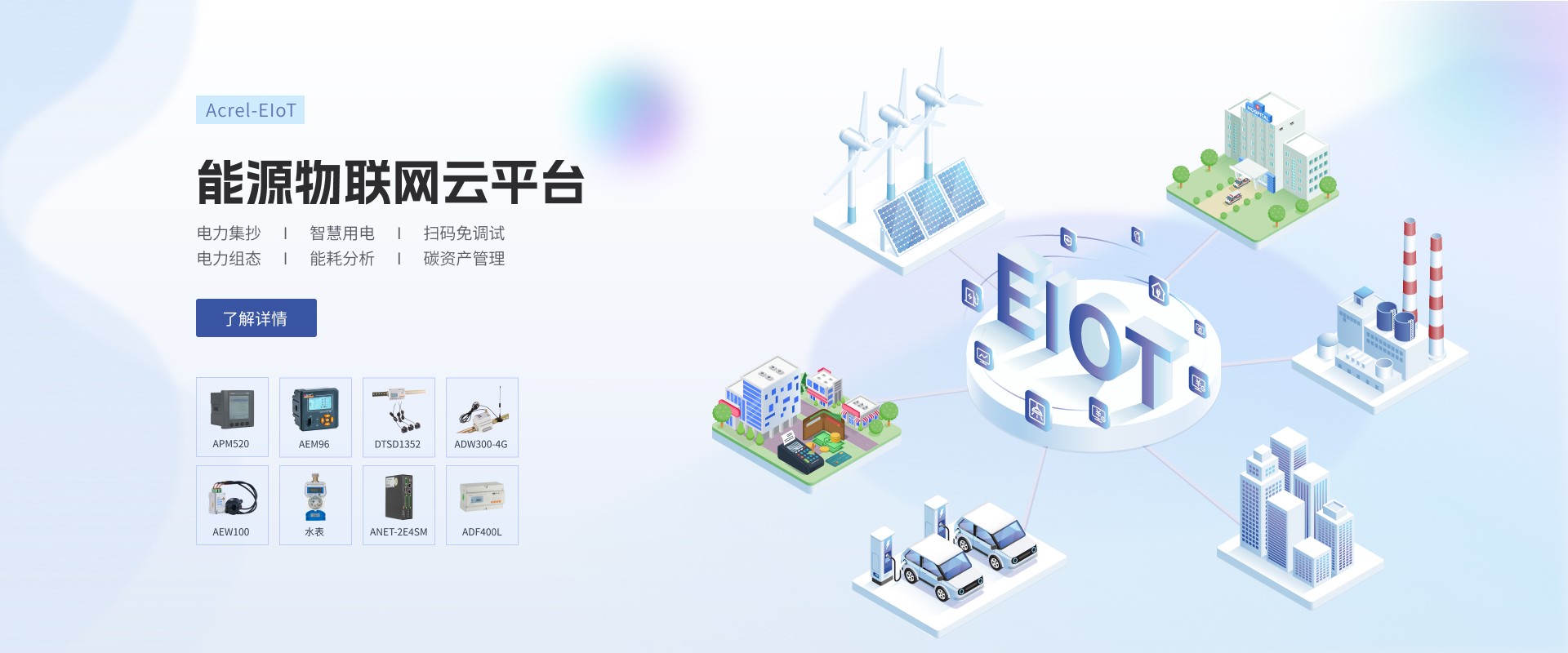
The application and development of the internet are the process of the emergence of the Internet of Things (IoT). The concept of IoT encompasses not only network systems but also specific business workflows and applications. It is a method that combines cloud computing, big data, communication, and sensor technology to facilitate interactions between objects and people. It enables an effective remote management system for interactions between objects and between objects and people. The application of smart water management involves transmitting data detected by sensors to the application system via the network, real-time monitoring the operation status of various water management systems, and effectively connecting water management departments with water supply and drainage facilities, thus forming a smart water management IoT. Based on the IoT comprehensive information management platform, a simulation model is used to create an intelligent management system, including water supply monitoring, flood prevention, wastewater treatment, data collection, and automatic analysis functions. Smart water production and operation integrate GIS positioning, video surveillance, data analysis, and automated service management systems. Data analysis and processing are centered around IoT technology, connecting with other systems, eliminating the management drawbacks of traditional water management that could not share resources, and also removing the drawbacks of unilateral decision-making in various fields. Therefore, the construction of smart water management makes water system decision-making more refined and effectively improves the utilization rate of water resources.
Establishment of the 3.5 IoT Smart Water Cloud Platform
The diversity of equipment and complexity of the network environment in smart water management imply numerous challenges for the construction of the Internet of Things platform. Through the smart water management data collection system, data is collected on cloud computing platforms, filtered for useful information based on applications, and processed scientifically to optimize the entire construction, management, and service process of smart water management. The cloud platform built upon this can be divided into service, network, platform, and perception layers. It primarily handles data access, publishing collected data on the internet. Administrators can share data applications to remotely control various smart water management facilities, ensuring real-time data transmission, storage, and processing. After complex data is transmitted and stored, it is analyzed based on demand, filtering useful data and messages, with extracted data sent in real-time to different terminal devices. Additionally, cross-platform data management can display to multiple management departments, supporting multi-level early warnings to achieve the purposes of drought and flood prevention, and real-time monitoring of rainfall and water levels, which is crucial for urban drought and flood control. Establishing cloud platform resources, improving flood and drought prevention systems, and managing water resources rationally, and developing and protecting aquatic environments. Integrating all urban water management into a single platform, moving data out of traditional silos, allows for unified decision-making among relevant management departments, reducing redundancy in smart water management work, and enhancing the efficiency of smart water management.
4 AcrelEMS-SW Smart Water Efficiency Management Platform
4.1 Platform Overview
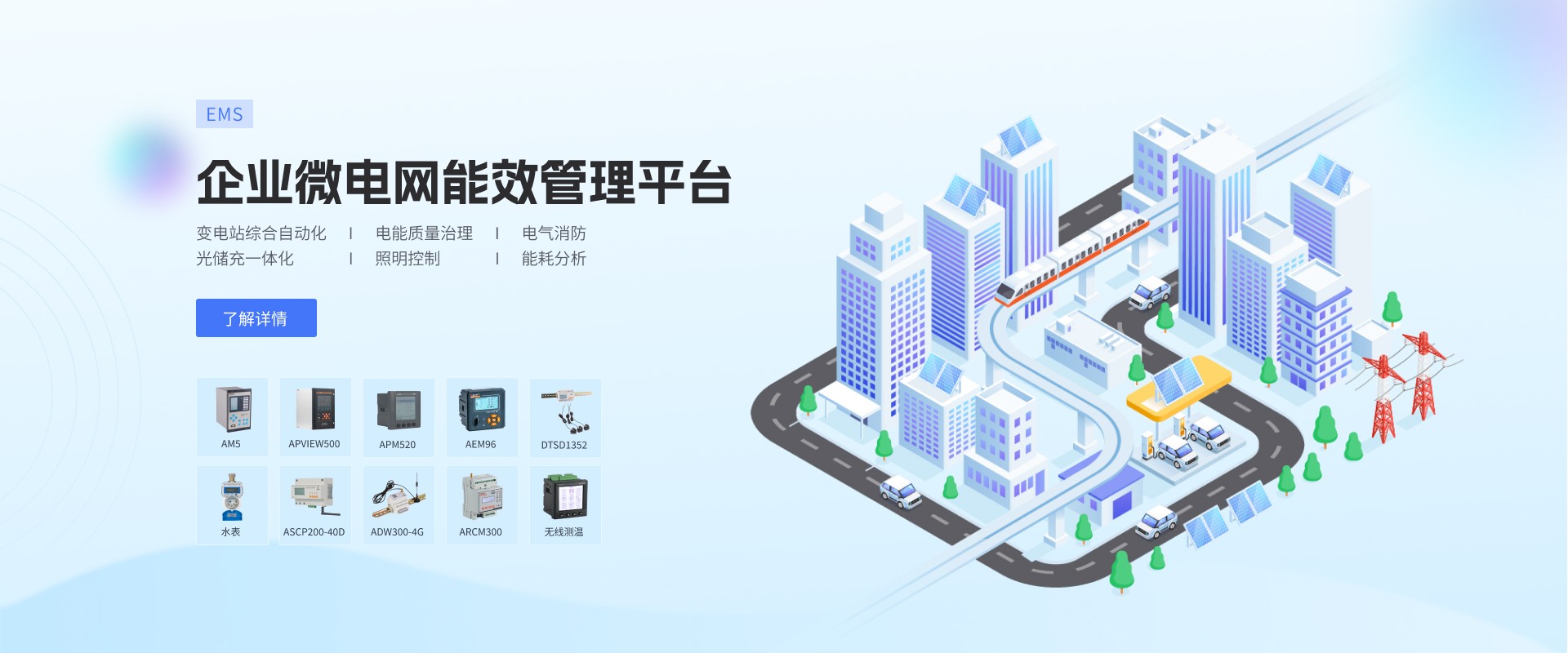
AcrelEMS-SW Smart Water Efficiency Management Platform, part of AcrelElectrical's comprehensive product ecosystem ranging from terminal sensing to edge computing and energy efficiency management platforms, is designed to monitor the total and intensity of energy consumption in wastewater treatment plants. By installing protective, monitoring, analytical, and treatment devices at critical nodes across the source, network, load, storage, and charging of the wastewater treatment plants, it ensures the reliability of plant operations, improves energy efficiency, and provides a scientific and refined solution for the energy efficiency management of wastewater treatment.
4.2 Platform Composition
The AcrelEMS Smart Water Utility Comprehensive Energy Management System consists of a substation comprehensive automation system, electric power monitoring, and energy management system. It covers water utility medium-voltage power distribution systems, electrical safety, emergency power supply, energy management, lighting control, and equipment maintenance, throughout the entire water utility energy flow. It assists operations and maintenance managers in real-time monitoring the operation status of the water distribution system through a single platform and an APP, and can be applied to the management needs of water utility support departments based on user permissions.
4.3 Platform Topology Diagram
4.4 Platform Subsystem
4.4.1 Substation Integrated Automation System and Power Monitoring
The company has configured relay protection and arc protection for 35kV and 10kV voltage levels in the water and power distribution system, achieving functions such as remote measurement, remote signaling, remote control, and remote adjustment, and providing timely early warnings for abnormal conditions.
Monitor transformer, pump, and blower current, voltage, active/inactive power, power factor, load factor, temperature, three-phase balance, and abnormal alarm data.
4.4.2 Power Quality Monitoring and Management
A significant number of high-power motors and variable-frequency pumps in waterworks cause a large amount of harmonic distortion in the power distribution system. By monitoring the harmonic distortion, voltage fluctuations, flicker, and tolerance indices of the power distribution system, we analyze the electrical energy quality and implement corresponding measures to improve the quality of supplied electricity.
4.4.3 Electric Motor Management
Motor Monitoring achieves protection, remote measurement, remote signaling, and remote control functions for motors in waterworks. The motor protector can protect, monitor, and alarm against abnormal conditions such as overloading, short-circuit, phase loss, and leakage. It accurately reflects fault status, fault time, fault location, and related information, enabling health diagnosis and preventive maintenance for motors. Additionally, it supports integration with PLCs, soft starters, inverters, etc., to achieve automatic or remote control of motors, monitoring and controlling various process equipment, ensuring normal production.
4.4.4 Energy Management
Establishing a measurement system for water utilities to display the flow and loss of energy, the energy flow diagram assists in analyzing the destination of energy consumption for water utilities, identifying areas of abnormal energy consumption.
Centralize all energy-related parameters on a dashboard, conduct comparative analysis from multiple dimensions, achieve energy consumption comparison across various process stages, and assist leaders in managing the overall factory's energy consumption, energy costs, and standard coal emissions.
Energy consumption data is collected and statistically analyzed from wastewater treatment plants, waterworks, pump stations, etc., including electricity, water, gas, and heat/cold consumption. Comparative analysis is conducted for year-on-year and month-on-month data, with calculations of total energy consumption and intensity, as well as standard coal equivalent and CO2 emission statistics trends.
Energy efficiency analysis is conducted based on a three-tiered metering framework, aligning with the requirements of the energy management system. It allows for the analysis of energy efficiency levels across various workshops/functional departments, including year-on-year, month-on-month, and benchmark comparisons. By utilizing wastewater production volumes and energy consumption data collected by the system, a trend chart for specific wastewater consumption is generated, along with year-on-year and month-on-month analyses. Additionally, the specific wastewater consumption is benchmarked against industry, national, and standard indicators, enabling the company to adjust production processes based on product-specific consumption levels, thereby reducing energy consumption.
4.4.5 Smart Lighting Control
The system provides lighting control management solutions for wastewater treatment plants, waterworks, pump stations, etc., supporting various control methods such as single control, area control, automatic control, sensor control, timed control, scene control, and dimming control. The modules can automatically identify sunrise and sunset times based on latitude and longitude to enable automatic control functions, maximizing the use of natural light for intelligent indoor and facility lighting, achieving safety and energy-saving objectives.
4.4.6 Electrical Safety
Electrical Fire Monitoring: Monitors leakage current and cable temperature in distribution system circuits, providing electrical safety early warnings for wastewater treatment plants, waterworks, and pump stations.
② Emergency Lighting and Evacuation Guidance: The system quickly activates an evacuation plan according to pre-set emergency response procedures, guiding personnel to evacuate. It interfaces with the fire emergency lighting indicator system data, displaying the operational status and any anomalies of the evacuation sign lighting through floor plans.
Fire Equipment Power Monitoring: Ensuring the operational power of fire equipment is normal to ensure that fire equipment can be used as intended in the event of a fire.④ Fire Door Monitoring System: The fire door monitoring system centrally controls the working status of its terminal devices, including the fire door monitoring module, electric door closer, and electromagnetic release. It real-time monitors the opening, closing, and fault status of fire doors in evacuation routes, displaying fault signals such as open circuit and short circuit in terminal devices. The system connects communication-enabled monitoring modules using fire protection two-wire technology. In the event of faults like short circuit or open circuit in terminal devices, the fire door monitor can emit an alarm signal, indicating the location of the alarm and saving alarm information, ensuring the reliability of electrical safety.
4.4.7 Environmental Monitoring
Wastewater treatment plants, waterworks, pump stations, and other facilities display and warn about temperature and humidity, smoke, waterlogging, video surveillance, and flammable gas concentrations in UPS battery rooms to ensure safe operation. In the event of excessive flammable or harmful gas concentrations, the exhaust fans or fresh air systems are automatically activated to eliminate hazards and maintain a good water treatment environment.
4.4.8 Distributed Photovoltaic Monitoring
Real-time monitoring of the electrical parameters such as current, voltage, and power for each circuit of the low-voltage grid-connected cabinet, as well as the circuit breaker switch status. Monitoring the inverter operation, including the input DC voltage, current, and power for each photovoltaic string on the inverter DC side, the AC voltage, current, frequency, power factor, current power generation, and cumulative power generation. Historical data of these monitored parameters are plotted in a curve format.
The platform integrates the actual layout of the factory area, displaying the distribution of distributed photovoltaic components on rooftops and carports through 3D or 2.5D flat maps. It shows the locations of the collector boxes and grid connection points, as well as the installed capacity of each rooftop.
4.4.9 Process Simulation Monitoring
The platform monitors the operational status of processes such as coarse格栅, sewage pumping, fine格栅, aeration sedimentation, improved biochemical treatment, secondary sedimentation, chlorination contact disinfection, sludge concentration and press filtration, and biological odor removal in real-time via 2D and 3D methods. Motor protection is installed in the control cabinets or low-voltage power distribution cabinets for low-voltage motors of equipment like格栅渣清除机, sewage pumping pumps, recirculation pumps, aeration fans, dosing pumps, concentration and press filtration machines, sand suction pumps, and sludge suction pumps. These protections include short-circuit, overcurrent, overload, start-up timeout, phase failure, imbalance, low power, grounding/leakage, te protection, lock-rotating, reverse, and temperature, as well as external fault interlock shutdown. In conjunction with PLCs, soft starters, and inverters, this system achieves automatic or remote control of the motors, monitors, and controls various process equipment to ensure normal production.
In summary, in the integration of smart water management in urban construction, we adhere to the Ministry of Water Resources' standards for data resource unification and information sharing of hydrological resources. By following standardized procedures and automating tasks, including data analysis and early warnings, we effectively enhance the efficiency of smart water management. Through big data-driven strategies and leveraging existing knowledge, we improve the accuracy of flood forecasting. Guided by overall planning, unified standards, and resource sharing, we continuously advance the construction of smart water management in cities. Smart water management is a product of the continuous development of water resources, playing a crucial role in urban development and progress. It not only meets the needs of residents but also effectively mitigates flood disasters, ensures the healthy development of modern cities, promotes the rational allocation and utilization of water resources, and drives the continuous advancement of smart city construction.
Reference:
Shang Dawei, Gong Yueming. Design and Implementation of an Intelligent Water Resource Monitoring System Based on NB-10T Technology[J]. Software Guide, 2021, 20(06): 155-158.
Fei Lin. "Construction Conception and Economic Benefit Analysis of the Smart Water Conservancy System in Sanmenxia Reservoir Area, Shaanxi." Shaanxi Water Conservancy, 2021(05): 252-253+258.
[3] AnkoRui Enterprise Microgrid Design and Application Manual. 2022.05 Edition