

Olympus Rotating Billet Phased Array Inspection System, Eddy Current Array flaw detection system_供应产品_Tuduo (Shanghai) Testing Technology Co., Ltd. 
在线客服 在线客服邀请中...
关闭

您好,现在客服正邀请与您通话,请留下您的联系方式,客服将尽快与您取得联系。

 点击提交代表您同意《服务条款》《隐私政策》
Tuduo (Shanghai) Testing Technology Co., Ltd.

Spectrometers, Phased Array, Ultrasonic Flaw Detectors, Endoscopes

18019490612 13918558304

Olympus Rotating Billet Phased Array Inspection System, Eddy Current Array flaw detection system

产品Price 1000.00/Set

最小起订Quantity:1 Set 供货总Quantity: 10000 Set

用手机扫描二维码直达商品手机版
MobileView details
Location:
Shanghai
有效期至:
长期有效
最后更新:
2022-11-30 17:07

Recommended Products

猜你喜欢

Product Details

Rotary Billet Inspection System (RBIS)


The Rotating Billet Inspection System (RBIS) is a turnkey solution that applies Phased Array (PA) and Eddy Current Array (ECA) technologies to an automatic inspection system, meeting customers' highly stringent requirements for volume and surface inspections of billets. Its main advantages include:

  • The same system can handle both volume inspection and surface inspection.

  • High detection volume, saving time compared to conventional detection methods.

  • Automatic calibration feature reduces reliance on operator skills

  • 2D Imaging Function, fully leveraging the system's performance

  • When inspecting round billets and black and silver bars made of carbon steel, stainless steel, aluminum, and titanium, there is a great deal of flexibility.

  • Quickly change specifications, reducing downtime

The system's design aims to provide a simple and straightforward solution for obtaining repeatable test results. This solution includes the following components:

  • Specialized Project Management

  • Instruments, probes, and mechanical equipment

  • Software

  • Debugging, Training, and After-Sales Support


Comprehensive raw material inspection

Inspection of the entire volume of the billet using phased array technology

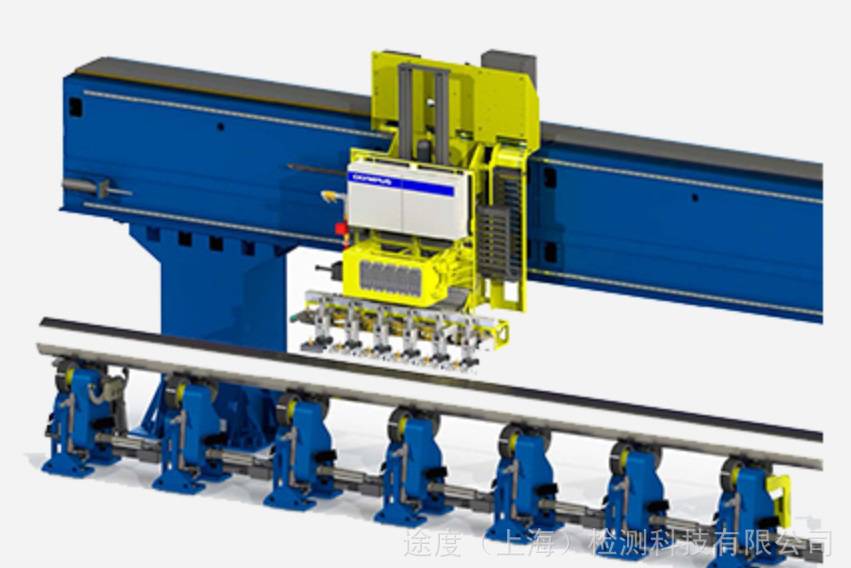
As the billet rotates, the probe hanging from the gantry moves along the length of the gantry above the billet. At the start of the inspection sequence, the cylinder pushes the wedge down, and at the end of the inspection sequence, the cylinder pushes the wedge up.

The probe is mounted in an Olympus water wedge, which can rotate freely at multiple angles and features an air-suspended design, ensuring an excellent coupling effect.

Specific wedges are used for longitudinal and transverse wave detection, to measure the volume and near-surface of the billet.


Surface inspection of billets using Eddy Current Array Technology (ECT)

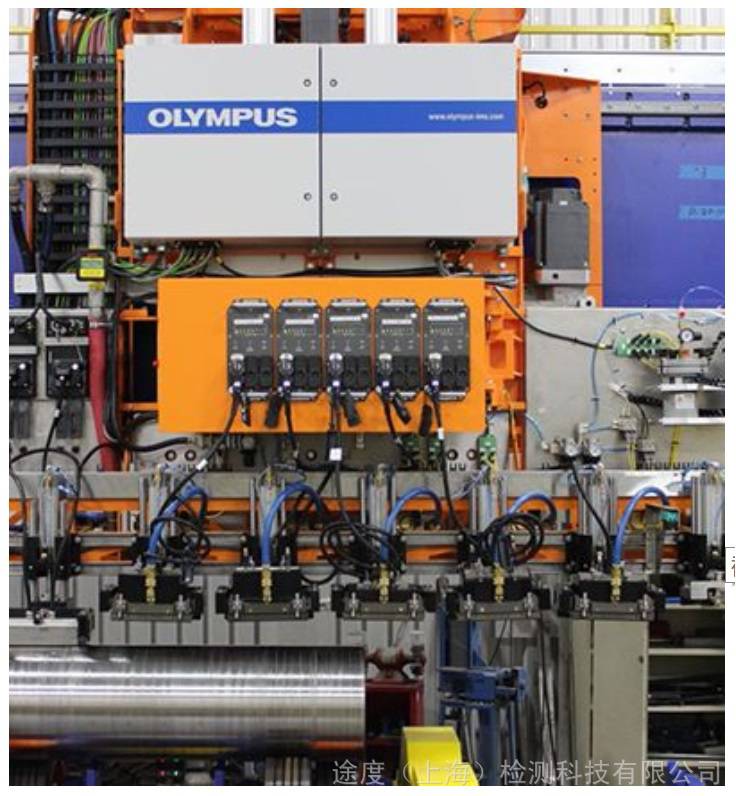
The eddy current array technology can detect surface defects on the billets. We offer a special probe holder for this inspection, which ensures superior lift-off effect when performing contact-based detection on billets of different diameters. The contact surface of the probe used is ceramic, which can prevent damage to the probe.


High-quality test results

The aim of developing the Olympus inspection system is to meet the requirements of the metal manufacturing industry for productivity, while ensuring that the inspection complies with high international quality standards.


Water wedge

The water wedge can rotate freely at multiple angles as the billet moves and can adjust its pneumatic suspension height according to the billet's position. The water wedge utilizes an Aqualene elastomer membrane to form a thin water film between the probe and the billet, thereby achieving superior coupling effects. The water path within the water wedge remains undisturbed, allowing for high repeatability when detecting minute defects. We also provide users with different sizes of wear-resistant plates to accommodate various diameters of billets.


Premium Inspection Head

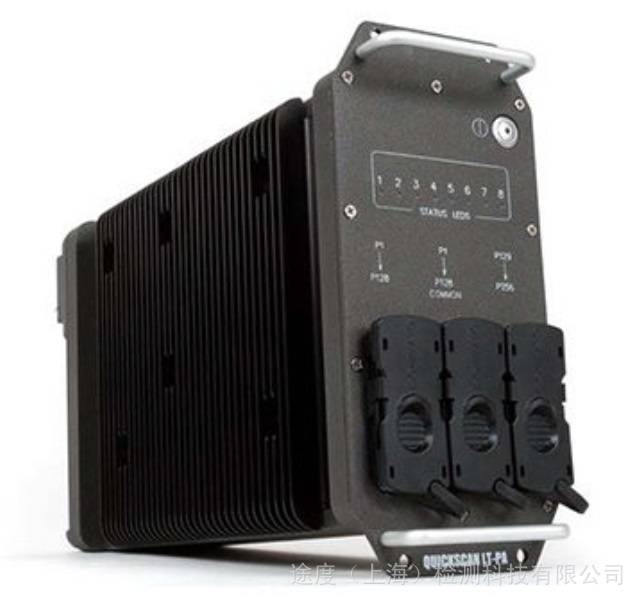
Electronics are integrated into the detection head, which not only shortens the cable length but also reduces electromagnetic noise. The modular design facilitates upgrades and maintenance. A single detection head can accommodate up to 8 wedges, 5 QuickScan LT collection units, and 1 QuickScan ECA collection unit, and can be used with some standard options, such as installed labeling systems and pre-wetting devices.


Phased Array Probe

Each pair of adjacent PA probe chip groups may have an overlapping area. The size of the overlapping area is adjusted electronically based on the defect size, allowing for high-density energy to be concentrated on the blank material, and ensuring high repeatability in the detection results.


Automatic Calibration

To ensure comprehensive inspection of the stock material, each probe must be calibrated. During the calibration process, each probe's apertures must scan a known defect, after which the probe's gain level is automatically adjusted. The automatic calibration feature allows users to conveniently perform precise calibrations for each focusing rule and verify them, saving a great deal of time and eliminating the need for reliance on the operator's skill level.

  • Calibration for all probes can be performed in an automated sequence.

  • Completed calibration verification under normal production conditions

  • Each reference defect must be verified to ensure that any defects exceeding the alarm level are detected.

  • Test results are displayed in an easily interpretable strip chart.


Phased Array (PA) and Eddy Current Array (ECA) technology, a powerful data acquisition device, and advanced software combined, can form a robust detection system.


Phased Array (PA) and Eddy Current Array (ECA) Acquisition Equipment

QuickScan PA 32:256 module meets IP55 rating standards, with the QuickScan EC unit offering flexibility in detecting the surface of raw materials. Both units can be easily integrated into industrial environments.


Convenient settings

QuickView software facilitates system setup, data collection, and management. The software's wizard simplifies the process of creating settings for inspecting various sizes of billets. Each billet diameter's inspection configuration and calibration parameters are saved and easily retrievable. The final results are compiled and displayed on the screen, clearly distinguishing between qualified and unqualified billets.

  • Quick access to pre-defined test settings

  • The wizard in the software assists in easily creating new settings.

  • The software features permission management capabilities, which help minimize operators' accidental errors.

  • Calibration and testing information is stored for traceability purposes.


Imaging Function

The system employs a reference signal with each rotation of the stock, thereby providing X and Y axis coordinates of the defect location, measuring the size of the defect surface, and determining the direction of the defect. The data imaging feature allows the system to perform 2D marking operations, and 2D marking aids in completing verification or automatic polishing applications.


询价单
主题 *
内容 *
Your company's名
Contact person *
ContactPhone *
电子Email
验证码  
 点击确定代表您同意《服务条款》《隐私政策》
 
 Click submit means you agree to《Service terms》《Privacy policy》

Phone Consultation

Consultation Phone:
18019490612

Back to Top
