
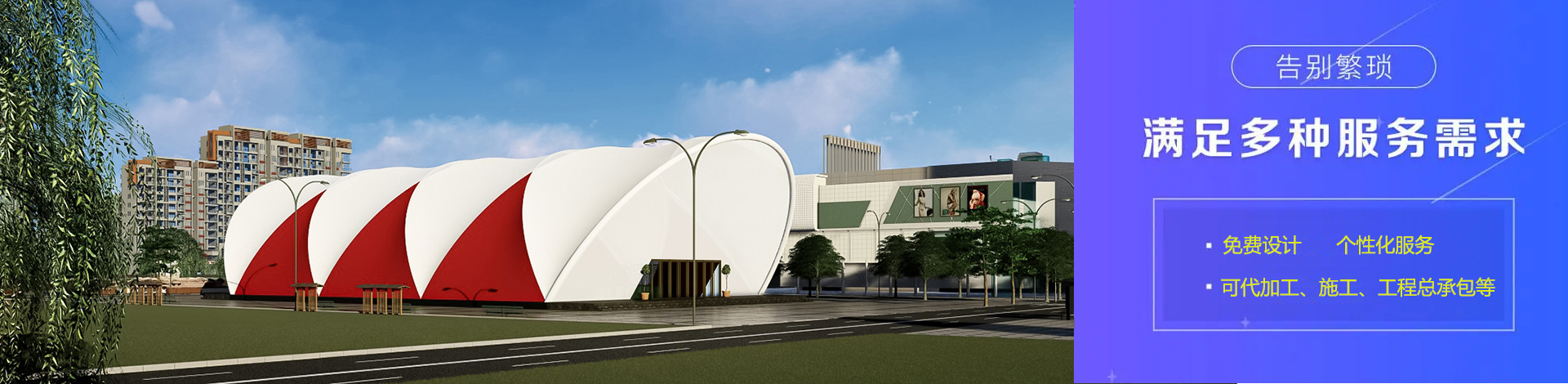
Membrane structures have a wide range of applications. To better acquaint new clients with them, here is an overview of the advantages of membrane structure buildings:
1. Greater freedom in architectural form shaping
The versatile support structures and flexible membrane materials of membrane structures make building shapes more diverse, innovative, and aesthetically pleasing, while also showcasing the beauty of the structure. With a rich palette of colors, they can create more free-form architectural figures and a richer architectural language.
2. Enhanced economic benefits
The membrane building roof weighs only 1/30 of a conventional steel roof, thereby reducing the cost of walls and foundations. Additionally, the unique shape and night view effects of membrane buildings offer distinct "building recognition" and commercial benefits, resulting in a higher price-performance ratio.
3. Shorter construction timeline
All processing and manufacturing of membrane structure buildings can be completed within the factory. On-site work is limited to installation and tensioning operations. Compared to the construction timeline of traditional buildings, it is almost twice as fast.
4. Lower energy consumption
Membrane structures offer high reflectivity and low light absorption, as well as low thermal conductivity, which to some extent prevents solar energy from entering the interior. Additionally, the semi-transparency of the membrane material ensures adequate natural diffused light illumination indoors.
5. Larger architectural spaces
Due to their lightweight nature, membrane structures can span large areas without the need for internal support, allowing for flexible and more creative design and use of architectural spaces.
