

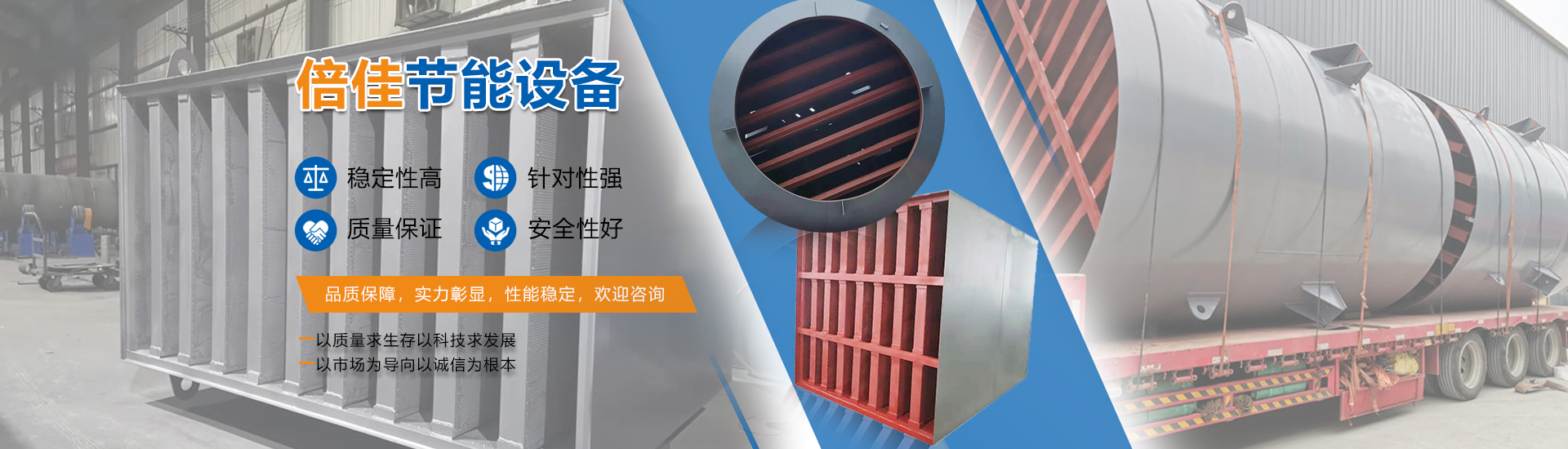

Industrial Fan Muffler Usage Precautions:
1. Mufflers require reducer pipes at both ends; the corresponding pipe cross-sectional dimensions and flange sizes should be provided at the time of ordering.
2. The flow velocity between silencer plates is generally selectable to be equal to the pipeline flow velocity. For civil building silencers, the flow velocity V typically ranges from 3 to 10 m/s, while for industrial silencers, it can be from 12 to 25 m/s, not exceeding 30 m/s.
Please specify if a rain cover is required.
Jiangsu Baibai Energy-Saving and Environmental Protection Equipment Co., Ltd.'s fan muffler is a general-purpose mechanical equipment with a wide range of applications. It is indispensable in the production of various industries such as electricity, mining, machinery, metallurgy, and chemical engineering. The noise generated during the operation of fans often becomes a source of harm to workers' health and environmental disturbance. Particularly, the aerodynamic noise radiated from the intake and exhaust ports of fans near residential areas is a major factor in environmental pollution, creating public hazards. It has been one of the main targets for noise pollution control in China's industrial sector in recent years.
Industrial fan silencers are equipment designed for continuous operation. The International Organization for Standardization (ISO) sets noise standards for such equipment at ≤90 decibels. Our country's new standards are identical to this, serving as the basis for continuous noise compliance in industrial enterprises. However, without noise reduction measures, the noise emitted from the intake and exhaust of the fan can reach 110-120 decibels, significantly exceeding the compliance requirements.
A muffler is a device that prevents sound from propagating while allowing airflow to pass through, serving as a crucial measure for eliminating aerodynamic noise. It is a noise-reduction device installed on the airflow channels of aerodynamic equipment or at the ends of air conditioning systems (such as blowers, air compressors), or within the intake and exhaust systems. Mufflers can block the propagation of sound waves while allowing airflow, making them an effective tool for noise control.
The mufflers for fans, exhaust pipes, and induced draft fans share the same design. They all utilize the resistive sound absorption principle, which is effective for mid and high-frequency broadband characteristics, and the reactive noise reduction principle, which is beneficial for low and mid-frequency as well as pulsating characteristics. Additionally, they incorporate micro-perforated mufflers and impedance composite mufflers.
The Wind Turbine Muffler is a noise reduction device designed to mitigate the aerodynamic noise caused by wind turbines on the environment. It incorporates a resistive structure that effectively reduces high and medium-frequency noise, as well as a reactive structure for noise reduction at medium and low frequencies. Additionally, the resistive channel utilizes both high and low-frequency noise reduction zones to broaden the frequency range of the muffler, achieving an excellent noise reduction effect.
