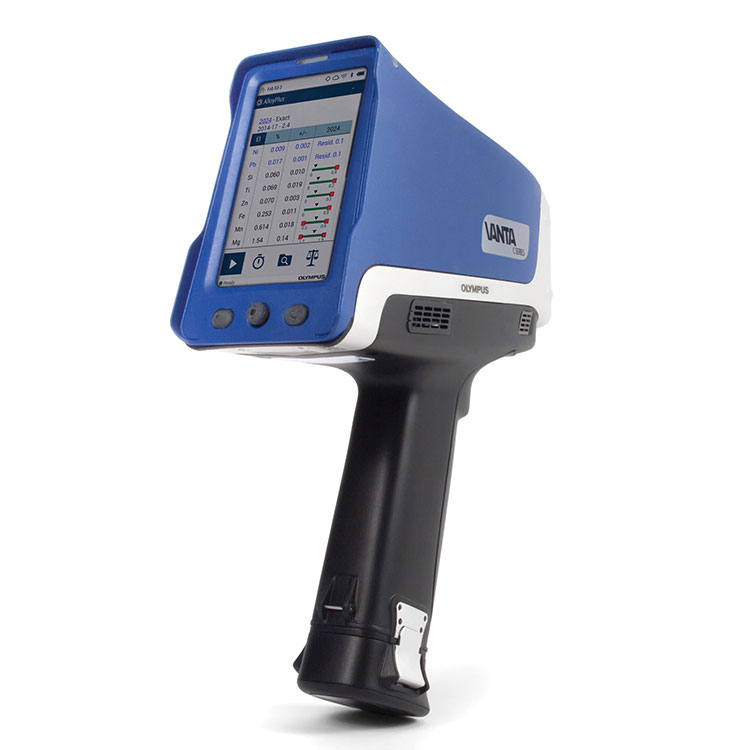




The history of stainless steel dates back to the World War II era, when steel rich in chromium was discovered for its excellent resistance to acids, alkalis, and salts. Today, with ongoing research, various types of stainless steel are utilized in our daily lives. The differing alloy content in stainless steel determines its varied properties. Just as stainless steel was initially found to contain a high amount of chromium, which enables it to resist acids, alkalis, and salts, making it suitable for tableware, it is not suitable for detecting illegal items. Shanghai Huanqiu Instrument Equipment Co., Ltd. offers handheld spectrometers for the analysis of stainless steel materials, hoping to assist you.
Stainless steel is an abbreviation for "corrosion-resistant steel." It refers to steel grades that are resistant to weak corrosive media such as air, steam, and water, or steel grades with corrosion resistance. On the other hand, steel grades that resist corrosion from chemical corrosive media (acids, alkalis, salts, etc.) are called acid-resistant steel.
Due to their differing chemical compositions, stainless steels generally exhibit varying corrosion resistance; while common stainless steels are typically not resistant to chemical medium corrosion, acid-resistant steels generally possess corrosion resistance. The term "stainless steel" does not simply refer to a single type of steel but denotes over a hundred industrial stainless steel grades, each demonstrating excellent performance in its specific application field. The key to success lies in first determining the purpose and then selecting the appropriate steel grade. In the field of architectural and construction applications, there are usually only six types of steel grades. They all contain 17-22% chromium, with better grades also including nickel. Adding molybdenum can further enhance atmospheric corrosion resistance, particularly against chloride-containing atmospheres. Generally speaking, stainless steel is harder than aluminum alloys, and it is also more expensive.
Hand-held Spectrometer
For example, in production, stainless steel grades 304 and 316 are commonly used. Grade 304 stainless steel is labeled as 0Cr18Ni9, while grade 316 stainless steel is also widely applied, with the GB label 0Cr17Ni12Mo2. It is primarily used in the food industry and surgical equipment, with the addition of molybdenum to achieve a special corrosion-resistant structure. Grade 316 contains higher levels of nickel and molybdenum alloys, making it more expensive than grade 304. In actual trade, it's difficult to quickly distinguish between different steel grades, which may result in significant losses for users and even pose quality and safety hazards. In practical production and daily life, 316 and 304 stainless steel grades are hard to differentiate visually, and conventional analysis methods are time-consuming and繁琐. The use of a portable spectrometer allows for rapid, non-destructive, and accurate analysis of stainless steel materials on-site, determining their composition and grade information, making it suitable for the on-site screening and testing of large quantities of raw materials.