
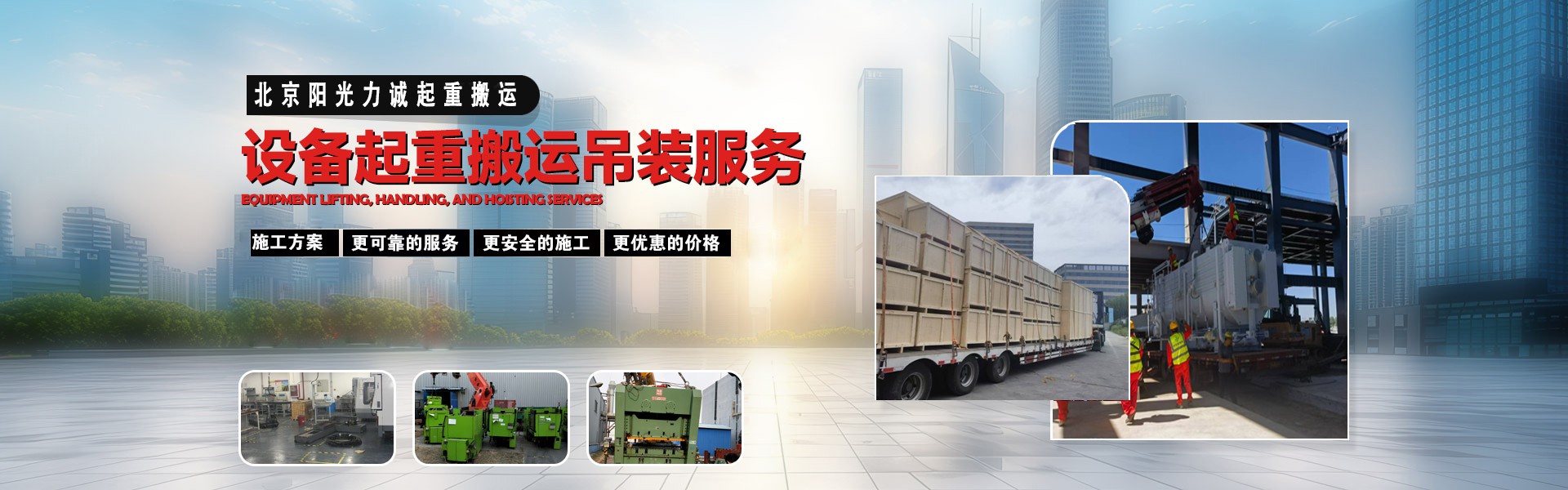
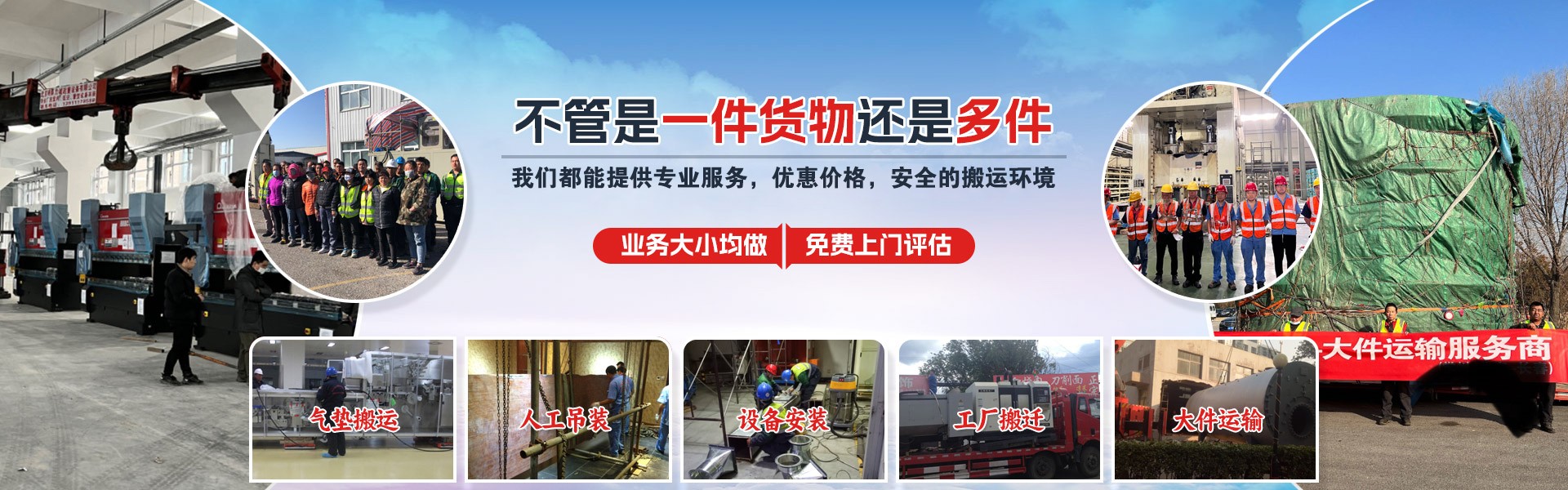
Equipment hoisting is a common term at our Beijing Sunlight Integrity Hoisting and Transportation. Hoisting refers to the general term for the installation and positioning of equipment using cranes or lifting structures, and is a specialized term for positioning equipment. Equipment hoisting usually requires the use of hoisting equipment, which generally includes lifting blocks, shackles, lifting rings, and hooks. What should be taken into account during equipment hoisting? Let's explore this further below.
1. The rolling method for loading and unloading mobile equipment in traditional construction must ensure that the diameter of the rollers is consistent. The annual length should be 50cm longer than the width of the trolley. It is strictly prohibited to fill the rollers with gloves. When loading and unloading vehicles, the slope of the edge should not exceed 20°, the roller track should be flat and firm, with joints staggered, and the rolling speed should not be too fast; a rope should be used.
During the installation process, if any issues are identified, they should be addressed promptly and then proceed with the lifting after resolution.
When hoisting large tower-type equipment using a crane, the combined operation of multiple winches requires that the winching speeds be roughly similar. It is essential to ensure that the loads on each lifting point of the tower are roughly uniform to avoid deformation of the tower due to uneven distribution of forces.
When using the rotation or tilt method for hoisting tower tanks, the hinge at the bottom of the tower must be capable of resisting the horizontal thrust generated during the lifting process. The left and right guiding ropes of the tower must be secure during lifting. When the tower is rotated to the correct height, allow it to slowly descend onto the foundation to prevent accidents and deformation.
5. When installing equipment on frames or buildings, the strength and stability must meet the requirements for installation. After the equipment is installed and positioned, it must be securely fastened or welded according to the drawings. Only after achieving the required strength and stability can the hooks be removed; otherwise, temporary fixation is necessary.
Here is our detailed introduction of the key points for equipment hoisting that Beijing Yangguang Licheng Lifting and Transportation has provided for you. We hope this information is helpful. Should you have any further questions, please don't hesitate to call us for detailed inquiries.