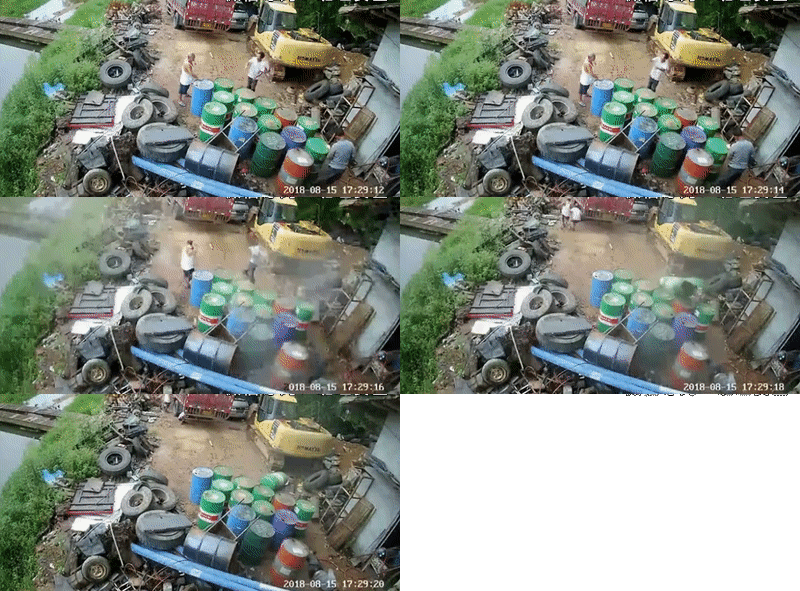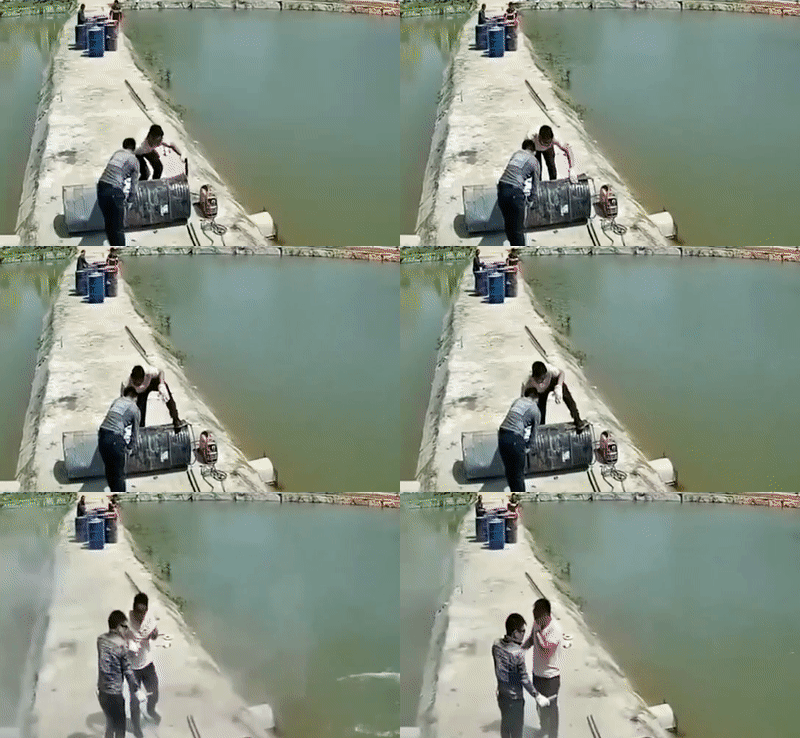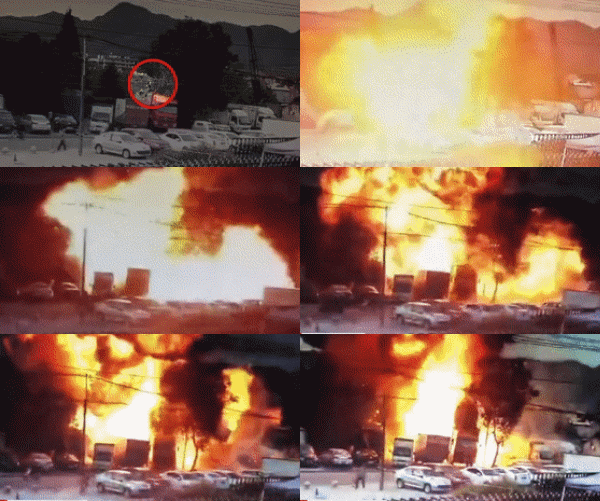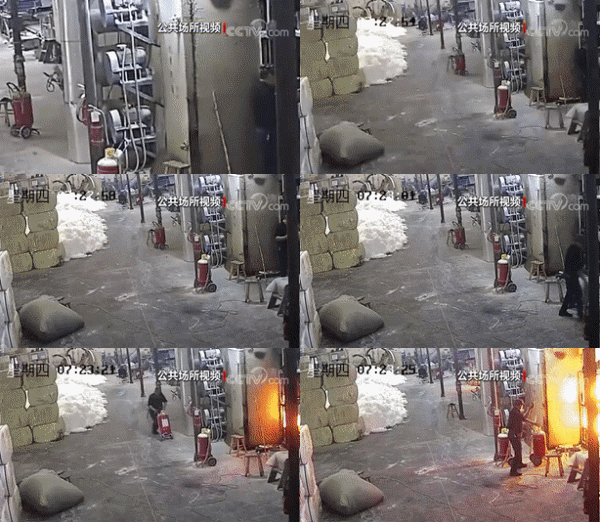

Welding operations are widespread in industries such as industrial production, construction, and transportation. As a fire-based activity, welding involves high temperatures, extreme heat, flammability, and splashes. Inadequate precautions during operation can lead to fires, explosions, and other accidents, resulting in minor property damage or, worse, injuries or fatalities. Therefore, it is crucial to adhere to the bottom line of safe production at all times.
What are the potential dangers associated with welding operations?
Potential Hazards of Welding Operations
1
Welding heat conduction leads to fire accident
Due to welding's process of melting metal using an electric arc, and the extreme temperatures exceeding 6000℃ during welding, it's easy for flammable materials to ignite upon contact with the opposite end of the welded piece.
2
High-altitude falls and spatter from welding slag
In welding operations, molten sparks fly everywhere. These tiny sparks are extremely hot and can ignite flammable materials, potentially causing fires; they can also trigger explosions when they come into contact with explosive gases.
3
Fire Incidents Are Not Easily Detected
Welding and cutting operations are typically not on the same plane as the ignition point, making it difficult to detect fires in the early stages.
4
A short circuit caused a fire involving flammable materials.
Welding machine power cords are often dragged and worn during operation, which easily leads to wire damage and increases the risk of short circuits, potentially igniting nearby flammable materials.
Fire Safety Experiment: Welding Spatter Temperatures Reach Up to 2,474°F
To measure the temperature of molten beads produced by welding operations, the test personnel, after ensuring safety precautions, placed the temperature sensor of the thermometer at the spot where molten beads were splashing from the welding process. The temperature of the pouring molten beads skyrocketed exponentially, quickly surpassing a thousand degrees, reaching a high of 1372°C, which is far above the ignition points of cardboard, polyurethane foam boards, and various items.
Research confirms: Welding operations produce molten droplets at high temperatures, easily igniting surrounding combustible materials.

A set of animated graphics explains
Illegal Welding: How Dangerous It Can Be


Welding operations, classified as special procedures.
Relevant staff members
Mandatory specialized safety technology training and passing the assessment.
Obtained special operation certification
Ready for Duty!
Legal Knowledge普及
Article 21 of the "Fire Prevention Law of the People's Republic of China" stipulates: Where open flame operations are required due to special circumstances such as construction, approval procedures must be handled in advance as per regulations, and corresponding fire safety measures shall be taken; operators must comply with fire safety regulations.
Employees performing welding, gas welding, and other fire-hazardous activities, as well as operators of automatic fire protection systems, must be certified and adhere to fire safety operational procedures.
Article 63 of the "Fire Prevention Law of the People's Republic of China" stipulates: Anyone violating regulations by using open flames for work or smoking or using open flames in places with fire or explosion hazards may be warned or fined less than 500 yuan. In serious cases, they may be detained for up to five days.
Article 64 of the "Fire Prevention Law of the People's Republic of China" stipulates: If someone instructs or coerces others to violate fire safety regulations and engage in hazardous activities, and such actions do not constitute a crime, the offender shall be sentenced to detention of ten to fifteen days, and may be fined up to 500 yuan; for less serious cases, a warning or a fine of up to 500 yuan may be imposed.
Then
What should be noted during welding operations?


Safety in production is no trivial matter.
Businesses must always remain vigilant.
Preventive measures before any harm